

Why Is Void-Free Insulation Critical for Transformer Dielectric Integrity?
2026-10-16
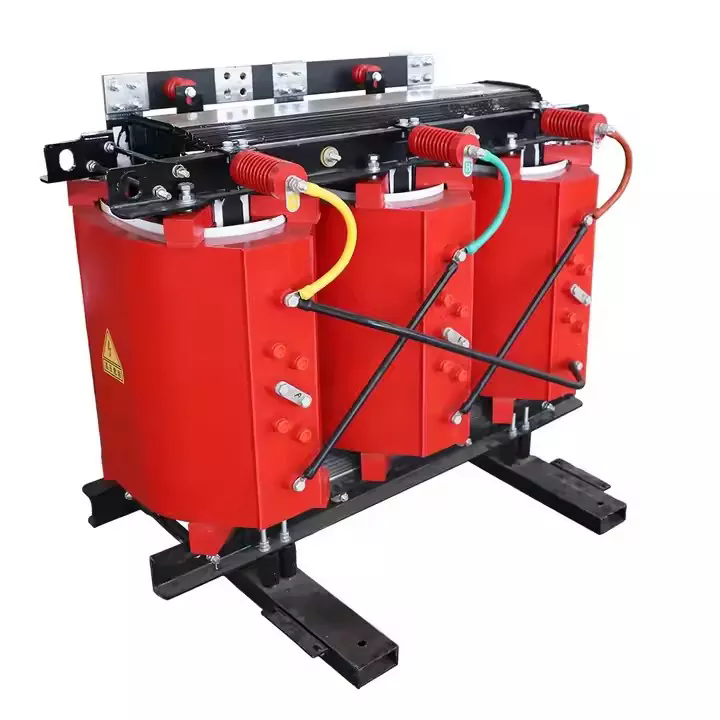
A test engineer runs a partial discharge test on two Dry Type Transformer units. Both units passed the power frequency withstand test at 28 kV for 60 seconds. Unit A has a partial discharge level of 3 pC at 1.5 times the rated voltage. Unit B has a partial discharge level of 120 pC. The engineer cuts open Unit B and finds a void in the cast resin insulation near the high-voltage winding. The void is approximately 0.5 mm in diameter. This void is the source of the partial discharge. The engineer realizes that the power frequency test did not detect the void because the void did not break down at the test voltage. But the partial discharge test did detect it. This guide explains why void-free insulation is critical for dielectric integrity.
1. What Is Partial Discharge and How Does It Relate to Voids?
Partial discharge is a localized electrical breakdown that does not bridge the entire insulation. It occurs in voids, cracks, or at the interface between different materials. In a Dry Type Transformer, the insulation is a cast resin. If the resin contains a void, the electric field in the void is higher than in the surrounding resin because the dielectric constant of the gas in the void is lower than that of the resin. The field enhancement factor is approximately equal to the ratio of the dielectric constants. For an epoxy resin with a dielectric constant of 4.0 and a void filled with air (dielectric constant 1.0), the field in the void is 4 times the field in the resin. This enhanced field can cause the gas in the void to ionize, which produces partial discharge. The table below shows the field enhancement factor for different void shapes and materials.
| Void shape | Void material | Dielectric constant ratio | Field enhancement factor | Typical discharge inception |
| Spherical | Air | 4.0 | 4.0 | 2.5 kV/mm |
| Flat (disc) | Air | 4.0 | 4.0 – 6.0 | 1.8 kV/mm |
| Needle | Air | 4.0 | 8.0 – 12.0 | 0.8 kV/mm |
| Spherical | Moisture | 4.0 | 2.0 – 3.0 | 3.5 kV/mm |
In our factory, we perform partial discharge tests on every Dry Type Transformer unit. The test is performed according to IEC 62271-100. The acceptance criterion is a partial discharge level below 10 pC at 1.5 times the rated voltage. Unit A passed with 3 pC. Unit B failed with 120 pC. The difference is the presence of voids in the cast resin. Lugao Power Co.,Ltd has been manufacturing dry type transformers for over 15 years and has invested in vacuum casting equipment to eliminate voids.
2. How Does Void Size Affect the Discharge Inception Voltage?
The discharge inception voltage depends on the void size and the gas pressure inside the void. For a spherical void in a solid dielectric, the inception voltage is proportional to the void diameter and the gas pressure. The table below shows the inception voltage for different void diameters in an epoxy resin with a dielectric constant of 4.0 at atmospheric pressure.
| Void diameter (mm) | Inception voltage (kV) | Discharge magnitude (pC) | Risk level |
| 0.1 | 4.5 | < 1 | Low |
| 0.2 | 3.2 | 1 – 5 | Moderate |
| 0.5 | 2.1 | 10 – 50 | High |
| 1.0 | 1.5 | 50 – 200 | Very high |
| 2.0 | 0.8 | > 200 | Critical |
The data shows that a void of 0.5 mm in diameter has an inception voltage of 2.1 kV and produces a discharge magnitude of 10 to 50 pC. This is above the acceptance criterion of 10 pC. A void of 0.2 mm has an inception voltage of 3.2 kV and produces a discharge magnitude of 1 to 5 pC, which is below the acceptance criterion. This is why the manufacturing process must control the void size to below 0.2 mm. In our factory, we use vacuum casting to reduce the void size to less than 0.1 mm. Lugao Power Co.,Ltd has validated this process through destructive testing of sample units.
3. How Does Vacuum Casting Eliminate Voids in Dry Type Transformer Insulation?
Vacuum casting is the process of pouring the epoxy resin into the mold under a vacuum. The vacuum removes the air from the mold and from the resin before and during the pour. The absence of air prevents the formation of voids. The table below shows the effect of vacuum level on void content and partial discharge.
| Vacuum level (mbar) | Void content (%) | Maximum void size (mm) | Partial discharge (pC) |
| Atmospheric (1013) | 2 – 5 | 0.5 – 2.0 | 50 – 500 |
| 100 | 0.5 – 1.0 | 0.2 – 0.5 | 10 – 50 |
| 10 | 0.1 – 0.3 | 0.1 – 0.2 | 3 – 10 |
| 1 | < 0.1 | < 0.1 | < 3 |
| 0.1 | < 0.05 | < 0.05 | < 1 |
Test engineer's note: The vacuum level must be maintained throughout the pouring and curing process. If the vacuum is lost during curing, air can be drawn back into the resin. In our factory, we use a vacuum chamber that maintains a pressure below 1 mbar for the entire casting and curing cycle. The partial discharge level of our Dry Type Transformer units is consistently below 5 pC. This meets the requirements of the most demanding applications, including wind farms and data centers.
4. What Other Factors Contribute to Void Formation?
Vacuum level is the primary factor, but there are three other factors that contribute to void formation. The first is the resin viscosity. A high-viscosity resin does not flow easily into the tight spaces between the windings, which can trap air. The second is the mold design. The mold must have proper vents to allow the air to escape. The third is the curing profile. A fast cure can trap air before it has time to escape. The table below shows the effect of these factors on void content.
| Factor | Optimal condition | Effect of deviation |
| Resin viscosity | 500 – 1,500 mPa·s | Higher viscosity increases void content |
| Mold venting | Vents at highest points | Poor venting traps air |
| Curing profile | Slow ramp, hold, slow cool | Fast cure traps air |
| Resin degassing | Vacuum degassing before pour | No degassing increases void content |
In our factory, we use a low-viscosity epoxy resin that is specifically formulated for vacuum casting. The resin is degassed under vacuum before it is poured. The mold is designed with vents at the highest points to allow the air to escape. The curing profile is optimized to allow the resin to flow and the air to escape before the gel time. Lugao Power Co.,Ltd provides the full casting process specification to our customers.
Frequently Asked Questions About Void-Free Insulation in Dry Type Transformers
Summary for Test Engineers and Quality Managers
Void-free insulation is critical for the dielectric integrity of a Dry Type Transformer. Voids cause partial discharge, which degrades the insulation and can lead to premature failure. The discharge inception voltage and the discharge magnitude depend on the void size. A void of 0.5 mm can produce a discharge level above 10 pC, which is the acceptance criterion for most applications. Vacuum casting at a pressure below 1 mbar reduces the void size to less than 0.1 mm and the discharge level to less than 5 pC. The resin viscosity, mold venting, and curing profile also affect void formation. By controlling these factors, manufacturers can produce dry type transformers with excellent dielectric integrity. Lugao Power Co.,Ltd has been manufacturing dry type transformers for over 15 years and provides full partial discharge test reports for our products.
Lugao Power Co.,Ltd manufactures Dry Type Transformer units with vacuum-cast insulation, low partial discharge levels, and full test documentation. We provide partial discharge test reports, insulation resistance test reports, and temperature rise test reports for all of our products.