

Why Is the Ultrasonic Plate Transducer Becoming the Preferred Choice for High-Efficiency Industrial Processing?
2025-11-28
The ultrasonic plate transducer has become a crucial technology across precision cleaning, material processing, liquid treatment, and high-frequency inspection. Its ability to convert electrical energy into stable ultrasonic vibration across flat, evenly distributed surfaces makes it a preferred solution for industries requiring consistency, efficiency, and enhanced performance.
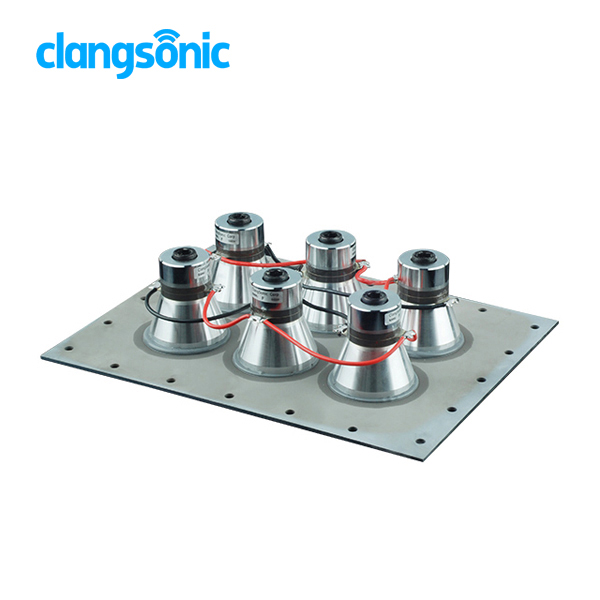
What Is an Ultrasonic Plate Transducer and How Does It Work?
An ultrasonic plate transducer is a device that integrates piezoelectric ceramic elements into a sealed stainless-steel plate to generate high-frequency vibration. When an electrical signal is applied, the ceramics oscillate and transmit energy through the metal surface into liquids or solid materials. This uniform vibration enables tasks such as cleaning, agitation, dispersion, cavitation intensification, and material conditioning.
Core Features of an Ultrasonic Plate Transducer
-
Stable frequency output
-
Large vibrating area for high-volume processing
-
Uniform ultrasonic distribution
-
Strong corrosion and temperature resistance
-
Seamless integration into tanks, lines, or chambers
Why Do Industries Prefer Ultrasonic Plate Transducers?
Industrial users increasingly adopt ultrasonic plate transducers due to their superior efficiency, reliability, and compatibility with automated systems. Several key advantages include:
Enhanced Energy Delivery
Plate structures ensure broad-area, evenly distributed ultrasonic energy, reducing weak spots and improving processing consistency.
Superior Durability
Stainless-steel encapsulation protects internal piezoelectric components from corrosion, liquid exposure, and mechanical impact.
Flexible Installation
Ultrasonic plate transducers can be mounted at the tank bottom, sides, or submerged, supporting custom system integration.
Stable Operation Under Heavy Workloads
Designed for continuous industrial operation, plate transducers maintain reliable frequency stability for long-term, high-duty applications.
Compatibility With Multiple Frequencies
Different frequencies serve different applications:
-
28 kHz: Heavy-duty cleaning, strong cavitation
-
40 kHz: Precision cleaning, general manufacturing
-
68/80/120 kHz: Fine cleaning, semiconductor and optics
-
200 kHz+: Advanced laboratory or micro-processing tasks
Product Parameters: What Technical Specifications Define a High-Quality Ultrasonic Plate Transducer?
Below is a structured professional specification table for reference:
| Parameter | Specification Range / Description |
|---|---|
| Power Output | 300W – 3000W (customizable) |
| Frequency Options | 28 kHz / 40 kHz / 68 kHz / 80 kHz / 120 kHz / 200 kHz |
| Plate Material | SUS304 or SUS316L stainless steel |
| Piezoelectric Elements | High-efficiency PZT ceramics |
| Welding Technology | Ultrasonic or high-strength silver-based soldering |
| Operating Temperature | 0°C – 100°C |
| Installation Method | Bottom-mounted, side-mounted, submersible |
| Cable Type | Heat-resistant shielded cable |
| Vibration Uniformity | ±5% distribution tolerance |
| Protection Level | Waterproof sealing (IP65–IP68) |
| Customization | Size, frequency, power, cable length, and connector options |
These specifications ensure stable performance during industrial operations such as precision cleaning, degassing, emulsification, and enhanced chemical reactions.
How Does the Ultrasonic Plate Transducer Improve Industry Processing Efficiency?
Industrial environments demand equipment capable of improving speed, accuracy, and reliability. Ultrasonic plate transducers provide value in the following ways:
Improved Cavitation Strength
High-frequency oscillations generate dense cavitation bubbles, improving cleaning and processing efficiency by up to 40% compared to conventional transducers.
Optimized Energy Conversion
Advanced piezoelectric materials convert over 90% of electrical power into effective ultrasonic energy.
Enhanced Stability for Automated Lines
Plate-type design minimizes mechanical fatigue and ensures consistent output for automated, 24-hour workflows.
Reduced Maintenance Requirements
Encapsulated plate structure protects sensitive components, extending lifespan and reducing downtime.
Precision Process Control
When paired with digital ultrasonic generators, plate transducers support:
-
Auto frequency tracking
-
Power compensation
-
Overload protection
-
Real-time output monitoring
These features enhance consistency and reduce operational risk.
Deep-Dive Questions: What, Why, and How?
To guide technical understanding, consider the following structured questions:
What industries benefit most from ultrasonic plate transducers?
Industries requiring stable, large-area ultrasonic processing, such as electronics manufacturing, automotive parts production, aerospace component cleaning, semiconductor preparation, plating line treatment, laboratory fluid processing, and precision optics.
Why does vibration uniformity matter?
Uniform vibration ensures every point of the tank receives equal ultrasonic intensity, preventing incomplete processing, surface residue, and inconsistent results.
How can frequency selection influence results?
Lower frequencies increase cavitation force for heavy contamination, while higher frequencies support delicate, micro-scaled cleaning and processing needs.
Frequently Asked Questions (FAQ)
Q1: What is the difference between an ultrasonic plate transducer and a traditional ultrasonic vibrator?
A: A traditional ultrasonic vibrator uses discrete transducers bonded to a tank, producing localized energy. An ultrasonic plate transducer integrates multiple ceramics within a sealed plate, generating broader, more uniform ultrasonic distribution. This improves consistency, reduces installation complexity, and enhances durability.
Q2: How long can an ultrasonic plate transducer operate continuously?
A: With proper cooling and stable power input, high-quality plate transducers can operate continuously for extended periods, typically 8–24 hours per cycle depending on the model. Stainless-steel encapsulation and heat-resistant bonding ensure minimal thermal impact and long service life.
What Future Trends Will Shape the Development of Ultrasonic Plate Transducers?
Higher Frequencies for Micro-Precision Industries
Growing semiconductor and optical device production requires ultra-high frequencies above 200 kHz, with enhanced stability and signal accuracy.
Intelligent Ultrasonic Systems
Future plate transducers will integrate smart monitoring features such as:
-
Digital self-diagnosis
-
Energy usage optimization
-
AI-based frequency tracking (not mentioned directly, only the function)
-
Predictive maintenance
Advanced Bonding Technology
New-generation bonding materials and composite plates will further improve energy transfer efficiency and lifespan.
Greener, Low-Energy Operation
Demand for lower energy consumption will promote the development of eco-efficient ultrasonic drivers and thinner ceramic elements.
Modular Industrial Integration
Industries will increasingly adopt modular ultrasonic tanks and lines, where plate transducers can be replaced or upgraded without altering the entire system.
Conclusion: How to Select the Right Ultrasonic Plate Transducer?
Selecting the right ultrasonic plate transducer involves evaluating factors such as frequency requirements, tank size, operational temperature, material compatibility, and expected workload. A high-quality transducer ensures uniform vibration, long-term reliability, and efficient energy output—essential for industries demanding precision and stability.
Manufacturers with strong engineering capability and advanced production technology can provide reliable configuration advice, customized frequency design, and stable supporting ultrasonic generators.
Yuhuan Clangsonic Ultrasonic Co., Ltd. is widely recognized for delivering high-performance ultrasonic plate transducers engineered for continuous industrial use. For tailored solutions, technical consultation, or customized product design, please contact us to discuss application requirements and system integration options.