

A modern entrance has to do more than simply let people pass. It needs to control authorization, manage pedestrian flow, protect users, fit the available space, and work smoothly with the access control technology already installed in a building. This is where sliding turnstiles can become an important part of a well-designed pedestrian access system.
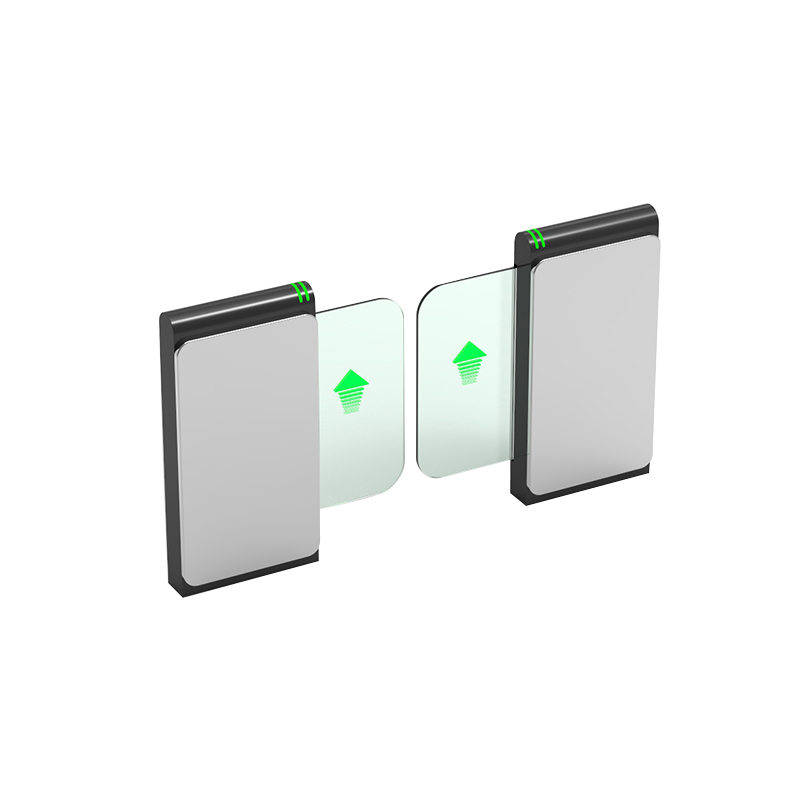
What Are Sliding Turnstiles?
Sliding turnstiles are automated pedestrian access gates that use horizontally moving door panels to control passage through a defined lane. Unlike traditional rotating turnstiles, their doors move sideways when an authorized user is permitted to enter or exit.
This operating principle gives sliding turnstiles a distinctive combination of controlled access and architectural flexibility. The mechanism can be designed around the available entrance layout, while the door material, cabinet finish, lane width, and authentication method can be selected according to project requirements.
For example, ZOJE's PB106 customized sliding turnstile is designed with an ultra-thin cabinet for locations where installation space is limited. The product uses 304 stainless steel as standard, with 316 stainless steel available as an option, and can accommodate different access control systems.
Only authorized users receive permission to pass through the lane.
Horizontal door movement can be useful where entrance space must be carefully managed.
Access credentials can be connected with modern identification and access management systems.
Which Entrance Problems Can Sliding Turnstiles Solve?
Many entrance projects face the same fundamental challenge: the building needs stronger access management without making everyday movement unnecessarily complicated. An entrance that is too open can create security and management problems, while an overly restrictive checkpoint can cause queues and user frustration.
1. Uncontrolled Pedestrian Movement
A sliding turnstile creates a clearly defined passage point. When connected to an access controller, the gate can respond to an approved credential before allowing the user to proceed.
2. Limited Installation Space
Not every building has a large lobby or generous entrance footprint. Compact cabinet designs can help project planners use available space more efficiently. This is one reason ZOJE specifically describes its customized PB106 model as suitable for limited-space locations.
3. Slow or Inconvenient Authentication
Modern facilities may need to support more than one authentication method. Depending on the access control architecture, users may be verified through cards, QR codes, fingerprints, facial recognition, or other compatible credentials.
4. Difficulties With Pedestrian Flow
Entrance equipment should not only protect the facility; it should also help people move through it efficiently. Proper lane planning, suitable authentication hardware, clear status indicators, and correctly configured opening times can reduce unnecessary delays.
Where Are Sliding Turnstiles Commonly Used?
The right access gate depends heavily on the building's function, expected pedestrian volume, security requirements, available space, and interior design. Sliding turnstiles can be considered for many environments where controlled pedestrian access is required.
They can help separate public reception areas from employee-only zones while providing a clean appearance suitable for contemporary commercial interiors.
Controlled entrances can be used in selected areas where guest convenience and restricted access need to coexist.
Sliding turnstiles can become part of a wider smart access ecosystem involving networked controllers and digital authentication.
Other potential applications include commercial facilities, residential developments, campuses, reception areas, and controlled internal zones. ZOJE identifies office buildings, hotels, intelligent buildings, and high-end residential environments among applications for its customized sliding turnstile.
What Practical Advantages Do Sliding Turnstiles Offer?
A good pedestrian gate should solve a real operational problem. The most useful advantages of a sliding turnstile therefore come from the relationship between mechanical design, electronic control, safety features, and the building environment.
- Efficient use of entrance space: Compact and customized configurations can be considered where floor space is restricted.
- Modern visual appearance: Glass, acrylic, stainless steel, and other finish options can be coordinated with contemporary architectural interiors.
- Controlled pedestrian access: The gate can remain closed until the access system authorizes passage.
- Multiple authentication possibilities: Depending on the selected system, credentials can include cards, QR codes, fingerprints, facial recognition, and other access technologies.
- Safety-oriented operation: Suitable sensor arrangements and anti-pinch functions can help reduce risks during automatic door movement.
- Customizable configuration: Lane width, materials, drive systems, and other specifications can be adapted to project requirements.
ZOJE's PB106 documentation describes optical sensors, mechanical anti-pinch protection, automatic reset, traffic indicators, and an anti-collision motor as part of the product feature set.
How Do They Work With Access Control Systems?
The turnstile itself is only one part of a complete access management solution. A typical system combines the physical gate, authentication device, access controller, sensors, communication interfaces, and management software.
Step 1: User Identification
The visitor or employee presents an approved credential. Depending on the project, this may be a card, QR code, fingerprint, facial recognition credential, or another compatible method.
Step 2: Authorization
The access controller evaluates the credential and determines whether the person is allowed to pass through the designated entrance.
Step 3: Gate Response
If access is authorized, the sliding doors open. If access is rejected, the gate remains closed and the system can provide a visual status indication.
Step 4: Passage Detection
Sensors help detect movement through the lane and can support safe closing and access management functions.
Step 5: Data Communication
Network interfaces can allow the turnstile controller to communicate with a larger access management platform. ZOJE's AC101 access controller, for example, supports TCP/IP and RS485 communication and multiple authentication methods.
What Should You Check Before Installation?
Choosing a sliding turnstile should be treated as an engineering and operational decision, not simply a product-shopping exercise. The following checklist can help avoid expensive changes after installation.
Standard and customized configurations can be particularly useful when a project has unusual architectural constraints. ZOJE's published PB106 specifications include a standard 600 mm channel width, with 900 mm or customized widths available as options.
How Do Different Entrance Requirements Compare?
There is no universal turnstile configuration for every building. The following table can help project teams identify the characteristics that deserve attention before selecting equipment.
| Project Requirement | Key Consideration | Sliding Turnstile Approach |
|---|---|---|
| Limited entrance space | Cabinet footprint and door movement | Consider slim or customized cabinet configurations. |
| High pedestrian activity | Authentication speed and lane planning | Use appropriate readers, sensors, and multiple lanes where necessary. |
| Modern commercial interior | Appearance and materials | Coordinate stainless steel, acrylic, glass, and lighting with the architecture. |
| Smart building integration | Communication interfaces | Confirm controller and network compatibility before deployment. |
| Enhanced pedestrian safety | Sensor coverage and anti-pinch functions | Select a configuration with appropriate detection and protection features. |
| Changing project requirements | Customization capability | Confirm whether lane dimensions, materials, drive systems, and readers can be customized. |
How Can You Keep a Sliding Turnstile Reliable?
Even a well-designed access gate requires appropriate installation and maintenance. Many operational problems are not caused by the basic concept of a sliding turnstile but by incorrect installation, poor alignment, unsuitable electrical conditions, blocked sensors, or inadequate inspection.
Keep the Sensor Area Clear
Optical and proximity sensors need a clear operating environment. Dust, physical obstruction, or incorrect alignment can affect detection performance.
Inspect Moving Components
Sliding mechanisms, motors, doors, and related components should be checked according to the manufacturer's maintenance recommendations.
Check Emergency Functions
Emergency release and automatic opening functions should be tested as part of a planned maintenance schedule and coordinated with the building's emergency procedures.
Review Access Control Communication
If the gate is connected to a networked access system, inspect communication, controller settings, authentication devices, and event records when troubleshooting unusual behavior.
Choose the Correct Material
Material selection should reflect the environment. ZOJE lists 304 stainless steel as a standard option for PB106 and 316 stainless steel as an available alternative, which may be relevant when a project has more demanding corrosion-resistance requirements.
Why Customization Matters More Than Many Buyers Expect
Two buildings can require pedestrian access control but still need completely different solutions. One may have a narrow lobby and a sophisticated facial recognition system. Another may need wider lanes, different materials, stronger environmental protection, or a specific communication interface.
This is why customization should be discussed before the quotation is finalized. A supplier should understand the installation dimensions, access control method, expected traffic, emergency requirements, material preferences, and communication architecture.
ZOJE describes its sliding turnstile products as customizable and notes options involving stainless steel grades, lane width, door materials, drive systems, and access control integration.
Frequently Asked Questions About Sliding Turnstiles
A sliding turnstile is an automated pedestrian access gate that uses horizontally moving panels to regulate entry and exit. It can be connected to different access control technologies to authorize users before opening.
They can be particularly suitable for projects with restricted space when a compact configuration is selected. ZOJE's PB106, for example, is specifically described as an ultra-thin customized sliding turnstile for limited-space locations.
Yes, compatible configurations can integrate facial recognition and other authentication technologies. The exact reader or terminal should be selected according to the project's access control architecture.
Yes. Sliding turnstile systems can be configured with different readers and access controllers. ZOJE documentation lists support for technologies including IC cards, ID cards, RFID, QR codes, fingerprint recognition, and facial recognition.
Material options depend on the model. ZOJE's PB106 uses 304 stainless steel as standard and offers 316 stainless steel as an option, while acrylic and tempered glass are among the door material choices described in its product documentation.
Depending on the selected model, yes. ZOJE lists a 600 mm standard channel width for PB106, with 900 mm and customized widths available as options. Project requirements should be confirmed with the manufacturer before ordering.
Safety depends on the complete system design, installation, sensor configuration, and maintenance. Features such as optical detection and anti-pinch protection can help support safer automatic operation.
Yes. Multi-lane arrangements can be designed according to pedestrian flow and available space. ZOJE notes that multiple motors can be configured within a cabinet for multi-lane pedestrian solutions on its customized PB106 platform.
Provide the installation dimensions, required lane width, number of lanes, expected pedestrian volume, authentication method, indoor or outdoor environment, preferred materials, emergency requirements, and access control communication requirements. Drawings or entrance photos can also help the manufacturer recommend a suitable configuration.
Because the correct configuration depends on the actual building and access control system. Discussing requirements early can reduce compatibility issues, installation changes, and unnecessary compromises after delivery.
A Practical Way to Plan Your Next Entrance Project
Selecting a sliding turnstile becomes much easier when the project is approached from the entrance outward rather than from the product catalog inward. Start by measuring the space. Then define the required lane width, pedestrian volume, authentication method, emergency behavior, environmental conditions, and communication requirements.
After these points are clear, compare the available configurations and confirm which specifications can be customized. This process helps ensure that the selected equipment works as part of the building rather than becoming an isolated piece of hardware.
For organizations looking for a combination of compact design, controlled pedestrian access, flexible authentication, and configurable specifications, ZOJE sliding turnstiles provide a practical starting point for evaluating a modern entrance solution.
Planning a Sliding Turnstile Project?
Every entrance has different dimensions, traffic patterns, security requirements, and integration needs. If you are comparing configurations or need help determining the right sliding turnstile for your project, contact ZOJE with your entrance dimensions and system requirements. Our team can help you review the available options and develop a configuration around your actual application.
Contact UsYou can also explore the ZOJE Sliding Turnstile product range for additional product information and configuration options.