

What Makes an Alcohol Tester a Reliable Safety Tool Today?
2025-11-20
An Alcohol Tester is a precision device designed to measure blood alcohol concentration (BAC) through breath analysis. It plays a significant role in personal safety, workplace risk control, transportation management, and regulatory compliance.
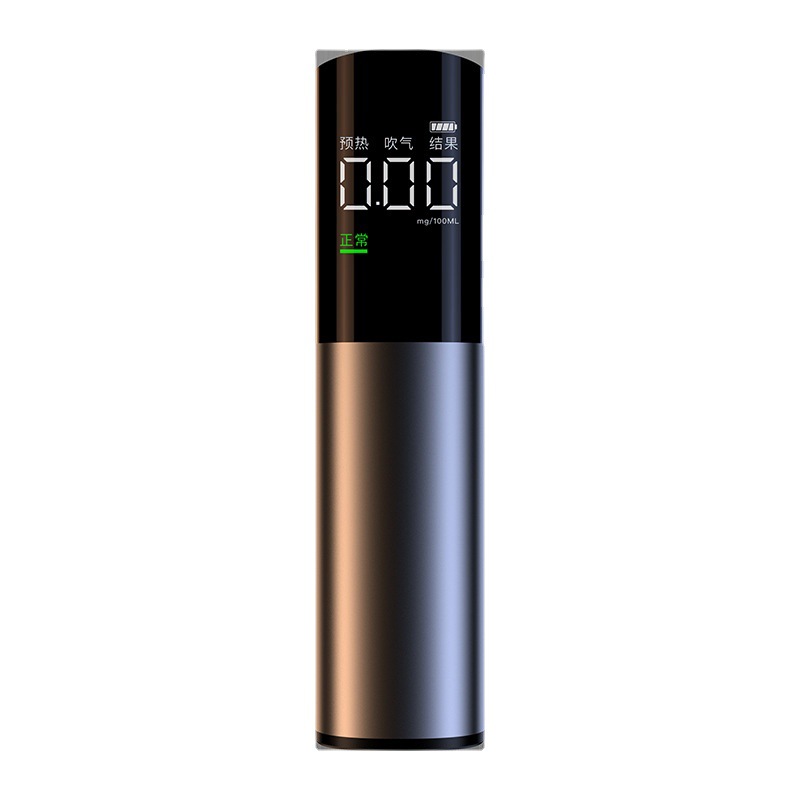
To help highlight the technical strengths of a professional-grade Alcohol Tester, below is a structured parameter list that demonstrates accuracy, build quality, sensor type, and operational features.
Product Parameters (Summary List)
| Parameter | Description |
|---|---|
| Sensor Type | Advanced Fuel Cell Sensor / Semiconductor Sensor (depending on configuration) |
| BAC Range | 0.000 – 0.400% BAC (or equivalent units) |
| Accuracy | ±0.005% BAC at 0.100% BAC |
| Response Time | 1–5 seconds |
| Warm-up Time | 3–10 seconds |
| Display Type | High-contrast digital LCD screen |
| Power Supply | Rechargeable lithium battery / AAA battery |
| Working Temperature | -10°C to 50°C |
| Memory Function | Stores 10–20 test records |
| Alarm System | Visual + Audible high-BAC alert |
| Calibration Cycle | Every 6–12 months depending on use |
| Certifications | DOT/NHTSA/CE/RoHS compliance (model-specific) |
These parameters serve as the technical backbone when evaluating an Alcohol Tester’s quality. The following sections explore why users should prioritize high-spec models, how these devices improve safety outcomes, and what innovations are likely to redefine the category.
Why Is an Alcohol Tester Important in Daily Life and Industrial Safety?
Alcohol-related risks continue to affect personal safety, transportation systems, and workplace operations. Understanding why the device matters clarifies its value across different user groups.
Why Does Accurate BAC Measurement Matter?
Accuracy determines the trustworthiness of any Alcohol Tester. Whether for personal use before driving, fleet management, or industrial monitoring, inaccurate readings can lead to safety hazards. Devices incorporating Fuel Cell Sensors provide the most stable performance, especially at higher BAC levels, which is why they are widely used by law enforcement and commercial operators.
Why Should Workplaces Adopt Alcohol Testers?
Industries involving machinery, logistics, chemical processing, and construction prioritize safety compliance. Alcohol Testers help reduce accidents caused by impaired judgment, slow reaction time, and loss of coordination. Companies use testing devices to:
-
Improve employee safety
-
Reduce insurance liabilities
-
Comply with regulatory standards
-
Maintain operational reliability
Regular screening significantly reduces alcohol-related incidents, contributing to long-term workplace stability.
Why Do Individuals Prefer Portable Alcohol Testers?
Consumers increasingly value self-monitoring tools. A portable Alcohol Tester offers convenience, quick results, and peace of mind. Instead of guessing personal BAC levels after drinking, users can rely on measurable data. Convenience, speed, and affordability have contributed to the rapid growth in consumer demand.
How Does an Alcohol Tester Deliver Accurate and Consistent Results?
Understanding how Alcohol Testers work helps determine whether a device meets professional expectations.
How Does the Sensor Technology Work?
Alcohol Testers rely mainly on two sensor technologies:
-
Fuel Cell Sensor Technology
-
Measures BAC through chemical reaction between alcohol molecules and electrode surfaces
-
Delivers stable, police-grade accuracy
-
Minimizes false positives from substances like perfume, smoke, or food particles
-
Performs well across broad temperature variations
-
-
Semiconductor Sensor Technology
-
Lower cost, commonly used in consumer models
-
Suitable for light-to-moderate usage
-
Requires scheduled calibration to maintain performance
-
Fuel Cell models are ideal for users needing high precision, while Semiconductor models work well for everyday personal monitoring.
How to Use an Alcohol Tester Effectively?
Proper operation helps maintain accuracy:
-
Allow sufficient warm-up time
-
Wait at least 15 minutes after drinking before testing
-
Replace mouthpieces regularly
-
Follow calibration cycle recommendations
These steps ensure the reading reflects true BAC levels rather than residual alcohol.
How Does Calibration Improve Accuracy?
Alcohol Testers naturally drift over time due to sensor aging and environmental exposure. Calibration adjusts internal algorithms to return the sensor to optimal accuracy. Professional calibration every 6–12 months keeps the instrument performing reliably.
What Future Trends Are Shaping Alcohol Tester Development?
The Alcohol Tester industry is experiencing rapid technological evolution. Several emerging trends will define the next generation of BAC measurement tools.
What Advancements Improve Precision?
Future Alcohol Testers may integrate:
-
AI-free algorithmic optimization for noise reduction
-
More advanced fuel cell chemistry to extend sensor lifespan
-
Multi-gas filtering technology to eliminate false readings
-
Smart temperature compensation for consistent performance
These improvements aim to bring police-grade accuracy to consumer devices.
What Enhances Portability and User Convenience?
Modern users expect fast, flexible, and portable testing:
-
Ultra-compact pocket-sized form factors
-
Ergonomic design for single-hand operation
-
Fast charging and extended battery life
-
Enhanced LCD readability
The trend moves toward easy-to-use devices with continuous uptime.
What Role Will Connectivity and Data Tracking Play?
Although many workplaces need digital documentation, future Alcohol Testers may offer:
-
Bluetooth record tracking
-
Test history reports
-
Encrypted data management for compliance
-
Integration with company safety dashboards
These features help create structured safety documentation without complicating the user experience.
What Will the Market Demand Look Like?
Global demand is expected to grow due to:
-
Stronger government road safety programs
-
Increasing workplace regulations
-
Rising public awareness of responsible drinking
-
Growth of ride-sharing and logistic industries
More sectors are recognizing the essential role of Alcohol Testers in reducing preventable accidents.
Alcohol Tester Frequently Asked Questions (FAQ)
Q1: How accurate is a Fuel Cell Alcohol Tester?
A: Fuel Cell Alcohol Testers offer highly stable accuracy, typically ±0.005% BAC at 0.100% BAC. Their chemical reaction system responds only to ethanol molecules, minimizing false positives from external substances. This makes them suitable for law enforcement, medical facilities, corporate testing programs, and professional transport sectors.
Q2: How often does an Alcohol Tester need calibration?
A: Calibration cycles depend on usage frequency. Consumer use may require calibration every 9–12 months, while workplace or high-volume testing may require recalibration every 6 months. Calibration enhances measurement accuracy and compensates for sensor aging, ensuring each reading remains reliable.
Q3: What’s the difference between Fuel Cell and Semiconductor Alcohol Testers?
A: Fuel Cell models deliver higher precision, longer lifespan, and superior stability across temperature variations. Semiconductor models provide affordable testing suitable for casual personal use. Choosing between the two depends on testing frequency, accuracy requirements, and operational environment.
Why Choosing the Right Alcohol Tester Matters
Alcohol Testers serve as a reliable safety solution for individuals, workplaces, and transportation operations. They contribute to safer driving, improved workplace compliance, and reduced risk of alcohol-related incidents. High-quality devices with advanced fuel cell sensors, fast response times, and professional calibration cycles ensure the highest levels of testing accuracy. As innovations continue to improve sensor stability, portability, and data management, Alcohol Testers will play an even more significant role in future safety routines.
YEHANG is committed to delivering precision-engineered Alcohol Testers designed for dependable performance across personal, commercial, and industrial applications. For more details about products, specifications, or customized solutions, contact us to explore how professional-grade testing tools can support your safety needs.