

Commercial Cooling Guide
A refrigeration system does more than lower temperatures. It protects product quality, supports operational continuity, controls energy consumption, and helps businesses maintain the conditions their processes require. Choosing an unsuitable unit can lead to temperature fluctuations, unexpected downtime, high electricity bills, and costly product losses.
This guide explains how refrigeration units work, which features matter most, how to select suitable equipment, and how to maintain consistent cooling performance. Whether you operate a cold room, food processing facility, commercial storage area, or industrial cooling system, understanding these fundamentals can help you make a more confident purchasing decision.
01 / Fundamentals
Understanding a Refrigeration Unit
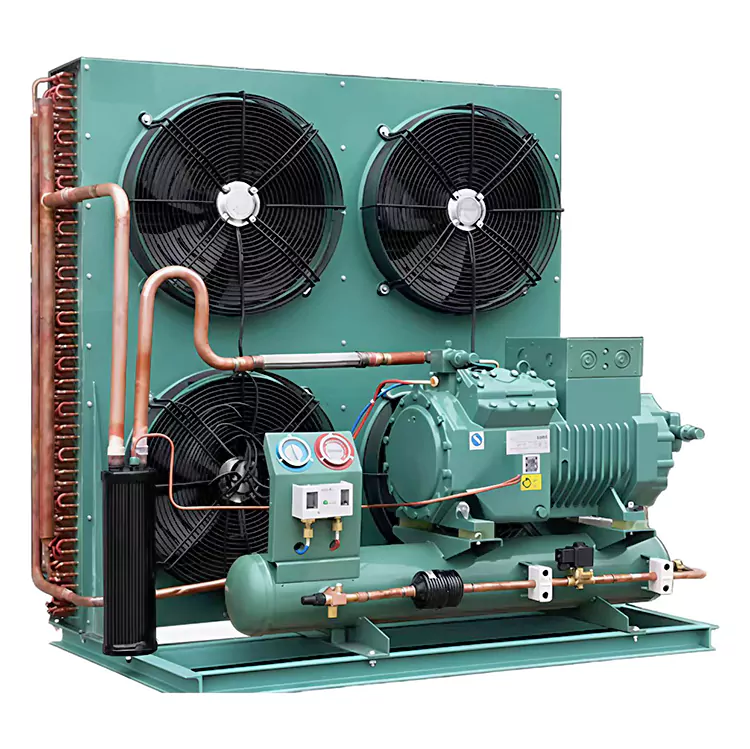
A refrigeration unit is equipment designed to remove heat from an enclosed space, product, or process and release that heat elsewhere. Rather than producing cold in the same way a heater produces warmth, most conventional refrigeration systems move thermal energy from a lower-temperature area to a higher-temperature environment by using a refrigerant and mechanical components.
Depending on the design, a refrigeration unit may serve a walk-in cooler, freezer room, supermarket display case, food production line, warehouse, laboratory, or industrial process. Its required capacity, operating temperature, configuration, and control strategy depend on the application.
For buyers, the important point is that a unit should not be selected on cooling capacity or purchase price alone. It must match the real heat load, the surrounding climate, the required temperature range, and the expected operating schedule.
Temperature Stability
Suitable capacity and responsive controls help keep the cooled environment within its specified operating range.
Operating Efficiency
Correct equipment sizing, clean heat exchangers, and well-designed airflow can help reduce avoidable energy use.
Product Protection
Consistent cooling helps preserve food quality, protect temperature-sensitive goods, and support process requirements.
Serviceability
Accessible components, clear documentation, and available replacement parts can simplify maintenance and repairs.
02 / Operating Principles
How the Refrigeration Cycle Works
Many refrigeration units use a vapor-compression cycle. Four major components work together to absorb heat from the cooled area and reject it to the surrounding environment.
1. Evaporator: Absorbing Heat
Low-pressure refrigerant enters the evaporator and absorbs heat from the air, liquid, or process being cooled. As it absorbs energy, the refrigerant changes from liquid to vapor. Fans or pumps may help move air or fluid across the heat exchanger, depending on the system design.
2. Compressor: Raising Pressure
The compressor draws in refrigerant vapor and increases its pressure. This also raises its temperature, allowing the refrigerant to release heat at a higher temperature in the condenser. Compressor selection influences capacity, power consumption, operating limits, and service requirements.
3. Condenser: Releasing Heat
The condenser transfers heat from the hot refrigerant to outdoor air or cooling water. As the refrigerant loses heat, it condenses into a liquid. A blocked condenser coil, insufficient airflow, or high ambient temperature can make heat rejection more difficult and increase system pressure and energy use.
4. Expansion Device: Regulating Refrigerant Flow
An expansion valve or another suitable metering device reduces refrigerant pressure and regulates the flow entering the evaporator. Correct refrigerant control helps the system respond to changing cooling loads while maintaining appropriate operating conditions.
03 / Real-World Uses
Common Applications and Cooling Requirements
Different industries have different definitions of successful refrigeration. A system that performs well in a small retail cooler may not be suitable for a large cold-storage warehouse or a production line with continuous heat loads.
Food Processing and Cold Storage
Food businesses need appropriate temperature control to protect product quality and support safe handling procedures. Door openings, incoming product temperatures, room insulation, defrost cycles, and loading schedules can all influence the refrigeration load. Chilled and frozen products may require very different operating conditions, so the system must be designed around the product and applicable requirements.
Restaurants, Supermarkets, and Retail
Commercial kitchens and retail stores often face frequent door openings and variable heat loads. Compact layouts, noise limits, ease of cleaning, and convenient service access can be as important as rated cooling capacity.
Pharmaceutical and Temperature-Sensitive Storage
Some medicines, laboratory materials, and sensitive products require defined temperature ranges and documented monitoring. Equipment selection should consider the required stability, alarms, monitoring arrangements, backup plans, and any applicable industry or regulatory requirements. A general-purpose refrigeration unit should not be assumed suitable for every controlled-storage application.
Industrial and Process Cooling
Manufacturing processes may require continuous heat removal from machinery, liquids, production environments, or specialized equipment. In these applications, designers should evaluate operating hours, peak heat loads, required fluid temperatures, redundancy, and the consequences of interrupted cooling.
Before comparing products, document the actual operating conditions. Clear requirements make it easier to distinguish equipment that merely appears suitable from a system that can support the application over the long term.
04 / Equipment Options
Main Types of Refrigeration Units
Refrigeration equipment is available in several configurations. The best option depends on the installation environment, required capacity, service access, heat-rejection method, and system layout.
| Unit Type | Typical Applications | Key Considerations |
|---|---|---|
| Self-contained unit | Small commercial coolers, display equipment, and compact applications | Simple installation, available ventilation, noise, and heat rejection |
| Split refrigeration system | Commercial cold rooms and installations where components need separation | Refrigerant piping, installation quality, line length, and service access |
| Condensing unit | Cold rooms, freezers, and compatible refrigeration systems | Compatibility with the evaporator, controls, refrigerant, and design conditions |
| Packaged refrigeration system | Applications requiring a coordinated equipment assembly | Specified capacity, footprint, maintenance access, and installation conditions |
| Industrial refrigeration system | Large facilities and continuous process-cooling applications | Engineering design, load variation, safety systems, redundancy, and lifecycle cost |
These categories can overlap, and product terminology varies by manufacturer. Confirm the equipment's actual configuration, included components, rated operating conditions, and system compatibility before placing an order.
05 / Selection Guide
How to Choose the Right Refrigeration Unit
The most reliable purchasing decisions begin with a clear assessment of the application. A unit that is too small may struggle during peak demand, while unnecessary oversizing can increase initial cost and contribute to inefficient operation under some conditions.
Calculate the Cooling Load
Cooling load is the amount of heat that the system must remove to maintain the required conditions. It is not determined by room size alone. A proper assessment may include:
- Room dimensions and insulation performance.
- Target temperature and expected outdoor design conditions.
- Heat entering through walls, floors, ceilings, and doors.
- Heat from lighting, motors, workers, and other equipment.
- Product load, including the temperature of products entering the room.
- Door-opening frequency, infiltration, ventilation, and defrost requirements.
- Required pull-down time and anticipated peak operating conditions.
For larger or more demanding installations, have a qualified refrigeration professional perform a load calculation using the actual site conditions. Capacity estimates based only on square footage can miss important heat sources.
Check the Required Temperature Range
Define both the normal operating temperature and the acceptable range. A chilled-storage application may have substantially different requirements from a freezer or a specialized process. Check the manufacturer's capacity data at the intended evaporating and condensing conditions, rather than relying only on a headline capacity rating.
Evaluate the Operating Environment
Ambient temperature, humidity, dust, salt exposure, ventilation, and installation altitude may influence equipment selection. A unit intended for a mild indoor environment may not deliver the same performance in a hot outdoor location. Ask for operating limits and derating information where relevant.
Consider Refrigerant and Regulatory Requirements
Refrigerant choice affects equipment design, operating characteristics, service procedures, and environmental considerations. Some refrigerants also have specific flammability, toxicity, or pressure-related safety requirements. Verify local regulations, technician qualifications, ventilation needs, and any restrictions applicable to the proposed equipment.
Review Controls and Protection Features
Depending on the application, useful features may include temperature controllers, high- and low-pressure protection, overload protection, alarms, defrost controls, and remote monitoring interfaces. Confirm which features are included as standard, which are optional, and which must be supplied by the installer or system integrator.
06 / Cost Management
Energy Efficiency and Long-Term Operating Costs
Electricity can represent a significant portion of the total cost of operating refrigeration equipment. The purchase price is only one part of the financial picture; energy use, preventive maintenance, repairs, downtime, and equipment life also matter.
Look Beyond the Initial Purchase Price
A useful comparison considers the expected cost over the equipment's service life. Where reliable data is available, compare rated power input, seasonal or application-specific efficiency, expected operating hours, and maintenance requirements. Ensure that efficiency figures are based on comparable test conditions.
Improve Heat Transfer
Dirty condenser and evaporator surfaces interfere with heat exchange. Keep coils clean according to the manufacturer's instructions, and make sure air inlets and outlets remain unobstructed. For water-cooled systems, follow the specified water-treatment and cleaning procedures.
Reduce Unnecessary Heat Gain
Well-maintained door seals, suitable insulation, effective strip curtains where appropriate, and disciplined door-opening practices can reduce the amount of warm air entering a refrigerated space. These measures reduce avoidable load without requiring a larger refrigeration unit.
Match Operation to Actual Demand
Appropriate controls and capacity modulation, when supported by the system design, can help match cooling output to changing loads. Defrost schedules should also reflect the application and manufacturer's guidance. Excessive defrosting or poorly adjusted control settings can waste energy or disturb product temperatures.
Actual savings depend on the baseline equipment, site conditions, control strategy, maintenance quality, and operating habits. Avoid relying on generic percentage claims when evaluating a particular installation.
07 / Installation
Installation Factors That Affect Performance
Even a well-selected refrigeration unit can underperform when installed incorrectly. Installation quality affects airflow, heat rejection, refrigerant behavior, noise, service access, and long-term reliability.
- Allow sufficient clearance: Follow the manufacturer's required spacing around condensers, evaporators, electrical panels, and service points.
- Provide suitable ventilation: Air-cooled equipment needs an adequate supply of air and a clear path for rejecting heat.
- Verify electrical compatibility: Confirm voltage, phase, frequency, current requirements, grounding, circuit protection, and applicable electrical codes.
- Follow piping specifications: Refrigerant piping diameter, routing, insulation, oil return, pressure testing, and evacuation must meet the system design and manufacturer instructions.
- Plan condensate drainage: Drainage should prevent water accumulation, leaks, and unwanted ice formation.
- Protect the equipment: Consider vibration, weather exposure, corrosion, accidental impact, and the structural support required for the installation.
- Commission the system: Verify operating pressures, temperatures, superheat and subcooling where applicable, controls, safety devices, airflow, and performance under appropriate load conditions.
Refrigerant handling, electrical work, pressure testing, and commissioning should be performed by appropriately qualified personnel using the required safety procedures and equipment. Improvised installation practices can create safety risks and may invalidate warranty coverage.
08 / Preventive Care
Maintenance Practices That Help Extend Service Life
Preventive maintenance helps identify developing problems before they lead to major breakdowns. The inspection schedule should reflect operating hours, environmental conditions, equipment design, and the manufacturer's maintenance instructions.
Routine Operator Checks
- Record room or process temperatures and investigate unusual variations.
- Listen for abnormal noise, vibration, or changes in operating behavior.
- Check for visible leaks, damaged insulation, or unusual ice accumulation.
- Keep equipment ventilation areas and surrounding spaces clear.
- Confirm that doors, seals, and access panels close correctly.
- Review alarms and record recurring faults rather than repeatedly resetting them without investigation.
Scheduled Technical Maintenance
Qualified technicians may inspect electrical connections, protection devices, fan motors, refrigerant circuit condition, pressure and temperature readings, drain systems, and control calibration. Coil cleaning, filter replacement where applicable, and mechanical checks should follow the relevant service instructions.
Maintenance records should include inspection dates, observed operating conditions, repairs, replacement parts, and unresolved issues. Trend data can help identify gradual performance deterioration that might otherwise go unnoticed.
09 / Problem Solving
Common Refrigeration Unit Problems and Troubleshooting
When cooling performance changes, start by documenting the symptoms and checking basic operating conditions. The following table lists common possibilities, not definitive diagnoses.
| Symptom | Possible Causes | Recommended Action |
|---|---|---|
| Insufficient cooling | High heat load, blocked coils, poor airflow, control faults, or refrigerant circuit problems | Check doors, load conditions, airflow, alarms, and temperature records; arrange technical diagnosis if unresolved. |
| Unexpectedly high energy use | Dirty heat exchangers, excessive heat gain, unsuitable settings, or deteriorating performance | Review energy trends, coil condition, door seals, setpoints, and maintenance records. |
| Frequent cycling | Control settings, sensor issues, capacity mismatch, or abnormal operating conditions | Record cycle behavior and operating conditions; have the controller and system checked. |
| Unusual noise or vibration | Loose panels, fan problems, mounting issues, or mechanical faults | Keep clear of moving parts and request inspection if the noise is new, severe, or persistent. |
| Ice buildup | Air leakage, airflow restriction, drain problems, or defrost faults | Check door closure and visible airflow obstructions; arrange service for recurring or heavy icing. |
| Repeated alarms or shutdowns | Safety trips, sensor faults, electrical problems, or operating conditions outside limits | Record alarm codes and contact a qualified technician; do not bypass safety protections. |
10 / Before You Buy
Refrigeration Unit Purchasing Checklist
Before requesting a quotation, prepare a clear specification sheet. This helps suppliers recommend equipment based on your actual needs and reduces the risk of overlooking important installation or operating requirements.
- Application type: cold room, freezer, retail refrigeration, or industrial process.
- Required internal temperature and allowable temperature variation.
- Room dimensions, insulation details, and expected product load.
- Required cooling capacity and the conditions used to rate that capacity.
- Minimum and maximum ambient operating temperatures.
- Power supply, installation location, and available ventilation.
- Refrigerant type and applicable local compliance requirements.
- Control functions, alarm needs, and monitoring requirements.
- Noise limits, corrosion exposure, service access, and physical dimensions.
- Warranty conditions, technical documentation, spare parts, and service support.
- Lead time, delivery arrangements, commissioning responsibilities, and total operating cost.
Also clarify whether the quotation covers a complete system or only a component. Refrigeration packages can differ in whether they include evaporators, condensers, controllers, piping accessories, installation materials, and commissioning. A detailed scope of supply makes quotations easier to compare.
11 / Frequently Asked Questions
Frequently Asked Questions About Refrigeration Units
1. What is the main purpose of a refrigeration unit?
Its main purpose is to remove heat from a designated space, product, or process and release that heat elsewhere. The system helps maintain the required temperature for storage, commercial operations, or industrial processes.
2. How do I determine the correct refrigeration capacity?
Capacity should be based on a heat-load assessment that considers room construction, target temperature, ambient conditions, incoming product, door openings, equipment heat, and required pull-down time. A qualified designer can calculate the load and verify capacity at the intended operating conditions.
3. Does a larger refrigeration unit always perform better?
No. A larger unit is not automatically more efficient or more reliable. Oversizing can increase capital costs and may contribute to short cycling or poor humidity control in some applications. Correct sizing and suitable capacity control are more important than choosing the largest available model.
4. How often should a refrigeration unit be serviced?
Service frequency depends on the unit design, operating hours, environmental conditions, and manufacturer recommendations. Busy commercial and industrial systems may need more frequent inspection than lightly used equipment. Follow the prescribed maintenance schedule and investigate performance changes promptly.
5. Why is my refrigeration unit running continuously?
Possible reasons include a high cooling load, warm air entering the room, dirty heat exchangers, insufficient capacity, control problems, or a fault in the refrigeration circuit. Check the operating conditions and alarms first, then arrange a professional inspection if the issue persists.
6. What information should I provide when requesting a quotation?
Provide the application, target temperature, room dimensions, insulation details, ambient conditions, estimated product load, power supply, installation environment, and required controls. If replacing existing equipment, share the available model and performance information, along with the problems you want to resolve.
7. Can one refrigeration unit serve different applications?
Some equipment can support multiple operating scenarios when it is specifically designed and configured for them. However, the capacity, temperature range, refrigerant, controls, and operating limits must suit every intended application. Confirm compatibility with the manufacturer before changing the use or operating conditions.
8. Which factors influence the service life of a refrigeration unit?
Equipment quality, correct sizing, installation, ambient conditions, operating hours, maintenance, and the availability of appropriate service parts all contribute. Consistent preventive maintenance and prompt attention to abnormal operation can help reduce avoidable wear and downtime.
9. Is energy efficiency the only factor to consider when buying refrigeration equipment?
No. Efficiency is important, but buyers should also evaluate temperature stability, rated capacity, operating limits, reliability, serviceability, safety, compliance, warranty, and total lifecycle cost. The right balance depends on how critical cooling is to the operation.
10. Why is professional commissioning important?
Commissioning verifies that the equipment has been installed and configured correctly and that key operating conditions, controls, and protective devices function as intended. It also establishes baseline performance readings that can support future maintenance and troubleshooting.
12 / Final Considerations
Make a Better Refrigeration Investment
A reliable refrigeration unit is the result of matching the equipment to the application, installing it correctly, and maintaining it throughout its service life. Cooling capacity, temperature requirements, ambient conditions, heat rejection, controls, energy use, and technical support all deserve careful consideration.
Rather than focusing exclusively on the initial purchase price, evaluate how well the equipment can maintain the required conditions, how easily it can be serviced, and what it may cost to operate over time. A clear specification and a thorough review of operating requirements can reduce purchasing uncertainty and help prevent avoidable performance problems.
Whether you are planning a new installation or upgrading existing equipment, a systematic selection process is the foundation of dependable cooling performance.
Your Refrigeration Equipment Partner
Looking for Refrigeration Solutions for Your Application?
Choosing suitable refrigeration equipment starts with understanding your operating conditions and performance goals. HANYORK provides a starting point for exploring refrigeration-related solutions and discussing project requirements.
Visit the HANYORK company profile to learn more about the company. For product information, technical specifications, or assistance identifying a suitable solution, prepare your required temperature range, cooling load, installation environment, and power supply details, then contact us to discuss your refrigeration needs.
Note: Equipment specifications, refrigeration performance, installation requirements, and applicable regulations vary by product and location. Always consult the manufacturer's technical documentation and qualified refrigeration professionals before selecting, installing, or servicing equipment.