

What Makes a Ratchet Cable Cutter the Smarter Choice for Modern Electrical?
2025-11-20
A Ratchet Cable Cutter is a precision-engineered cutting tool designed to handle copper, aluminum, armored wire, communication cables, and various heavy-duty conductors with accuracy and efficiency. It uses a ratcheting mechanism that gradually increases force, allowing operators to cut thick cables without deforming the conductor or exerting excessive physical strain. The tool is widely used in electrical engineering, telecommunications installation, construction, industrial maintenance, and energy-grid service environments.
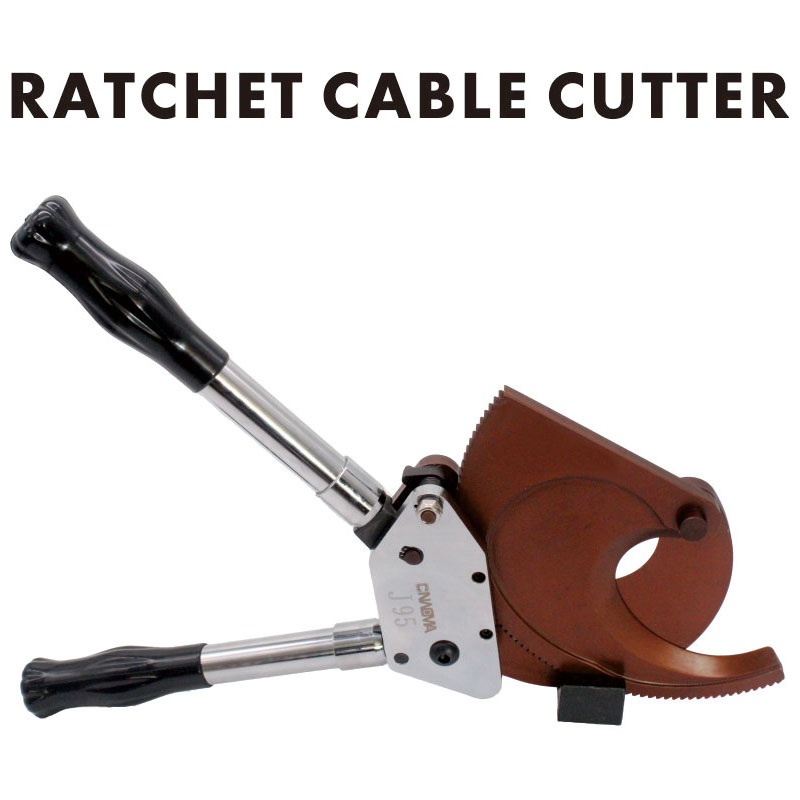
The central purpose of this article is to explore what defines a high-quality Ratchet Cable Cutter, why industries rely on it for safe and clean cable cutting, and how advanced design and manufacturing improve reliability and user experience. This includes a professional breakdown of product parameters, functional performance, operational principles, and future development trends shaping the next generation of cutting tools. Understanding these elements allows users to make better purchasing decisions and ensures they select equipment optimized for both efficiency and safety.
Key Product Parameters for a Professional-Grade Ratchet Cable Cutter
Below is an example of a specification structure commonly used for high-performance cutters:
| Parameter | Specification |
|---|---|
| Cutting Capacity | Copper/Aluminum Cables Up to 400–500 mm² |
| Cutting Type | Manual Ratchet Mechanism |
| Blade Material | Heat-Treated Alloy Steel / Hardened SK5 |
| Handle Material | Ergonomic Non-Slip TPR or PVC |
| Mechanism Structure | High-Torque Ratchet Drive |
| Weight | 0.9–1.5 kg (Depending on Model) |
| Length | 250–320 mm |
| Application | Electrical Wiring, Power Distribution, Industrial Cabling |
| Safety Features | One-Way Ratchet, Anti-Kickback Lock, Non-Conductive Coating |
| Maintenance | Replaceable Blades, Lubricated Gear Track |
These parameters reflect durability, cutting efficiency, and operator comfort—three primary factors that influence the long-term performance of cable cutting tools. Each specification plays a crucial role in ensuring the cutter performs consistently under frequent or heavy loads.
Why Are Ratchet Cable Cutters Preferred Over Traditional Cutting Tools?
Ratchet Cable Cutters solve multiple issues that traditional pliers or manual blade cutters cannot address. They deliver a clean, uniform cut while reducing physical labor, preventing cable deformation, and ensuring operational safety. Professionals choose them because they combine mechanical advantage with precision engineering, making them suitable for handling large-diameter and multi-strand conductors.
Why Do Clean Cuts Matter in Electrical and Industrial Work?
A clean cut prevents conductor fraying and ensures better connectivity when installing terminals, lugs, or wiring into distribution boxes. It also reduces installation time and minimizes risks related to uneven surfaces—especially critical in high-current or high-voltage systems.
Why Does the Ratchet Mechanism Improve Efficiency?
The ratcheting system applies incremental force rather than requiring a single heavy-pressure action. This provides:
-
Higher cutting torque without requiring strong manual grip
-
Better control, especially in confined spaces
-
Reduced fatigue during repetitive tasks
-
Improved safety, avoiding sudden slips or blade rebound
Why Are High-Hardness Blades Essential?
Cables—especially armored or thick multi-strand ones—contain materials that can dull low-quality blades quickly. Hardened steel blades maintain performance after thousands of cycles and resist damage when cutting dense conductor bundles.
Why Does Ergonomics Influence Professional Use?
A well-designed handle minimizes pressure on the hands and wrists. Technicians often perform cable cutting in difficult positions, so ergonomic grips can prevent strain injuries and improve long-term comfort.
Why Do Industrial Installations Require Non-Conductive Handles?
During electrical work, there is always the possibility of residual current, grounding issues, or accidental contact with live components. Tools with insulated, non-conductive handles provide an additional safety layer, reducing electrical risk.
How Does a Ratchet Cable Cutter Work and How Do Its Features Improve Real-World Applications?
A Ratchet Cable Cutter operates through a gear-based ratcheting system. When the user squeezes the handles, the mechanism advances the blade step by step. Each step locks into place, increasing force and preventing backward motion. This system allows the blade to cut through thick cables smoothly without requiring excessive manual strength.
How the Cutting Mechanism Works
-
Blade Engagement – The blade begins by gripping the cable’s outer layer.
-
Ratcheting Progression – With each squeeze, the blade moves forward incrementally.
-
High-Torque Application – The mechanism multiplies force, allowing efficient cutting.
-
Final Separation – The cable is cut cleanly, leaving a smooth end surface.
-
Release Mechanism – Once completed, a release lever resets the blade for the next cycle.
How Does This Mechanism Benefit Professional Work?
-
Cuts without crushing multi-strand conductors
-
Prevents material deformation, critical for high-accuracy wiring
-
Minimizes physical effort, even on thick cables
-
Enables precise cutting in tight or elevated working environments
-
Improves reliability, especially during repetitive use
How Product Structure Enhances Functionality
A professional Ratchet Cable Cutter typically includes:
-
Hardened steel blades for precise, long-lasting cuts
-
Reinforced ratchet gears designed to withstand high torque
-
Locking levers to control blade movement
-
Anti-slip handles for safe and stable gripping
-
Protective blade coating to resist corrosion
These design elements ensure stable operation across different industrial conditions, including HVAC installations, power grid maintenance, railway engineering, and heavy-equipment wiring.
How to Maintain a Ratchet Cable Cutter for Long-Term Use
Proper care is required to maintain performance:
-
Clean blades after each cutting operation
-
Apply light lubrication to ratchet gears regularly
-
Store in a dry environment to avoid rust
-
Replace worn blades promptly
-
Avoid using on steel-reinforced or hardened cables unless tool is designed for it
Maintenance ensures consistent cutting quality and extends product life.
What Future Trends Will Shape the Development of Ratchet Cable Cutters?
The tools industry is experiencing rapid improvement in material science, mechanical engineering, safety standards, and ergonomic design. These advancements are influencing how Ratchet Cable Cutters evolve.
Trend 1: Lightweight, High-Strength Materials
Manufacturers are shifting toward:
-
Heat-treated alloy steels
-
Coated carbon-steel blades
-
High-tensile composite handles
These materials balance strength with reduced weight for easier fieldwork.
Trend 2: Improved Safety Features
Future cutters may include:
-
Enhanced locking systems
-
Double-insulated handles
-
Non-slip safety composites
-
Gear protection covers
These features reduce injury risks in high-voltage environments.
Trend 3: Precision-Enhanced Engineering
Tools are becoming more accurate through:
-
Laser-sharpened blade technology
-
CNC-machined ratchet gears
-
User-friendly ergonomic profiles
This enhances efficiency and reduces error during installation.
Trend 4: Adaptation to New Cable Technologies
As communication, smart grid, and renewable energy systems evolve, cables become:
-
Larger
-
More complex
-
More diverse in material composition
Next-generation Ratchet Cable Cutters will need to handle wider ranges of conductor types, insulation thicknesses, and installation environments.
Frequently Asked Questions (FAQ)
Q1: What types of cables can a Ratchet Cable Cutter safely cut?
A: A Ratchet Cable Cutter is designed for copper and aluminum cables, multi-strand conductors, communication wires, double-insulated cables, and some types of soft-armored wiring. It cuts without flattening or deforming the conductor, ensuring smooth ends suitable for terminal connections.
Q2: How does the ratchet system make cutting easier compared with traditional cutters?
A: The ratchet mechanism multiplies applied force through incremental blade advancement. This removes the need for strong grip pressure, allows controlled cutting in tight spaces, and prevents cable deformation. It is significantly more efficient for large-diameter or multi-layer cables.
Q3: How long can the blades remain sharp under regular use?
A: High-quality hardened steel blades can remain sharp for thousands of cutting cycles when maintained properly. Regular cleaning, light lubrication, and avoiding materials beyond the rated capacity greatly extend the blade’s lifespan.
A Ratchet Cable Cutter is an essential tool for electricians, industrial technicians, communication installers, and maintenance teams who require precise and efficient cable cutting. Its high-torque ratcheting mechanism, durable blade construction, ergonomic safety features, and adaptability to modern cable materials make it a highly reliable option for professional work environments. As industries evolve and cable technologies expand, the demand for advanced, high-performance cutters is expected to grow steadily.
WOMA continues to develop reliable cutting solutions designed around durability, ergonomic handling, and high-precision engineering. For more detailed product information or professional consultation, contact us anytime.