

Article Summary
A mixing machine combines two or more materials to achieve a desired level of uniformity, consistency, or dispersion. The right machine depends on material properties, batch size, production targets, cleaning requirements, and the characteristics of the finished product. This guide explains common machine types, selection criteria, performance factors, maintenance practices, and troubleshooting methods to help manufacturers reduce process variation and make informed equipment decisions.
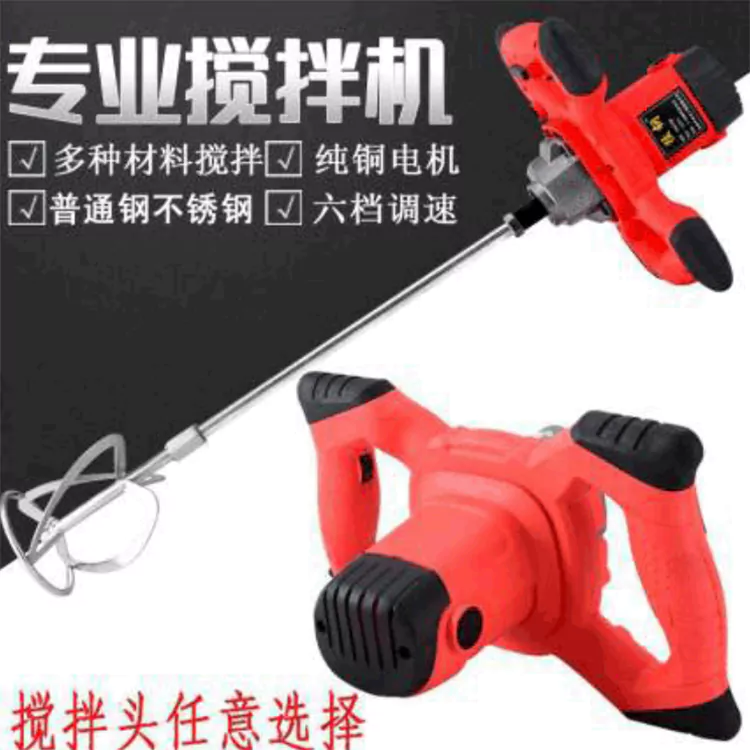
1. Understanding Mixing Machines
A mixing machine is industrial equipment designed to combine materials through mechanical movement. Depending on its configuration, it may use rotating blades, paddles, ribbons, screws, impellers, drums, or other mixing elements to move materials and distribute their components throughout a batch.
The objective is not always simply to make a material look uniform. A manufacturer may need to disperse a small quantity of an additive throughout a large batch, dissolve an ingredient in a liquid, distribute particles evenly, create a stable emulsion, or achieve a particular texture. Each task places different demands on the equipment.
For example, a free-flowing powder may mix effectively in a rotating drum or ribbon blender, while a thick paste may require a machine with greater torque and a mixing element designed for high-viscosity materials. A liquid formulation containing ingredients that do not naturally combine may require controlled agitation and a suitable impeller arrangement.
Understanding this distinction helps prevent a common purchasing mistake: selecting a machine based on its advertised capacity without confirming that it can achieve the required product quality.
2. How a Mixing Machine Works
Although designs vary, most mixing machines follow a similar operating sequence. Materials are loaded into a vessel or processing chamber, a drive system powers the mixing element, and mechanical movement distributes the ingredients. After the target mixing conditions are reached, the material is discharged for the next production stage.
Step 1: Material Loading
Operators load ingredients according to the production formula and specified batch size. The loading order may affect the result, particularly when combining liquids with powders, adding small quantities of active ingredients, or handling materials that tend to form lumps.
Step 2: Controlled Mixing
A motor and transmission system drive the mixing element at a suitable speed. The design determines how the material circulates, folds, shears, or moves through the chamber. Some applications need gentle movement to protect fragile particles; others need stronger mechanical action to break down agglomerates or distribute dense ingredients.
Step 3: Process Monitoring
Operators monitor relevant conditions, which may include mixing time, speed, temperature, motor load, or other process indicators. More advanced installations may use programmable controls and sensors. Monitoring helps identify changes that could affect repeatability, although the appropriate control strategy depends on the product and equipment design.
Step 4: Discharge and Verification
Once the required mixing endpoint is reached, the batch is discharged. Quality checks may include visual inspection, sampling, concentration measurements, particle distribution tests, or other product-specific methods. A repeatable procedure makes it easier to compare batches and identify process variation.
3. Common Types of Mixing Machines
Different machine designs serve different material characteristics and production objectives. The following comparison provides a starting point for equipment evaluation.
| Machine Type | Typical Materials | Key Characteristics | Selection Consideration |
|---|---|---|---|
| Ribbon Mixer | Dry powders and granules | Uses helical ribbons to move material in different directions | Check bulk density, fill level, and required uniformity |
| Paddle Mixer | Powders, granules, and some moist materials | Uses paddles to lift, fold, and redistribute material | Evaluate particle fragility and material flow behavior |
| Drum or Tumble Mixer | Free-flowing solids | Mixes through container rotation and material movement | Consider mixing time, available space, and segregation risk |
| Liquid Agitator | Liquids and low-to-medium viscosity formulations | Creates circulation and helps distribute liquid ingredients | Match impeller design to viscosity and circulation needs |
| High-Shear Mixer | Dispersions, emulsions, and difficult-to-disperse ingredients | Applies intense local shear to break down agglomerates or droplets | Assess heat generation, shear sensitivity, and energy demand |
| Planetary Mixer | Viscous pastes, doughs, creams, and similar materials | Mixing tools move through the vessel to reach different areas | Confirm torque, tool geometry, and bowl capacity |
These categories are broad rather than interchangeable specifications. Actual performance depends on the machine's geometry, drive system, operating settings, material properties, and manufacturer-rated limits. Some applications may also require a specialized or customized design.
4. Key Benefits for Manufacturers
More Consistent Product Quality
Uneven mixing can create differences in color, texture, concentration, strength, or performance between samples and batches. Properly matched equipment improves material distribution and makes it easier to establish repeatable operating procedures. Consistency still depends on correct loading, suitable settings, material preparation, and quality verification.
Improved Production Efficiency
Mechanical mixing can reduce the labor and time required compared with manual methods, especially when production volumes increase. A machine with appropriate capacity and discharge design can also reduce handling between processing steps and help keep the production line moving.
Reduced Material Waste
More controlled mixing may reduce the number of batches that require rework or disposal because of poor uniformity. Suitable vessel geometry and discharge arrangements can also limit retained product. The actual savings depend on the application and should be evaluated against the full operating cost.
Better Process Control
Adjustable speed, defined mixing time, and appropriate monitoring help operators reproduce established process conditions. For sensitive products, this can make the difference between an inconsistent manual operation and a controlled manufacturing procedure.
Safer and More Organized Workflows
Well-designed equipment can reduce repetitive manual handling and help keep materials within a designated processing area. Covers, guards, interlocks, emergency stops, and dust-control arrangements may further support safe operation when they are appropriate to the machine and working environment.
5. How to Select the Right Mixing Machine
Choosing a mixing machine should begin with the process requirements, not simply the largest capacity or highest motor power available. A machine that is too small may create bottlenecks, while an oversized machine can increase capital cost, energy consumption, cleaning effort, and the difficulty of processing small batches.
Evaluate Material Properties
Document whether the ingredients are liquid, powder, granules, paste, or a combination. For solids, consider particle size, bulk density, moisture content, flowability, abrasiveness, and the tendency to segregate. For liquids and pastes, assess viscosity, density, temperature sensitivity, and whether ingredients need to dissolve, disperse, or form an emulsion.
Calculate the Required Capacity
Distinguish between vessel volume, usable working volume, and actual batch mass. These values are not interchangeable. A powder's bulk density can vary considerably from that of a liquid, and a machine may require free space to achieve effective movement. Ask the manufacturer for recommended working ranges for the specific material.
Define the Mixing Result
Specify what a successful batch looks like and how it will be measured. Possible criteria include concentration uniformity, particle distribution, dispersion quality, texture, or a validated process endpoint. Where possible, arrange a material trial before making a final decision, especially for unusual or difficult-to-process ingredients.
Check Speed, Torque, and Drive Requirements
Rotational speed alone does not determine performance. High-viscosity materials may demand substantial torque even at relatively low speeds, while sensitive ingredients may require gentle movement. Review the motor, gearbox, mixing tool, speed-control range, and duty rating as a complete system.
Consider Cleaning and Material Compatibility
Wetted surfaces, seals, gaskets, and mixing tools must be compatible with the materials and cleaning agents involved. If the machine handles food, pharmaceuticals, cosmetics, chemicals, or other regulated products, confirm the applicable hygiene, documentation, surface-finish, and material requirements for the intended facility and market.
Compare Total Cost of Ownership
Purchase price is only one part of the investment. Include installation, energy, cleaning, routine maintenance, spare parts, operator training, downtime, and expected service life. A machine that costs more initially may offer better long-term value if it reliably meets quality and throughput targets.
6. Factors That Influence Mixing Quality
Even a well-designed mixing machine can deliver poor results when operating conditions are inappropriate. These factors should be considered during process development and routine production.
- Loading ratio: Overfilling can restrict material circulation, while underfilling may prevent the mixing elements from engaging the material effectively. Follow the recommended working range.
- Mixing speed: Excessive speed may create unwanted heat, foam, particle damage, or dust. Insufficient speed may leave unmixed areas or extend cycle time.
- Mixing duration: Longer mixing is not always better. Some materials can segregate after extended blending, while others require additional time to reach the desired dispersion.
- Ingredient addition sequence: The order and rate of adding materials can affect lump formation, wetting, dissolution, and final uniformity.
- Temperature control: Friction or high-shear action can raise product temperature. Sensitive formulations may require monitoring, cooling, or a different mixing method.
- Machine condition: Worn blades, damaged seals, loose fasteners, and drive problems can alter mixing performance or create safety concerns.
- Sampling method: A sample from one location may not represent the entire batch. Establish a sampling plan appropriate to the material and quality requirements.
For repeatable production, document the settings and procedures associated with an acceptable batch. Any change in raw materials, batch size, machine components, or operating conditions should be assessed to determine whether the established process remains suitable.
7. Industrial Applications of Mixing Machines
Mixing equipment is used across a wide range of manufacturing industries. The required design changes according to the product, production scale, and applicable process controls.
- Food processing: Combining dry ingredients, seasonings, powders, sauces, doughs, and other formulations. Equipment selection may prioritize cleanability, product protection, and cross-contamination control.
- Pharmaceutical manufacturing: Blending powders or preparing liquid and semi-solid formulations. Uniformity, validated procedures, traceability, and cleaning controls can be especially important.
- Cosmetics and personal care: Producing creams, lotions, gels, and pigment-containing formulations. Viscosity, dispersion, aeration, and temperature may influence the final result.
- Chemical production: Combining liquids, powders, additives, or reactive ingredients. Material compatibility, ventilation, containment, and process hazards must be assessed.
- Construction materials: Blending dry mortar components, cementitious materials, fillers, and additives. Abrasion resistance and effective handling of dense materials may be priorities.
- Plastics and composite materials: Distributing colorants, fillers, and functional additives. The required shear level and temperature limits depend on the material system.
- Agriculture and animal feed: Combining grains, powders, minerals, and nutritional ingredients. Consistent distribution of small-dose ingredients can be particularly important.
These examples are starting points rather than a universal equipment recommendation. Two products within the same industry may require different mixer designs because their physical properties and process objectives differ.
8. Cleaning and Maintenance Practices
Routine maintenance helps protect equipment reliability, product quality, and operator safety. The maintenance schedule should follow the manufacturer's instructions and reflect the actual duty cycle, material characteristics, and production environment.
Daily and Routine Checks
- Inspect the mixing vessel, blades, paddles, shafts, seals, and accessible connections for visible damage or unusual wear.
- Check for abnormal vibration, unexpected noise, overheating, leakage, or changes in motor load during operation.
- Clean product-contact surfaces using the approved procedure and verify that residues are removed.
- Confirm that guards, covers, interlocks, and emergency-stop devices are in place and functioning as intended.
- Record relevant operating observations and report recurring abnormalities before they develop into major failures.
Periodic Maintenance
- Inspect drive belts, couplings, bearings, gearboxes, fasteners, and lubrication points according to the maintenance schedule.
- Check seals and gaskets for wear, chemical damage, or loss of sealing performance.
- Verify speed controls, sensors, electrical connections, and protective devices where applicable.
- Replace worn components with approved parts and confirm alignment after relevant maintenance work.
- Review maintenance records to identify recurring faults, avoidable downtime, and potential improvements.
Always isolate the power supply and follow the required lockout and safety procedures before cleaning, inspection, or maintenance that exposes moving parts. Never reach into a vessel or bypass a safety interlock while the machine is energized. If the equipment handles hazardous substances, follow the appropriate decontamination and protective-equipment procedures.
Cleaning requirements vary significantly. Some machines can be cleaned using a validated manual procedure, while others may need dedicated wash systems or specialized arrangements. Confirm that the chosen method is compatible with the machine, the product, and the facility's safety requirements.
9. Common Problems and Practical Solutions
When mixing performance changes, investigate the process systematically rather than increasing speed or mixing time without understanding the cause.
| Observed Problem | Possible Cause | Recommended Action |
|---|---|---|
| Uneven mixing | Incorrect fill level, poor loading sequence, unsuitable tool design, or insufficient mixing | Review the batch procedure, check the recommended working range, and verify the result using representative samples |
| Excessive temperature rise | High friction, excessive speed, long processing time, or inadequate cooling | Review operating conditions and assess whether temperature monitoring or cooling is required |
| Unusual vibration or noise | Loose components, misalignment, worn bearings, imbalance, or foreign material | Stop the machine safely and arrange an inspection before returning it to service |
| Slow discharge | Material bridging, high viscosity, unsuitable outlet design, or incomplete flow | Check material behavior and discharge arrangements; never clear a blockage while the machine is running |
| Unexpected motor overload | Excessive batch load, material change, mechanical resistance, or drive-system problems | Stop and investigate the load, material specifications, and mechanical condition before restarting |
| Product residue after cleaning | Hard-to-reach surfaces, unsuitable cleaning procedure, or product buildup | Review cleaning access, approved cleaning methods, and equipment design with the supplier |
Record when the problem occurs, which materials are involved, and whether the issue began after a change in formulation, batch size, or machine setting. This information helps maintenance personnel and equipment suppliers narrow down the cause more efficiently.
10. Frequently Asked Questions
Q1. What is the main purpose of a mixing machine?
A mixing machine combines materials to achieve a specified degree of uniformity, dispersion, dissolution, or consistency. Its exact function depends on the material properties and the production objective.
Q2. What materials can a mixing machine process?
Depending on its design, a machine may process powders, granules, liquids, pastes, creams, or combinations of these materials. Not every machine can handle every material, so compatibility should be confirmed before purchase.
Q3. How do I choose the correct mixing machine capacity?
Start with the required batch mass, material density, working-volume range, production frequency, and available cycle time. Confirm the recommended loading range with the manufacturer instead of relying only on the vessel's nominal volume.
Q4. Is a higher mixing speed always better?
No. Higher speed may improve circulation or dispersion in some applications, but it can also generate heat, foam, dust, or unwanted particle damage. The suitable speed depends on the machine design and the material being processed.
Q5. How long should a mixing process take?
There is no universal mixing time. It depends on material properties, batch size, machine geometry, loading sequence, and the required result. Establish the endpoint through appropriate process trials and quality checks.
Q6. Can one mixing machine handle multiple products?
Some machines can process multiple products when their material properties and operating requirements fall within the machine's design limits. Evaluate cleaning, cross-contamination risks, changeover time, and whether different products require different mixing tools or settings.
Q7. Which materials should contact the product inside the machine?
Product-contact materials should be compatible with the ingredients, operating temperature, cleaning agents, and applicable industry requirements. Stainless steel is used in many applications, but the appropriate grade and surface finish depend on the specific process.
Q8. What maintenance does a mixing machine require?
Typical tasks include cleaning, inspecting mixing tools and seals, checking the drive system, monitoring unusual vibration or noise, and following the prescribed lubrication and component-replacement schedule. The exact program should follow the equipment manufacturer's instructions.
Q9. How can manufacturers reduce mixing-related waste?
Use equipment matched to the material, establish consistent loading procedures, monitor key process conditions, verify batch uniformity, and maintain the machine. Reviewing failed batches can reveal whether the main cause is material variation, process settings, or equipment limitations.
Q10. What information should I provide when requesting a quotation?
Provide the material type and properties, batch size, desired output, target mixing result, expected production volume, cleaning requirements, operating environment, and available utilities. Sample materials or product specifications may also help the supplier evaluate the application.
11. Make Mixing Performance a Reliable Part of Production
A mixing machine is more than a piece of production equipment. It is a key part of the process that determines whether ingredients are distributed consistently, batches meet specifications, and production targets remain achievable. Choosing the wrong design can lead to uneven results, unnecessary energy use, difficult cleaning, and repeated downtime.
The most effective approach is to define the desired mixing outcome, understand the materials, verify the appropriate working capacity, and evaluate the complete machine system. Operating procedures, preventive maintenance, representative sampling, and process monitoring then help preserve performance over time.
For manufacturers planning a new production line or upgrading existing equipment, a careful review of these factors can reduce purchasing uncertainty and support more dependable day-to-day operations.
Looking for a Mixing Machine for Your Production Needs?
Choosing suitable mixing equipment starts with understanding your materials, batch requirements, and production goals. Zhouxun Machinery can be part of your equipment evaluation process as you explore configurations suited to your application. Share your material characteristics, target capacity, and process requirements to discuss potential solutions and clarify the specifications that matter most.
Whether you are planning a new production line or improving an existing mixing process, take the next step toward more consistent and efficient manufacturing. For product information, configuration discussions, and assistance with your project, contact us to discuss your mixing machine requirements.