

What Is a Circulating Air Fan and How Does It Improve Indoor Air Movement
2026-09-23
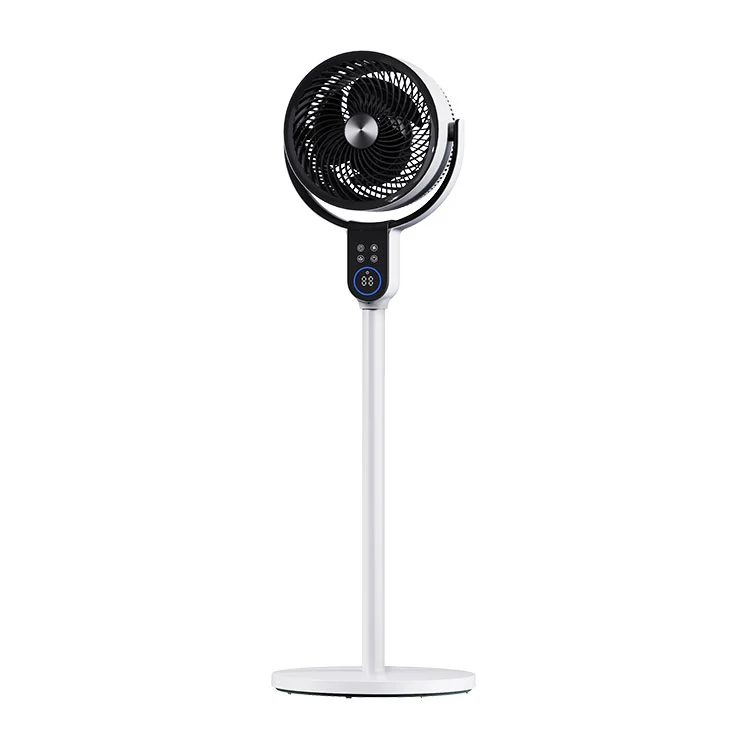
A Circulating Air Fan is designed to keep air moving continuously through a room rather than simply producing a localized breeze. From residential spaces and commercial buildings to workshops, warehouses, offices, and production areas, effective air circulation can make indoor environments more comfortable and help distribute conditioned air more evenly.
Understanding the Role of Air Circulation
Indoor air does not naturally remain evenly distributed. Warm air may accumulate near ceilings, cooler air can settle in lower areas, and corners or areas behind equipment may receive little airflow. Even when an air-conditioning system is operating, some parts of a room can feel noticeably warmer or more stagnant than others.
A circulating fan addresses this problem by creating a broader movement of air. Instead of depending entirely on the cooling or heating system to distribute conditioned air, the fan helps push existing air through the occupied space. This can make temperature differences less noticeable and improve the overall feeling of ventilation.
The practical value is particularly noticeable in large or open spaces. A properly positioned fan can move air across a greater distance, helping airflow reach locations that are outside the strongest output area of an HVAC system.
What Problems Can a Circulating Air Fan Address?
Choosing a fan based only on motor power or blade diameter can lead to disappointing results. The actual requirement usually begins with a specific airflow problem. Understanding that problem makes it easier to select the appropriate fan configuration.
Stagnant Air Areas
Rooms with furniture, machinery, shelving, partitions, or irregular layouts can develop areas where air movement is weak. Directed airflow can help reduce these stagnant zones.
Uneven Temperature
Warm and cool air can collect in different parts of a room. Circulation helps blend the air and can reduce noticeable temperature differences.
Limited HVAC Distribution
Air-conditioning outlets may not distribute conditioned air equally throughout a large space. Fans can supplement the existing airflow pattern.
Heat Accumulation
Workshops, commercial kitchens, warehouses, and equipment areas may generate localized heat. Continuous airflow can help move accumulated warm air toward areas where it can be managed more effectively.
How Does a Circulating Air Fan Move Air?
The basic operating principle is straightforward. Electrical energy powers a motor, the motor rotates the fan blades, and the blades accelerate surrounding air to create an airflow pattern. However, the final airflow performance depends on much more than simply turning the blades.
Motor Performance
The motor determines how consistently the fan can operate and how effectively it maintains its selected speed. For commercial or continuous-use applications, stable motor operation is especially important because inconsistent performance can affect airflow and operating costs.
Blade Geometry
Blade number, pitch, shape, diameter, and material influence how air is moved. A larger blade does not automatically mean better performance. The blade design must work together with the motor, housing, speed, and intended installation environment.
Airflow Direction
Directional control can significantly affect the useful coverage of a fan. A fan aimed directly toward a wall may create a different circulation pattern from one positioned to push air across an open floor or toward a higher area.
Speed Control
Different environments require different airflow levels. Adjustable speed allows operators to balance airflow, acoustic comfort, and power consumption according to actual conditions.
Which Specifications Matter Most?
Product specifications should be evaluated according to the intended application rather than viewed individually. A fan with a powerful motor may not be the right choice if it produces excessive noise or cannot provide the required airflow pattern.
| Specification | Why It Matters | Typical Buyer Concern |
|---|---|---|
| Airflow Volume | Indicates how much air the fan can move over a given period. | Is the airflow sufficient for the room or working area? |
| Motor Power | Influences operating capability and overall energy demand. | Can the motor maintain stable operation during extended use? |
| Fan Diameter | Affects the scale and characteristics of the airflow pattern. | Will the size suit the available installation space? |
| Speed Settings | Provides flexibility for different operating conditions. | Can users adjust airflow without replacing the unit? |
| Noise Level | Important in offices, retail spaces, schools, and other occupied areas. | Will the fan remain comfortable during prolonged operation? |
| Oscillation | Broadens the area affected by moving air. | Does the application require wide-area airflow? |
| Construction Material | Influences durability, weight, appearance, and maintenance. | Can the housing withstand the intended environment? |
Where Is a Circulating Air Fan Commonly Used?
Because the primary function is air movement, these fans can be applied across many environments. The correct model depends on room size, operating duration, required airflow, mounting conditions, and surrounding temperature.
- Homes: bedrooms, living areas, kitchens, garages, and utility spaces where additional air movement is needed.
- Offices: helps distribute conditioned air and reduce uncomfortable stagnant areas.
- Retail stores: supports air movement in open customer areas and back-of-house spaces.
- Warehouses: assists airflow across large spaces where natural circulation may be limited.
- Workshops: helps move warm air away from localized work areas.
- Restaurants and food-service areas: provides additional air movement where appropriate to the ventilation design.
- Factories: can supplement existing ventilation and HVAC systems in selected production areas.
- Gyms and recreational facilities: supports continuous air movement in spaces with high occupant activity.
In industrial environments, a circulating fan should not automatically be treated as a substitute for engineered ventilation. Areas containing dust, fumes, flammable gases, or hazardous substances may require specially designed ventilation equipment and electrical protection.
How Does Room Layout Affect Fan Performance?
A fan's rated airflow does not tell the entire story. The room itself determines how effectively that airflow is converted into useful circulation. Walls, ceilings, shelving, machinery, partitions, and furniture can redirect or obstruct moving air.
Open Spaces
In an open warehouse or large commercial room, a fan can often move air over a considerable distance. The installation height and airflow direction become important because air may need to travel above equipment or across a wide floor area.
Partitioned Rooms
Multiple partitions can interrupt airflow. In such environments, several smaller circulation points may work more effectively than relying on one high-output unit.
High Ceilings
High-ceiling spaces may experience temperature stratification, with warmer air accumulating above the occupied zone. Air movement can help mix these layers, although the fan's orientation and mounting height should be considered carefully.
What Should Buyers Check Before Purchasing?
For distributors, importers, contractors, and commercial buyers, product selection involves more than checking a catalog photograph. Technical information should correspond with the actual application and expected operating conditions.
- Confirm the required voltage and frequency for the destination market.
- Check airflow specifications using consistent measurement conditions.
- Determine the appropriate fan diameter for the installation area.
- Review available speed settings and control methods.
- Ask about motor construction and expected operating duration.
- Check noise specifications when the fan will operate near people.
- Confirm oscillation, tilt, mounting, or directional adjustment options.
- Evaluate housing and blade materials according to the working environment.
- Review electrical safety requirements applicable to the target market.
- For private-label projects, confirm OEM packaging, labeling, and customization capabilities.
How Can Businesses Choose a Fan for Long-Term Supply?
A single purchase and a long-term supply program have different requirements. Distributors and brand owners need consistency across batches, stable specifications, dependable communication, and documentation that supports their sales and compliance requirements.
Jianhui Electric works with buyers who need practical electric fan solutions for different market applications. When evaluating a supplier, buyers can ask for product drawings, electrical specifications, performance data, packaging details, sample arrangements, and production lead times before placing larger orders.
| Buyer Requirement | Information to Confirm |
|---|---|
| Product Consistency | Whether key specifications remain consistent between production batches. |
| Private Label | Logo printing, labels, packaging, manuals, and other branding options. |
| Electrical Configuration | Voltage, frequency, plug type, power rating, and applicable requirements. |
| Order Planning | MOQ, sample availability, production capacity, and lead time. |
| Market Support | Product specifications, images, manuals, packaging information, and technical documentation. |
Common Mistakes When Selecting a Circulating Air Fan
Focusing Only on Motor Wattage
Higher power consumption does not automatically mean that a fan provides a more useful airflow pattern. Motor power should be evaluated together with airflow, blade design, speed, and application.
Ignoring Noise
A fan installed in a factory may tolerate a different acoustic level from one used in an office, hotel, classroom, or bedroom. Noise should therefore be considered during the initial selection process.
Choosing by Room Size Alone
Two rooms with the same floor area can require different airflow solutions because their ceiling heights, layouts, heat sources, occupancy, and obstructions may differ.
Overlooking Installation Conditions
Clearance, mounting position, available power supply, accessibility for cleaning, and the surrounding environment can all influence practical performance.
Maintenance Practices That Help Preserve Performance
Dust accumulation on blades, protective grilles, and motor components can gradually affect airflow and increase operating resistance. Regular inspection helps maintain stable performance and provides an opportunity to identify unusual vibration, noise, or electrical issues.
- Disconnect the power supply before cleaning or servicing the fan.
- Keep blades and protective grilles free from excessive dust buildup.
- Check for unusual vibration or changes in operating noise.
- Inspect cables, plugs, switches, and visible electrical components regularly.
- Keep air inlets and outlets unobstructed during operation.
- Follow the manufacturer's maintenance instructions for lubrication or component replacement where applicable.
Fans used in demanding commercial or industrial environments may require a more structured maintenance schedule. Operating conditions should determine the inspection frequency.
Frequently Asked Questions
What is the main purpose of a Circulating Air Fan?
Its main purpose is to move and redistribute existing indoor air. It can reduce stagnant areas and help create a more uniform airflow pattern, but it is not necessarily a replacement for an air conditioner or engineered ventilation system.
Does a circulating fan actually lower room temperature?
The fan itself generally does not remove heat from the room. However, moving air can improve perceived comfort and can help distribute conditioned air more evenly when used with an HVAC system.
Is a larger fan always more powerful?
Not necessarily. Useful airflow depends on blade design, motor characteristics, rotational speed, fan geometry, and operating conditions. A larger diameter alone does not determine overall performance.
Can circulating fans be used in warehouses?
Yes, they are commonly considered for large indoor areas where additional air movement is required. The appropriate model depends on ceiling height, floor layout, obstructions, heat sources, and the required airflow coverage.
What should importers ask a fan manufacturer?
Buyers should request detailed electrical specifications, airflow data, product dimensions, materials, noise information, packaging details, applicable certifications, MOQ, lead time, sample policy, and OEM or private-label options.
Can a circulating fan run continuously?
Continuous operation depends on the specific motor, product design, ambient conditions, and manufacturer's rated operating requirements. Buyers should confirm the intended duty cycle before selecting a model for extended operation.
Making Airflow Work More Effectively
Selecting the right circulating fan is ultimately about matching airflow behavior with the environment in which the equipment will operate. Room dimensions, air distribution, installation position, motor performance, noise requirements, electrical configuration, and operating duration should all be considered together.
For residential users, the priority may be quiet operation and flexible adjustment. For commercial buyers, consistency, durability, packaging, and electrical compatibility may be more important. Industrial applications can require additional attention to environmental conditions, duty cycle, airflow coverage, and installation requirements.
Jianhui Electric can provide product information and discuss configurations according to different market and application requirements. For distributors, importers, project contractors, and private-label buyers looking for dependable air-movement products, clear technical communication at the beginning of a project can help avoid costly specification changes later.
Looking for the Right Air Circulation Solution?
Whether you need circulating fans for distribution, commercial projects, OEM programs, or a specific application, Jianhui Electric can help you review the relevant specifications and product requirements. Share your target market, electrical requirements, quantity, and application details to discuss a suitable solution.
Need product specifications or a quotation? Contact us.
Contact Us