

How to Choose the Right POP Bandage for Medical Applications?
2025-12-24
Abstract: This article explores the essential aspects of POP Bandage, providing a detailed overview of its specifications, applications, and practical guidance for medical professionals. It aims to answer common questions, compare usage scenarios, and provide insights for optimal selection in clinical settings.
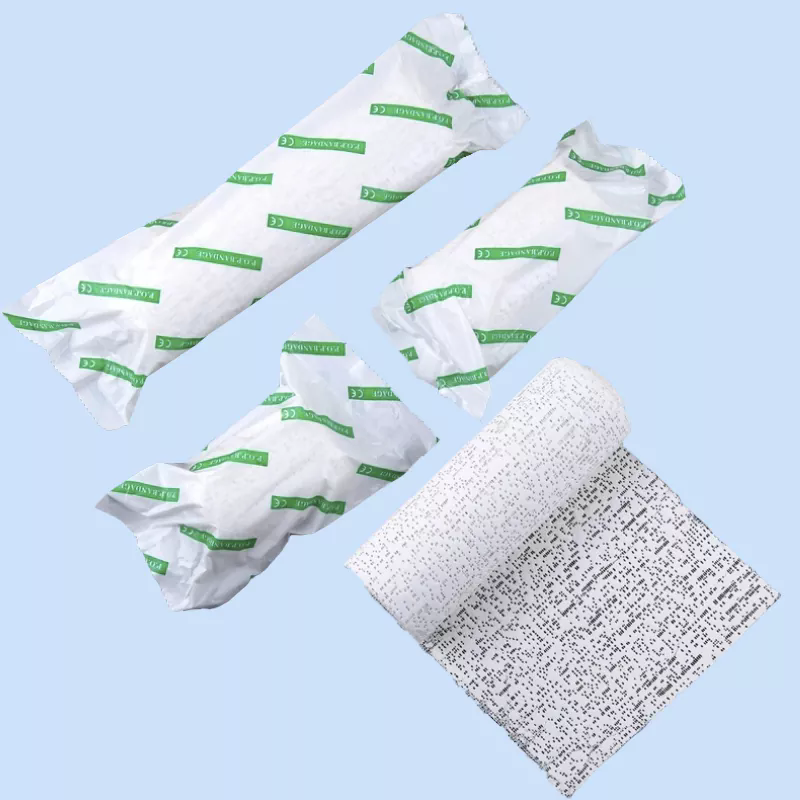
Table of Contents
Introduction to POP Bandage
POP (Plaster of Paris) Bandage is widely used in medical settings for immobilization, fracture management, and orthopedic treatments. The product consists of high-quality gauze impregnated with plaster, which allows for rapid setting and strong support when applied to injured areas. POP Bandages provide healthcare professionals with reliable and versatile solutions for patient care.
This article focuses on providing comprehensive knowledge of POP Bandage, including its technical specifications, clinical applications, and answers to frequently asked questions. The aim is to guide medical professionals in selecting the most suitable product for their specific needs.
POP Bandage Specifications
POP Bandages are available in a range of grades and widths, designed for various medical purposes. The following table summarizes key parameters:
| Parameter | Description |
|---|---|
| Composition | High-quality Plaster of Paris impregnated gauze |
| Width | 5 cm, 7.5 cm, 10 cm |
| Setting Time | 2–5 minutes (initial), 10–15 minutes (final) |
| Packaging | Rolls of 2 meters or 5 meters, individually wrapped |
| Applications | Fracture immobilization, orthopedic casts, splints |
Frequently Asked Questions about POP Bandage
1. How should POP Bandage be stored to maintain quality?
POP Bandage should be stored in a dry, cool environment to prevent premature hydration. Avoid exposure to humidity, water, or damp surfaces. Proper storage ensures consistent setting time and durability of the bandage during clinical use.
2. How to apply a POP Bandage correctly on a fractured limb?
First, clean and position the injured limb. Apply a soft padding layer to protect the skin, then wrap the POP Bandage evenly, avoiding excessive tension. Smooth and mold the bandage as it begins to set. Ensure proper alignment and check circulation frequently during application to prevent complications.
3. How long does it take for POP Bandage to fully harden?
The initial set occurs within 2–5 minutes, allowing for molding and shaping. Complete hardening usually takes 10–15 minutes depending on ambient temperature and humidity. After full setting, the bandage provides rigid support suitable for patient mobility restrictions.
4. Can POP Bandage be used for all age groups?
Yes, POP Bandage can be adapted for adults, children, and elderly patients. The width and layer thickness should be adjusted according to the size of the limb and fracture type to ensure proper immobilization without compromising comfort.
5. What precautions should be taken during removal of POP Bandage?
Use a specialized cast saw or scissors to carefully remove the bandage. Avoid forcing the material to prevent skin injuries. Post-removal, inspect the skin for irritation or pressure marks, and provide appropriate care if necessary.
Brand and Contact Information
Haorun offers premium POP Bandage solutions, manufactured with rigorous quality control to meet international medical standards. With a commitment to reliability and performance, Haorun ensures healthcare professionals have access to effective immobilization products for a variety of orthopedic needs.
For more information or to place an order, please contact us directly. Our expert team is ready to provide guidance on product selection, application techniques, and bulk purchasing options.