

How Does EAS AM Hard Tag Improve Retail Security and Prevent Theft?
2026-07-03
Abstract: EAS AM Hard Tag is a core component of modern retail security systems designed to reduce inventory loss, prevent shoplifting, and improve store operational efficiency. This article explains how EAS AM Hard Tags work, why they are widely adopted in retail environments, and how businesses can implement them effectively. It also includes practical insights, comparisons, and FAQs to help retailers make informed decisions and strengthen their loss prevention strategies.
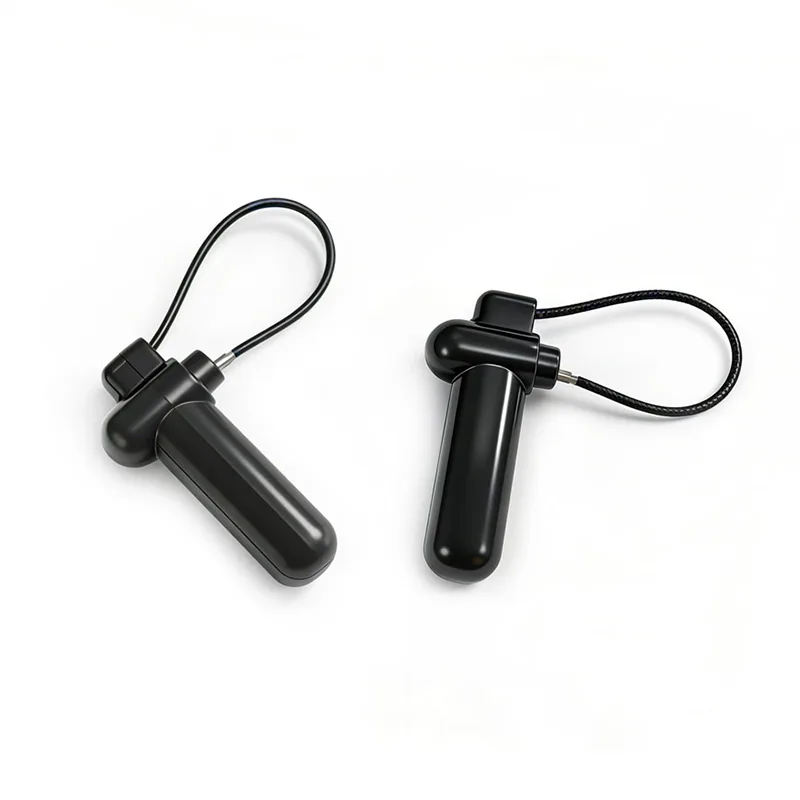
Table of Contents
- Article Outline
- 1. Introduction: Retail Theft Challenges
- 2. What is an EAS AM Hard Tag?
- 3. How EAS AM Technology Works
- 4. Key Benefits of EAS AM Hard Tags
- 5. Technology Comparison Table
- 6. Implementation Best Practices
- 7. Common Retail Mistakes
- 8. Industry Applications
- 9. Why LIFANGMEI Solutions Stand Out
- 10. Frequently Asked Questions
Article Outline
This article breaks down the EAS AM Hard Tag system into practical sections: definition, working mechanism, benefits, comparative analysis with other tagging technologies, deployment strategies, and real-world retail applications. It also addresses common retailer concerns and provides actionable guidance supported by industry practices.
1. Introduction: Retail Theft Challenges
Retail theft remains one of the most persistent challenges for physical stores worldwide. Shrinkage caused by shoplifting, internal theft, and administrative errors can significantly impact profit margins. In high-traffic retail environments such as apparel stores, supermarkets, and electronics outlets, even small losses accumulate into substantial financial damage over time.
To combat this issue, retailers increasingly rely on Electronic Article Surveillance (EAS) systems, particularly AM (Acousto-Magnetic) Hard Tags. These devices serve as a physical deterrent and an electronic tracking mechanism, making unauthorized product removal much more difficult.
2. What is an EAS AM Hard Tag?
An EAS AM Hard Tag is a reusable security device attached to merchandise in retail stores. It works with AM detection systems installed at store exits. If an item with an active tag passes through detection gates without proper deactivation, an alarm is triggered.
Unlike adhesive labels, hard tags are made of durable plastic and require a specialized detacher for removal, ensuring that only authorized personnel can disengage them at checkout.
- Reusable design: Can be used multiple times across inventory cycles
- Strong physical deterrent: Visible and difficult to remove without tools
- High detection accuracy: Works effectively even in dense product environments
3. How EAS AM Technology Works
The AM system operates using low-frequency magnetic fields. The hard tag contains a strip of amorphous metal that responds to a specific frequency generated by antenna gates placed at store exits.
When an active tag enters the detection zone, it resonates at a fixed frequency. The receiving antennas identify this signal and trigger an alarm if the tag has not been deactivated at checkout.
This process involves three key components:
- Hard Tag: Attached to merchandise for protection
- Deactivator/Detacher: Removes or deactivates tag at point of sale
- EAS Gate System: Detects active tags at exits
4. Key Benefits of EAS AM Hard Tags
Retailers adopt AM Hard Tags for several operational and financial reasons. Their benefits extend beyond theft prevention to overall store efficiency.
- Reduced shrinkage: Significant decrease in inventory loss
- Operational efficiency: Streamlined checkout and security processes
- Customer experience improvement: Less manual inspection at exits
- Durability: Long-term reuse reduces replacement cost
- High compatibility: Works across multiple retail categories
5. Technology Comparison Table
The following table highlights the differences between AM Hard Tags and other common EAS technologies:
| Feature | AM Hard Tag | RF Tag | Soft Label |
|---|---|---|---|
| Durability | High | Medium | Low |
| Reusability | Yes | Limited | No |
| Detection Accuracy | Very High | Medium | Medium |
| Cost Efficiency | Long-term high efficiency | Moderate | Low |
| Best Use Case | Apparel, electronics | General retail | Low-cost goods |
6. Implementation Best Practices
Proper implementation of EAS AM Hard Tags is essential for maximizing their effectiveness. Retailers should consider the following practices:
- Place tags consistently on high-risk items
- Train staff on correct tagging and detaching procedures
- Position EAS gates at all customer exit points
- Regularly test detection systems for accuracy
- Maintain detachers and tags to avoid operational delays
7. Common Retail Mistakes
Even with advanced systems, improper usage can reduce effectiveness. Some common mistakes include:
- Incorrect tag placement reducing detection efficiency
- Failure to deactivate tags at checkout
- Using incompatible tags and detection systems
- Neglecting staff training on EAS procedures
Addressing these issues ensures the system performs at its full potential.
8. Industry Applications
EAS AM Hard Tags are widely used across multiple retail industries due to their versatility and reliability:
- Fashion retail: Clothing, shoes, and accessories
- Electronics stores: Small high-value devices
- Pharmacies: Over-the-counter medical products
- Supermarkets: Select high-risk packaged goods
9. Why LIFANGMEI Solutions Stand Out
LIFANGMEI provides professional-grade EAS AM Hard Tag solutions designed to meet modern retail security demands. Their products focus on durability, detection accuracy, and ease of integration into existing retail environments.
By combining engineering precision with practical retail insights, LIFANGMEI helps businesses reduce shrinkage while maintaining smooth customer flow. Their tagging systems are widely applicable across global retail sectors, supporting scalable deployment for both small shops and large chains.
10. Frequently Asked Questions
What makes AM Hard Tags more secure than labels?
AM Hard Tags are physically robust and require specialized tools for removal, making them significantly harder to bypass compared to adhesive labels.
Can AM Hard Tags be reused?
Yes, they are designed for repeated use, making them cost-effective for long-term retail operations.
Do AM Hard Tags damage products?
No, when applied correctly, they do not damage merchandise. They are designed for safe attachment and removal.
Are AM systems suitable for small businesses?
Yes, small retailers can benefit significantly from reduced theft and improved inventory control.
What industries benefit most from AM Hard Tags?
Fashion retail, electronics, supermarkets, and pharmacies are the primary beneficiaries due to high shrinkage risk.
Final Note: Effective retail security is no longer optional in competitive markets. Integrating EAS AM Hard Tags can significantly enhance protection, operational control, and profitability.
For professional consultation and tailored solutions, contact us at LIFANGMEI today to explore how our EAS AM Hard Tag systems can strengthen your retail security infrastructure.