

How Does an Outdoor Protective Enclosure Protect Equipment in Harsh Environments?
2026-08-24
Article Summary: Outdoor electronic and electrical equipment is exposed to rain, dust, sunlight, temperature changes, corrosion, wind, accidental impact, and unauthorized access. An Outdoor Protective Enclosure provides a dedicated physical barrier between sensitive equipment and these external threats. However, choosing the right enclosure requires more than selecting a weather-resistant cabinet. Material, sealing, thermal management, mounting method, internal layout, security, and maintenance accessibility all influence long-term performance. This guide explains how Outdoor Protective Enclosures work, what design features matter most, and how to select a suitable solution for telecommunications, industrial automation, surveillance, digital signage, transportation, and smart infrastructure projects.
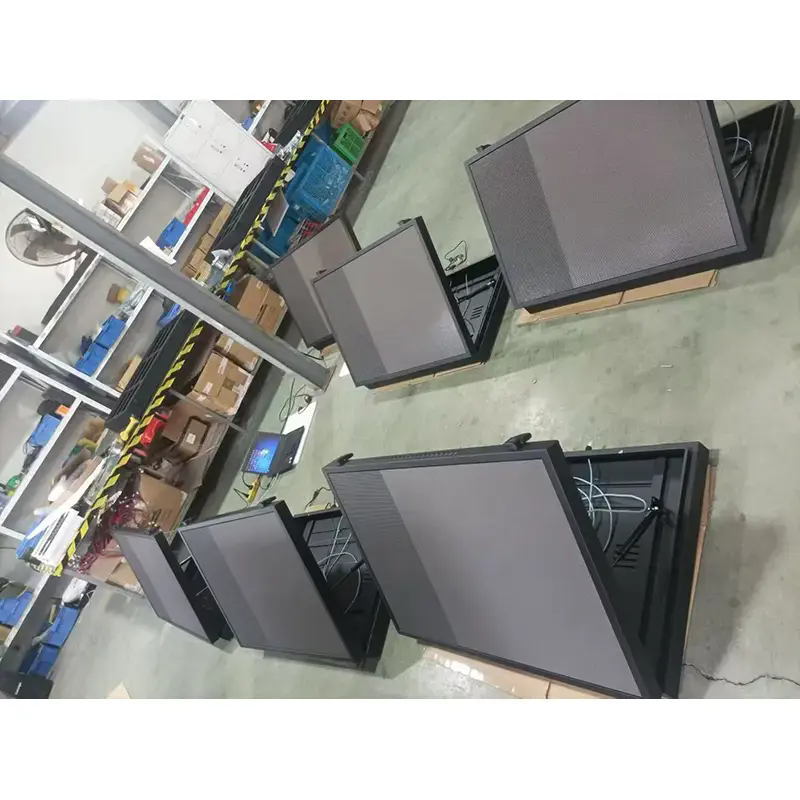
Article Outline
- Understanding the purpose of an Outdoor Protective Enclosure
- How an Outdoor Protective Enclosure protects sensitive equipment
- Key environmental threats that should be considered
- Important enclosure design features
- How to select the right material
- Thermal management and ventilation considerations
- Installation options for different applications
- Common applications and industry requirements
- How to evaluate a manufacturer and customization service
- Maintenance practices for longer service life
- Frequently Asked Questions
Table of Contents
- What Is an Outdoor Protective Enclosure?
- How Does an Outdoor Protective Enclosure Protect Equipment?
- What Outdoor Threats Can Damage Equipment?
- Which Design Features Matter Most?
- How Should You Choose the Enclosure Material?
- Why Is Thermal Management Important?
- Which Installation Method Is Suitable?
- Where Are Outdoor Protective Enclosures Used?
- How Should You Evaluate a Manufacturer?
- How Can You Maintain an Outdoor Protective Enclosure?
- Outdoor Protective Enclosure Selection Checklist
- Frequently Asked Questions
- Conclusion
What Is an Outdoor Protective Enclosure?
An Outdoor Protective Enclosure is a specially engineered housing system used to protect electrical, electronic, communication, automation, display, and control equipment installed outside buildings. Unlike an ordinary indoor cabinet, an outdoor enclosure must account for continuously changing environmental conditions.
Outdoor equipment can face moisture in the morning, intense solar radiation during the afternoon, dust carried by wind, condensation at night, and large temperature fluctuations over the course of a single day. In coastal or industrial locations, salt spray and corrosive airborne contaminants can create additional challenges.
The enclosure therefore acts as the first line of defense. Its structure, doors, seals, surface treatment, mounting system, ventilation arrangement, and cable-entry design work together to reduce environmental exposure and protect the equipment inside.
For projects where equipment downtime can interrupt communication, transportation, industrial production, public information services, or security systems, proper enclosure selection is an important part of overall system reliability.
How Does an Outdoor Protective Enclosure Protect Equipment?
The primary function of an Outdoor Protective Enclosure is to create a controlled physical environment around sensitive components. The enclosure does not simply surround the equipment; its construction must address several different failure mechanisms at the same time.
1. Protection Against Water
Rainwater is one of the most obvious outdoor hazards. Water entering through doors, joints, cable openings, ventilation points, or poorly sealed interfaces can cause corrosion, insulation problems, short circuits, and premature component failure.
A properly engineered enclosure uses appropriate sealing structures, protected openings, sloped surfaces, drainage considerations, and carefully designed cable-entry points to reduce the possibility of water reaching internal components.
2. Protection Against Dust and Contaminants
Fine dust can accumulate on electronic components and heat-transfer surfaces. In industrial areas, airborne particles may also contain chemicals or other contaminants that accelerate corrosion.
A well-designed enclosure limits unnecessary air exchange while maintaining the thermal conditions required by the equipment.
3. Protection Against Solar Radiation
Direct sunlight can increase the internal temperature of an enclosure significantly. Long-term UV exposure can also degrade unsuitable exterior materials and finishes.
Material selection, surface treatment, enclosure geometry, ventilation, and optional thermal-control systems should therefore be considered together when equipment will operate under strong sunlight.
4. Physical and Security Protection
Outdoor equipment may be installed in public spaces, roadside infrastructure, industrial sites, or remote locations. The enclosure should provide appropriate structural strength and controlled access.
Reinforced doors, secure locks, robust hinges, and suitable mounting structures can reduce the risk of accidental damage, unauthorized access, or equipment tampering.
What Outdoor Threats Can Damage Equipment?
Before selecting an enclosure, it is useful to identify the actual environmental conditions at the installation site. A cabinet that performs well in a sheltered urban location may not be suitable for an exposed coastal installation or a dusty industrial facility.
| Outdoor Threat | Potential Equipment Problem | Design Consideration |
|---|---|---|
| Rain and splash water | Short circuits, corrosion, insulation damage | Sealing and water-resistant construction |
| Dust and particles | Contamination and overheating | Controlled openings and filtration where required |
| Solar radiation | Internal temperature rise and material degradation | Thermal design and suitable exterior finish |
| Humidity and condensation | Corrosion and electrical faults | Moisture management and suitable sealing |
| Salt or chemical exposure | Accelerated corrosion | Appropriate material and surface treatment |
| Wind and debris | Structural or surface damage | Robust construction and secure mounting |
| Unauthorized access | Tampering or equipment loss | Locking and reinforced access structures |
The most important point is that these threats can occur simultaneously. For example, a roadside telecommunications cabinet may experience strong sunlight, rain, dust, vibration, temperature cycling, and unauthorized access. The enclosure must therefore be designed as an integrated system rather than as a simple metal box.
Which Design Features Matter Most?
When comparing Outdoor Protective Enclosures, buyers should examine the complete construction instead of focusing only on external appearance or cabinet dimensions.
- Weather-resistant construction: The enclosure should be designed around the expected exposure to rain, moisture, dust, and other outdoor contaminants.
- Strong structural frame: A rigid structure helps maintain door alignment and mechanical integrity during long-term use.
- Reliable access doors: Doors should provide convenient equipment access while maintaining the required protection when closed.
- Secure locking: Locking systems help control access in public or remote installations.
- Corrosion-resistant finish: Appropriate surface treatment can improve durability in humid or corrosive environments.
- Flexible internal layout: Mounting panels, cable management, and component spacing should accommodate the actual equipment configuration.
- Suitable cable management: Cable entries should be positioned to support installation without creating unnecessary environmental weak points.
- Maintenance accessibility: Technicians should be able to inspect and replace components efficiently.
- Appropriate mounting structure: Wall-mounted, pole-mounted, and floor-standing configurations may be required for different sites.
Shushi develops Outdoor Protective Enclosures with customization options covering dimensions, materials, mounting methods, internal arrangements, cable management, locking systems, surface finishes, and thermal-management requirements.
How Should You Choose the Enclosure Material?
Material selection should be based on environmental exposure, structural requirements, weight limitations, appearance, corrosion conditions, and project budget.
| Material | Typical Strength | Potential Advantage | Consideration |
|---|---|---|---|
| Steel | High structural strength | Suitable for rugged installations | Requires suitable corrosion protection |
| Aluminum | Good strength-to-weight ratio | Lighter and naturally corrosion resistant | Material cost and structural requirements must be evaluated |
| Other engineered materials | Application dependent | Can provide specialized environmental characteristics | Must be selected according to project conditions |
For many industrial projects, steel provides an attractive balance between mechanical strength and manufacturing flexibility. Aluminum may be preferable when reduced weight and corrosion resistance are important. The best choice depends on the installation environment rather than a universal material preference.
Why Is Thermal Management Important?
One of the most frequently overlooked enclosure problems is heat accumulation. Sensitive electronics generate heat during operation, while solar radiation can raise the external cabinet temperature. If the enclosure is heavily sealed without an appropriate thermal strategy, internal temperature may increase beyond the preferred operating range of the installed components.
Thermal management should therefore be considered during the enclosure design stage.
- Estimate the total heat generated by internal equipment.
- Consider the highest expected outdoor ambient temperature.
- Evaluate direct solar exposure and cabinet orientation.
- Determine whether natural ventilation is sufficient.
- Consider filtered ventilation, fans, heat exchangers, or air-conditioning when necessary.
- Keep heat-generating components appropriately separated from temperature-sensitive devices.
- Allow sufficient internal space for airflow and maintenance.
Thermal management must also be balanced against environmental protection. Increasing ventilation may improve heat dissipation but can create additional pathways for dust or moisture. This is why enclosure design should consider environmental sealing and heat management together.
Which Installation Method Is Suitable?
The installation environment determines which mounting configuration is most practical. Shushi supports multiple enclosure configurations to accommodate different infrastructure layouts.
Wall-Mounted Enclosures
Wall-mounted designs are useful when space is limited and a suitable structural wall is available. They are commonly considered for communication equipment, control systems, monitoring equipment, and building-related infrastructure.
Pole-Mounted Enclosures
Pole-mounted configurations are suitable for roadside communication equipment, surveillance systems, smart-city devices, and other infrastructure installed above ground level.
Floor-Standing Enclosures
Floor-standing cabinets provide greater internal capacity and are useful when multiple electrical, communication, or control components need to be installed in a single housing system.
Custom Configurations
Some projects have unusual mounting spaces, equipment dimensions, cable routes, or access requirements. A custom enclosure can be developed around these constraints instead of forcing standard equipment into an unsuitable cabinet.
Where Are Outdoor Protective Enclosures Used?
The versatility of an Outdoor Protective Enclosure makes it suitable for many infrastructure and industrial applications.
Telecommunications
Communication infrastructure often operates continuously and may be distributed across remote locations. Protective housings can help shield network and communication equipment from rain, dust, temperature variation, and unauthorized access.
Security and Surveillance
Outdoor surveillance systems require dependable operation in changing weather. Enclosures can protect control electronics, monitoring equipment, power components, and associated infrastructure.
Digital Signage
Outdoor advertising displays, public information screens, and interactive kiosks require protection from weather while maintaining convenient access for service technicians.
Transportation Infrastructure
Railways, airports, highways, parking systems, and intelligent transportation installations may use outdoor cabinets to house control electronics, communication devices, monitoring systems, and other supporting equipment.
Industrial Automation
Industrial facilities may place sensors, controllers, electrical systems, and automation components outside production buildings. A suitable enclosure helps separate these components from dust, moisture, chemicals, and mechanical hazards.
Smart City Infrastructure
Connected urban infrastructure depends on distributed electronic equipment installed throughout public spaces. Protective enclosures help provide a controlled environment for these devices while supporting practical installation and maintenance.
How Should You Evaluate a Manufacturer?
The enclosure itself is only part of the purchasing decision. Manufacturing capability, engineering support, customization, quality control, and production consistency can have a major effect on project results.
When evaluating an Outdoor Protective Enclosure supplier, consider the following:
- Manufacturing capability: Check whether the supplier has suitable cutting, bending, welding, punching, and finishing equipment.
- Engineering support: Confirm that the manufacturer can translate equipment dimensions and site conditions into a practical enclosure design.
- Customization capability: Verify whether dimensions, mounting arrangements, cable entries, internal panels, locks, and finishes can be modified.
- Quality control: Ask how raw materials, fabrication, welding, surface treatment, assembly, and final products are inspected.
- Production capacity: For large projects, consistent production capability is important for maintaining uniformity across multiple batches.
- After-sales communication: Technical questions and design changes are easier to manage when the supplier has a responsive engineering and support team.
Shushi operates a manufacturing facility equipped with laser cutting, CNC bending, laser welding, spot welding, pipe processing, and precision punching equipment. This combination supports both standard enclosure production and customized metal fabrication requirements.
How Can You Maintain an Outdoor Protective Enclosure?
Even a robust enclosure requires periodic inspection. Outdoor exposure is continuous, and small issues can become significant problems if they are ignored.
- Inspect door seals and sealing interfaces for damage or deterioration.
- Check locks, hinges, handles, and mounting hardware.
- Look for early signs of corrosion or coating damage.
- Remove accumulated dust, leaves, debris, and other contaminants.
- Inspect ventilation openings and filters where applicable.
- Check cable-entry areas for looseness or damaged sealing components.
- Verify that internal equipment remains securely mounted.
- Review internal temperature conditions when equipment generates significant heat.
- Confirm that drainage paths remain unobstructed where the enclosure design includes them.
Maintenance intervals should reflect the environment. A clean indoor-adjacent installation may require less frequent inspection than a cabinet located beside a busy road, manufacturing plant, coastline, or dusty construction area.
Outdoor Protective Enclosure Selection Checklist
| Selection Factor | Questions to Ask |
|---|---|
| Environment | Will the cabinet face rain, dust, salt, chemicals, snow, or intense sunlight? |
| Equipment | What devices must be installed, and what are their dimensions and heat output? |
| Material | Which material provides the required balance of strength, weight, and corrosion resistance? |
| Sealing | How will doors, joints, cable entries, and other openings be protected? |
| Thermal control | Is natural heat dissipation sufficient, or is active cooling required? |
| Installation | Is wall, pole, floor, or another mounting arrangement required? |
| Security | Does the installation require controlled or restricted access? |
| Maintenance | Can technicians reach internal components efficiently? |
| Customization | Can the manufacturer adapt dimensions, internal layouts, cable routing, and finishes? |
Using this checklist before purchasing can reduce the risk of choosing a cabinet that looks suitable but fails to meet the actual environmental or operational requirements of the project.
Frequently Asked Questions
What equipment can be installed inside an Outdoor Protective Enclosure?
Outdoor Protective Enclosures can house electrical control systems, communication equipment, network devices, monitoring electronics, industrial automation components, digital signage equipment, and smart infrastructure devices. The internal configuration should be designed according to the actual equipment dimensions, heat generation, cable routing, and maintenance requirements.
Can an Outdoor Protective Enclosure be customized?
Yes. Customization may include cabinet dimensions, material selection, mounting configuration, internal mounting panels, cable management, ventilation or cooling systems, locking arrangements, surface finishes, and branding. Shushi provides OEM and ODM enclosure development for different project requirements.
What is the difference between a general outdoor enclosure and a protective enclosure?
A general outdoor enclosure is normally intended for standard outdoor installations, while a protective enclosure is selected when environmental exposure, structural durability, equipment security, or other protection requirements are more demanding. The appropriate design depends on the actual operating conditions.
Is steel suitable for an Outdoor Protective Enclosure?
Steel can be an excellent choice when high structural strength and durability are required. However, the surface treatment and environmental conditions should be evaluated carefully, particularly for humid, coastal, or corrosive locations.
How do I prevent overheating inside an outdoor cabinet?
Start by calculating the internal heat load and considering the highest ambient temperature and solar exposure. Depending on the application, natural ventilation, filtered ventilation, fans, heat exchangers, or air-conditioning may be considered. The thermal solution should not compromise the required environmental protection.
Can Outdoor Protective Enclosures be used in telecommunications?
Yes. Telecommunications is a common application because communication equipment is frequently installed in exposed locations. A properly designed enclosure can provide protection from environmental conditions while supporting equipment access, cable management, security, and thermal control.
Does Shushi provide OEM and ODM services?
Yes. Shushi supports OEM and ODM projects and can customize enclosure dimensions, materials, internal configurations, mounting methods, cable management, locking systems, surface finishes, and other requirements according to project specifications.
What should I provide when requesting a customized enclosure?
Useful information includes the equipment dimensions, quantity of components, installation location, expected environmental conditions, preferred mounting method, cable-entry requirements, heat generation, access requirements, and desired surface finish. Drawings, photographs, or preliminary layouts can also help the manufacturer develop a more accurate solution.
Conclusion
An Outdoor Protective Enclosure is an important part of reliable outdoor equipment deployment. Its role goes beyond covering electrical or electronic components. The right enclosure must address water, dust, corrosion, solar exposure, temperature fluctuations, physical impact, unauthorized access, thermal management, cable routing, and long-term maintenance.
The best solution begins with the application environment. By identifying the actual outdoor hazards, calculating equipment requirements, selecting an appropriate material, planning thermal management, and choosing a practical mounting configuration, buyers can significantly reduce avoidable equipment failures and maintenance difficulties.
For projects requiring standard or customized outdoor equipment protection, Shushi combines metal fabrication capabilities with OEM and ODM engineering support. Its Outdoor Protective Enclosure solutions can be adapted for telecommunications, surveillance, digital signage, transportation, industrial automation, and smart infrastructure applications.
Need an Outdoor Protective Enclosure designed around your equipment and installation environment? Share your dimensions, application requirements, mounting conditions, and protection needs with Shushi today. Contact us to discuss a customized enclosure solution for your next project.