

How Does an Electronic Balance Scale Improve Precision and Efficiency in Weighing?
2026-03-17
Abstract: Electronic balance scales are essential instruments in laboratories, manufacturing, retail, and quality control environments. This article explains how electronic balance scales function, their key components, benefits, and how to select the right model. It also addresses common customer concerns such as accuracy, calibration, durability, and maintenance, helping users make informed decisions.
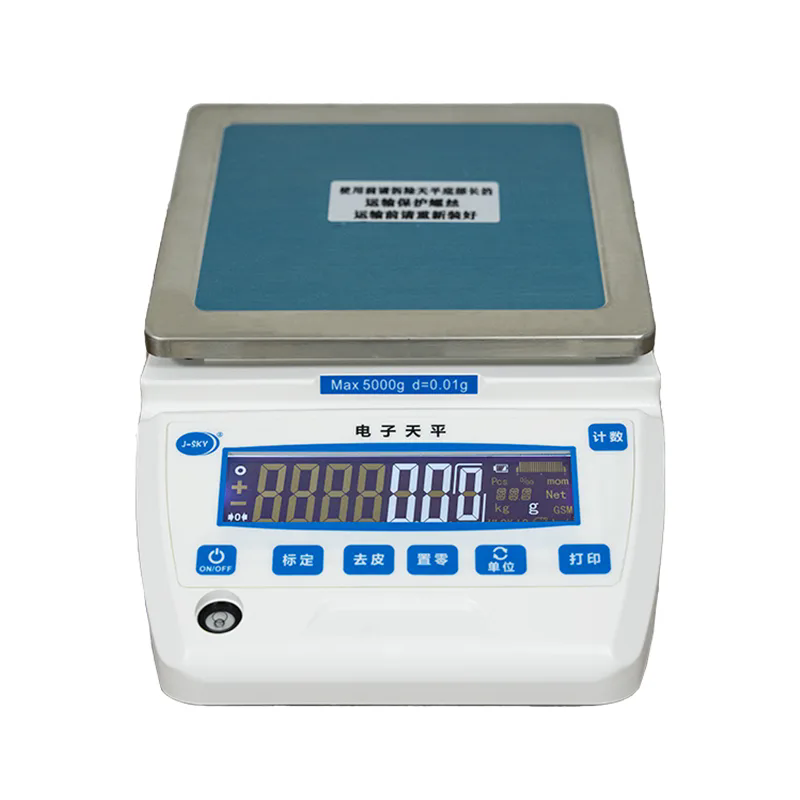
Table of Contents
- 1. Introduction to Electronic Balance Scales
- 2. How Electronic Balance Scales Work
- 3. Key Components and Features
- 4. Product Parameters Overview
- 5. Benefits and Application Scenarios
- 6. How to Choose the Right Electronic Balance Scale
- 7. Common Problems and Solutions
- 8. FAQs
- 9. Conclusion
1. Introduction to Electronic Balance Scales
An electronic balance scale is a precision instrument designed to measure mass with high accuracy. Unlike traditional mechanical scales, electronic balances use advanced sensor technology and digital processing systems to provide fast and reliable results.
Industries such as pharmaceuticals, food processing, laboratories, and manufacturing rely heavily on these devices to ensure consistency, compliance, and quality control. As precision requirements increase, electronic balance scales have become indispensable tools.
2. How Electronic Balance Scales Work
Electronic balance scales operate based on the principle of electromagnetic force compensation or strain gauge technology. When an object is placed on the weighing pan, the system detects the applied force and converts it into an electrical signal.
The process typically includes the following steps:
- The object applies force on the weighing pan
- The load cell sensor detects deformation or force change
- The signal is converted into electrical output
- The internal processor calculates the weight value
- The result is displayed digitally
This automated process ensures fast response time and minimizes human error, making it ideal for high-precision applications.
3. Key Components and Features
Understanding the main components helps users evaluate performance and reliability:
- Load Cell: Core sensor responsible for detecting weight
- Weighing Pan: Surface where objects are placed
- Display Screen: Digital interface for readings
- Calibration System: Ensures measurement accuracy
- Housing Structure: Provides durability and protection
Modern electronic balance scales also include features such as:
- Automatic calibration
- Overload protection
- Multiple unit conversion
- Data output and connectivity
4. Product Parameters Overview
| Parameter | Description |
| Capacity | Maximum weight the scale can measure (e.g., 200g – 30kg) |
| Readability | Smallest increment displayed (e.g., 0.001g) |
| Accuracy | Degree of measurement precision |
| Calibration Type | Internal or external calibration |
| Stabilization Time | Time required to display stable reading |
| Power Supply | AC adapter or battery |
| Display Type | LCD or LED digital display |
| Material | Stainless steel pan, ABS or metal housing |
5. Benefits and Application Scenarios
Electronic balance scales provide several advantages that address key customer concerns:
High Accuracy: Ideal for laboratory and industrial use where precision is critical.
Efficiency: Fast response time improves workflow and productivity.
User-Friendly: Digital displays and automated functions reduce operational complexity.
Versatility: Suitable for multiple industries, including:
- Laboratories and research institutions
- Food and beverage processing
- Jewelry and precious metal weighing
- Industrial manufacturing
- Retail and logistics
These benefits help businesses reduce errors, improve product quality, and maintain compliance with industry standards.
6. How to Choose the Right Electronic Balance Scale
Selecting the right model depends on specific requirements. Consider the following factors:
- Measurement Range: Choose based on maximum weight needs
- Precision Level: Higher precision for laboratory use
- Environment: Dustproof and waterproof designs for industrial settings
- Calibration Needs: Internal calibration for convenience
- Connectivity: USB or RS232 for data transfer
Customers often face issues such as unstable readings or inaccurate results due to improper selection. Matching specifications with application requirements is essential.
7. Common Problems and Solutions
Problem 1: Inaccurate Readings
Solution: Perform regular calibration and place the scale on a stable surface.
Problem 2: Fluctuating Results
Solution: Avoid air currents, vibrations, and temperature changes.
Problem 3: Overload Damage
Solution: Ensure the load does not exceed maximum capacity.
Problem 4: Slow Response Time
Solution: Check power supply and ensure proper maintenance.
8. FAQs
Q1: What is the difference between an electronic balance and a digital scale?
A: Electronic balances are designed for higher precision and are commonly used in laboratories, while digital scales are typically used for general-purpose weighing.
Q2: How often should calibration be performed?
A: Calibration frequency depends on usage, but regular calibration (daily or weekly) is recommended for high-precision applications.
Q3: Can electronic balance scales be used in industrial environments?
A: Yes, many models are designed with robust housing and protective features suitable for industrial use.
Q4: What affects measurement accuracy?
A: Factors include temperature, air flow, vibration, and improper calibration.
9. Conclusion
Electronic balance scales play a critical role in ensuring precise measurement across various industries. By understanding their working principles, components, and selection criteria, users can significantly improve efficiency and accuracy in their operations.
J-Sky provides reliable and high-performance electronic balance scale solutions designed to meet diverse industrial and laboratory needs. With a focus on precision, durability, and user-friendly design, these products help businesses achieve consistent and accurate results.
If you are looking for a dependable weighing solution tailored to your requirements, contact us today to explore how J-Sky can support your business with advanced electronic balance scale technology.