

How Does an Electronic Balance Scale Improve Accuracy and Efficiency?
2026-04-07
Abstract: Electronic balance scales have become indispensable tools across industries, laboratories, and commercial settings. They offer unmatched precision, speed, and ease of use compared to traditional mechanical scales. This article explores how electronic balance scales work, their benefits, types, applications, maintenance tips, and common troubleshooting methods. We also highlight how Jiangsu Jutian Weighing Equipment Co., Ltd. provides top-quality electronic balance solutions.
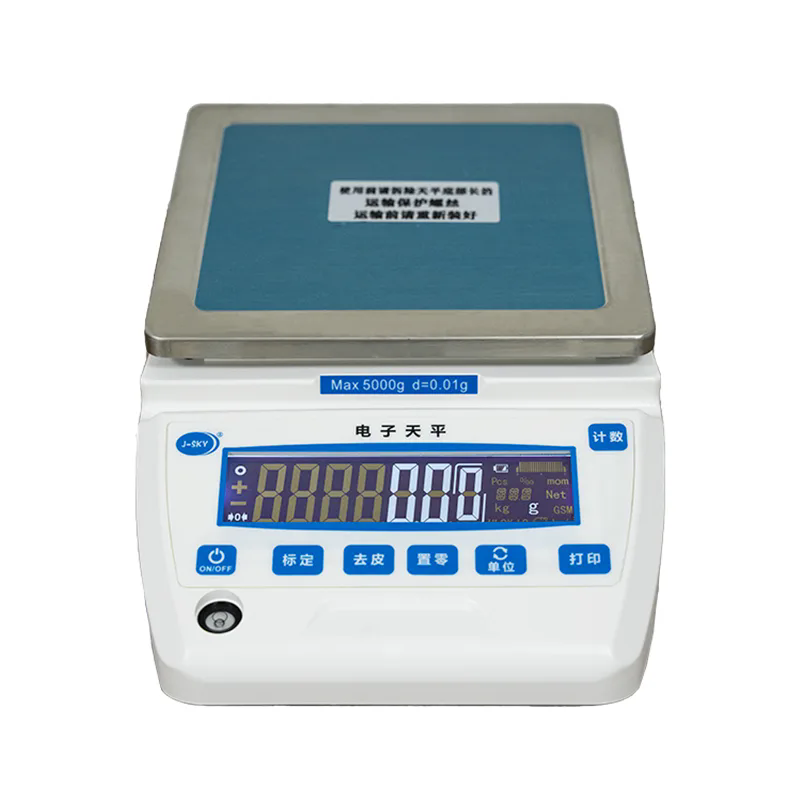
Table of Contents
- What is an Electronic Balance Scale?
- How Does an Electronic Balance Scale Work?
- Key Benefits of Electronic Balance Scales
- Types of Electronic Balance Scales
- Applications Across Industries
- Maintenance and Best Practices
- Common Troubleshooting Tips
- FAQ
What is an Electronic Balance Scale?
An electronic balance scale is a precision instrument that measures weight using electronic sensors rather than mechanical springs. Unlike traditional scales, electronic balances provide highly accurate readings with minimal human error. They are widely used in laboratories, food industries, pharmaceutical production, and retail businesses.
Electronic balance scales typically display the weight digitally, often in grams, milligrams, or ounces, allowing users to record and analyze data efficiently.
How Does an Electronic Balance Scale Work?
The working principle of an electronic balance scale is based on a load cell. When an object is placed on the scale, the load cell senses the applied force and converts it into an electrical signal. This signal is then processed by the internal microcontroller, which calculates the weight and displays it on the digital screen.
Key components include:
- Load Cell: Converts weight into an electrical signal.
- Microcontroller: Processes signals and computes accurate readings.
- Digital Display: Shows weight in readable units.
- Calibration System: Ensures precise measurement.
The precision of electronic balances often reaches 0.01g or even 0.001g, making them ideal for sensitive applications.
Key Benefits of Electronic Balance Scales
- High Accuracy: Reduces human error and ensures reliable results.
- Fast Measurements: Instant digital readings save time in busy environments.
- Data Integration: Many scales support USB, RS232, or Bluetooth connectivity for automatic data recording.
- Multiple Units: Easily switch between grams, milligrams, ounces, and pounds.
- User-Friendly: Digital interfaces are simple to operate, even for beginners.
- Durability: Modern scales are resistant to wear and environmental factors like humidity or dust.
Types of Electronic Balance Scales
Understanding the types of electronic balance scales helps you select the right model for your needs. Below is a table summarizing common types:
| Type | Precision | Typical Use |
|---|---|---|
| Analytical Balance | 0.0001 g – 0.001 g | Laboratories requiring ultra-precise measurements |
| Precision Balance | 0.01 g – 0.1 g | Industrial and educational applications |
| Top-Loading Balance | 0.01 g – 1 g | General weighing in labs and production lines |
| Compact/Portable Balance | 0.1 g – 1 g | Fieldwork and mobile measurements |
Applications Across Industries
Electronic balance scales are versatile and widely applied in various sectors:
- Laboratories: Precise chemical, biological, and pharmaceutical experiments.
- Food Industry: Portion control, ingredient measurement, and quality assurance.
- Retail: Weighing products for sale, ensuring accuracy in pricing.
- Education: Teaching students about mass, density, and scientific principles.
- Manufacturing: Accurate component weighing for assembly or packaging.
Maintenance and Best Practices
Proper maintenance ensures long-lasting accuracy and reliability:
- Calibrate the scale regularly using certified weights.
- Keep the scale clean and dry, avoiding spills and dust accumulation.
- Avoid overloading the scale beyond its maximum capacity.
- Store in a stable environment, free from vibrations and temperature extremes.
- Check and replace batteries or power sources as needed.
Common Troubleshooting Tips
Even high-quality scales can experience issues. Common problems and solutions include:
- Inaccurate Readings: Recalibrate using certified weights and ensure the surface is level.
- Display Errors: Check for loose connections or power supply issues.
- Scale Not Turning On: Replace batteries or verify electrical connections.
- Interference: Remove electronic devices nearby that may affect readings.
FAQ
Jiangsu Jutian Weighing Equipment Co., Ltd. offers a full range of electronic balance scales that combine precision, reliability, and user-friendly features. Whether you need analytical, precision, or top-loading balances, our products meet rigorous industry standards. For expert guidance and to choose the perfect electronic balance scale for your needs, contact us today!