

How Does a Wheeled Sprayer Improve Efficiency in Agricultural and Industrial Applications?
2026-08-10
Article Summary
A wheeled sprayer is an essential spraying solution designed to make agricultural, gardening, cleaning, and industrial spraying tasks faster, more accurate, and less physically demanding. Compared with traditional handheld sprayers, a wheeled sprayer provides better mobility, larger coverage, improved liquid distribution, and reduced operator fatigue. This article explains how a wheeled sprayer works, why it solves common spraying challenges, what factors should be considered before purchase, and how Crosstec provides reliable spraying equipment solutions for different application needs.
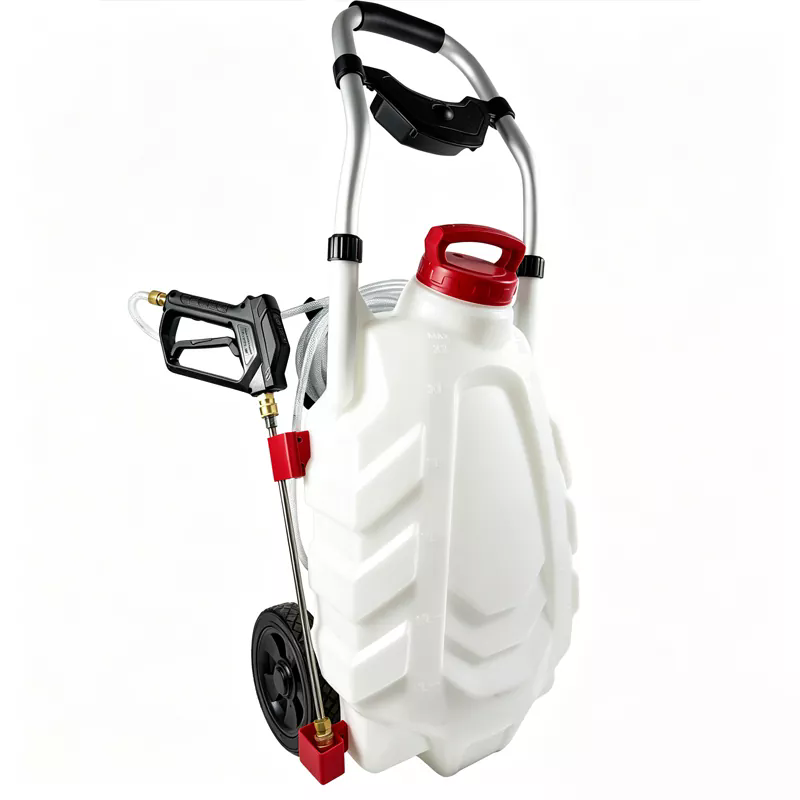
Table of Contents
- What Is a Wheeled Sprayer?
- How Does a Wheeled Sprayer Work?
- Why Choose a Wheeled Sprayer Over Traditional Spraying Tools?
- Key Features That Make a Wheeled Sprayer Effective
- Common Applications of Wheeled Sprayers
- How to Select the Right Wheeled Sprayer for Your Needs?
- Maintenance Tips for Long-Term Performance
- Frequently Asked Questions About Wheeled Sprayers
- Conclusion
What Is a Wheeled Sprayer?
A wheeled sprayer is a portable spraying machine equipped with wheels, a liquid tank, a pump system, spray accessories, and a handle structure that allows users to move the equipment easily during operation. Unlike backpack sprayers that require continuous carrying, wheeled sprayers transfer the equipment weight onto the ground, making large-area spraying tasks more comfortable and efficient.
The main purpose of a wheeled sprayer is to provide consistent liquid application while reducing manual effort. Whether it is used for crop protection, lawn maintenance, pest control, sanitation, or industrial cleaning, this type of sprayer helps users complete spraying operations with greater control and accuracy.
Crosstec develops practical spraying solutions that focus on durability, convenience, and user-friendly operation. The company’s wheeled sprayer products are designed to meet different working environments where mobility and reliable spraying performance are important.
How Does a Wheeled Sprayer Work?
Understanding the working principle of a wheeled sprayer helps users choose suitable equipment and achieve better spraying results. A wheeled sprayer usually operates through several coordinated components:
- Liquid Tank: Stores water, fertilizer solutions, pesticides, cleaning agents, or other spraying liquids.
- Pump System: Creates pressure to move liquid from the tank through the spraying pipeline.
- Spray Nozzle: Controls the spray pattern, droplet size, and coverage area.
- Wheel Structure: Provides convenient movement across different surfaces.
- Control System: Allows users to adjust spraying pressure and liquid output according to requirements.
During operation, the pump draws liquid from the tank and pushes it through the hose toward the nozzle. The nozzle then converts the pressurized liquid into a fine spray pattern. By moving the wheeled sprayer across the working area, operators can achieve uniform coverage without repeatedly lifting heavy equipment.
This simple but efficient working process makes wheeled sprayers suitable for both professional and everyday applications.
Why Choose a Wheeled Sprayer Over Traditional Spraying Tools?
Many users experience difficulties when using traditional spraying equipment, especially during long working periods. Common problems include physical fatigue, uneven spraying, limited coverage, and slow operation. A wheeled sprayer addresses these challenges through improved mobility and optimized design.
- Reduced Physical Strain: The wheeled structure eliminates the need to carry heavy tanks for extended periods.
- Higher Work Efficiency: Larger tank capacity and continuous movement allow users to cover wider areas quickly.
- More Consistent Spraying: Stable pressure systems help maintain even liquid distribution.
- Better Mobility: Wheels make transportation easier on farms, gardens, and industrial sites.
- Improved User Experience: Ergonomic handles and simple controls make operation easier.
For customers managing large lawns, agricultural fields, warehouses, or commercial properties, a wheeled sprayer can significantly improve productivity while reducing labor requirements.
Key Features That Make a Wheeled Sprayer Effective
A high-quality wheeled sprayer should provide reliable performance under different working conditions. The following features determine the overall effectiveness of the equipment:
- Strong and Durable Construction: A robust frame helps the sprayer withstand frequent movement and outdoor environments.
- Efficient Pump Performance: A powerful pump ensures stable pressure and smooth spraying.
- Large Capacity Tank: A suitable tank size reduces the frequency of refilling.
- Flexible Spray Adjustment: Adjustable nozzles allow users to control spray width and intensity.
- Easy Transportation: Quality wheels improve movement across different terrains.
- Simple Maintenance Design: Accessible components make cleaning and servicing easier.
Choosing a sprayer with these features can help prevent common issues such as inconsistent spraying, equipment breakdowns, and unnecessary downtime.
Common Applications of Wheeled Sprayers
Wheeled sprayers are widely used because they provide flexible spraying performance for many industries and environments. Their applications include:
- Agriculture: Used for applying pesticides, herbicides, fertilizers, and crop protection solutions.
- Gardening: Suitable for lawns, flowers, trees, and landscape maintenance.
- Pest Control: Helps distribute insect control solutions in residential and commercial areas.
- Cleaning Operations: Used for spraying cleaning liquids on large surfaces.
- Public Facilities: Supports sanitation and maintenance work in parks, schools, and industrial areas.
Because of their flexibility, wheeled sprayers can serve both professional users and individuals who require efficient spraying tools for regular maintenance tasks.
How to Select the Right Wheeled Sprayer for Your Needs?
Selecting the correct wheeled sprayer requires consideration of the working environment, spraying materials, and operation requirements. Before making a decision, users should evaluate several important factors.
- Tank Capacity: Choose a capacity based on the size of the spraying area. Larger areas generally require bigger tanks.
- Spray Pressure: Different applications require different pressure levels. Agricultural spraying may need different settings compared with cleaning applications.
- Mobility Requirements: Consider whether the sprayer will be used on flat ground, farmland, grass, or uneven surfaces.
- Material Compatibility: Ensure that tank and internal components can handle the intended spraying liquids.
- Ease of Operation: Comfortable handles, simple controls, and easy maintenance improve daily usability.
A carefully selected wheeled sprayer can provide better performance, lower operating costs, and longer service life.
Maintenance Tips for Long-Term Performance
Proper maintenance is essential for keeping a wheeled sprayer operating efficiently. Regular care can prevent failures and extend equipment lifespan.
- Clean the tank after every use to prevent chemical residue buildup.
- Check hoses and connections regularly for leaks or damage.
- Clean spray nozzles to maintain accurate liquid distribution.
- Inspect wheels and moving parts to ensure smooth transportation.
- Store the equipment in a dry and protected environment when not in use.
- Follow manufacturer instructions for pump maintenance.
Routine maintenance not only protects the equipment investment but also ensures stable spraying results during every operation.
Frequently Asked Questions About Wheeled Sprayers
Q1: What is the main advantage of a wheeled sprayer?
The biggest advantage is improved mobility and reduced physical effort. Users can move the sprayer easily while maintaining consistent spraying performance over larger areas.
Q2: Can a wheeled sprayer be used for agricultural purposes?
Yes. Wheeled sprayers are commonly used in agriculture for applying pesticides, fertilizers, and other crop treatment solutions.
Q3: How often should a wheeled sprayer be cleaned?
The sprayer should be cleaned after each use, especially when applying chemicals or solutions that may leave residue inside the tank and pipeline.
Q4: What factors affect spraying efficiency?
Spraying efficiency depends on pump performance, nozzle design, liquid pressure, tank capacity, and proper operation methods.
Q5: Why choose Crosstec for wheeled sprayer solutions?
Crosstec focuses on providing practical and reliable spraying equipment designed for different customer requirements. With attention to product performance and user convenience, Crosstec helps customers achieve efficient spraying operations in various environments.
Conclusion
A wheeled sprayer is a valuable tool for improving spraying efficiency, reducing labor intensity, and achieving more consistent application results. Its combination of mobility, reliable pressure control, and convenient operation makes it suitable for agriculture, gardening, cleaning, and many other fields.
When selecting spraying equipment, users should consider tank capacity, spray performance, durability, and application requirements. With well-designed products and professional manufacturing experience, Crosstec provides dependable wheeled sprayer solutions that help customers complete spraying tasks more efficiently.
If you are looking for a durable and efficient wheeled sprayer solution tailored to your application needs, contact us today to learn more about Crosstec products and professional support.