

Summary: Vacuum circuit breakers are essential devices in modern electrical systems, providing reliable interruption of high-voltage currents while ensuring system safety. This article explains their structure, working principle, advantages, maintenance requirements, and common applications.
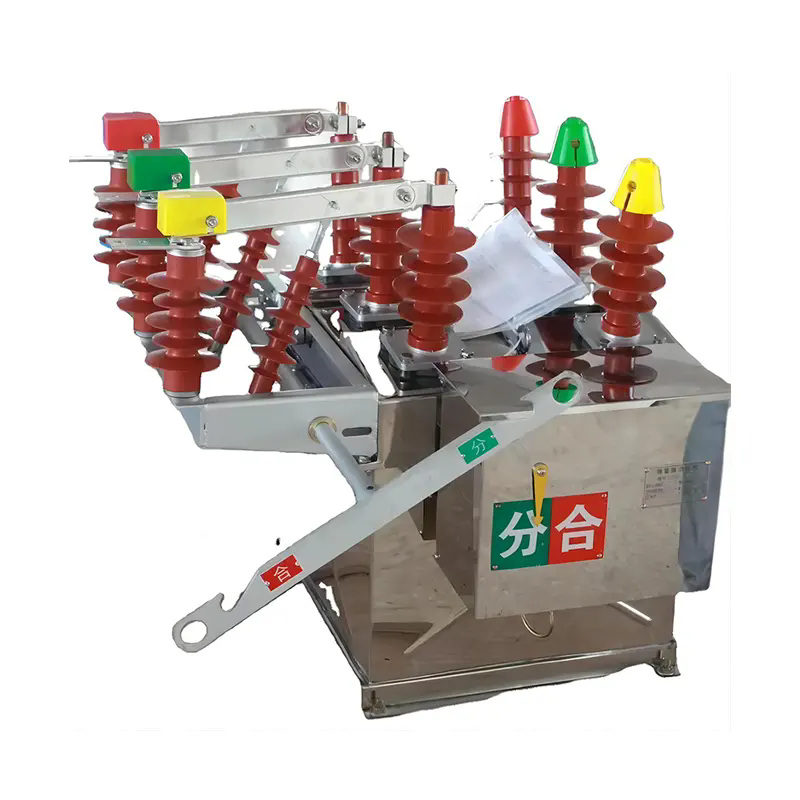
Table of Contents
- Introduction to Vacuum Circuit Breakers
- Working Principle
- Key Features
- Technical Specifications
- Advantages
- Maintenance Tips
- FAQs
- Conclusion
Introduction to Vacuum Circuit Breakers
Vacuum Circuit Breakers (VCBs) are specialized electrical devices designed to safely interrupt electrical currents in medium and high-voltage circuits. Unlike conventional breakers that rely on oil or air, VCBs use a vacuum as the arc-extinguishing medium. This provides superior dielectric strength and rapid arc extinction, ensuring enhanced safety and reliability.
Working Principle
VCBs operate by separating electrical contacts within a vacuum chamber, known as a vacuum interrupter. When a fault occurs, an arc forms between contacts. The vacuum quickly suppresses the arc by increasing dielectric strength, effectively stopping the current flow.
- Contact Separation: Current-carrying contacts are mechanically separated.
- Arc Formation: An arc occurs between contacts.
- Arc Extinction: The vacuum rapidly extinguishes the arc.
- Current Interruption: Circuit is safely interrupted, preventing damage.
Key Features
- High dielectric strength and rapid arc quenching
- Long service life with minimal maintenance
- Compact and lightweight design
- Environmentally friendly (no oil, gas, or toxic byproducts)
- Reliable operation in medium and high-voltage systems
Technical Specifications
| Parameter | Description |
|---|---|
| Rated Voltage | 3.6–40.5 kV |
| Rated Current | 630–4000 A |
| Short-Circuit Breaking Current | 20–50 kA |
| Operating Mechanism | Spring or motor operated |
| Service Life | 10,000–30,000 operations |
| Installation | Indoor/Outdoor |
Advantages of Vacuum Circuit Breakers
- Safety: Rapid arc extinction reduces the risk of electrical fires.
- Low Maintenance: Minimal moving parts and no oil reduce service requirements.
- Longevity: Durable contacts ensure a long operational life.
- Eco-Friendly: No harmful gases or oils are used.
- Compact Design: Saves space in switchgear installations.
Maintenance Tips
Though VCBs are low-maintenance, regular checks are necessary:
- Inspect vacuum interrupters for signs of wear.
- Check mechanical operating mechanisms for smooth function.
- Ensure electrical connections are tight and free from corrosion.
- Perform periodic insulation resistance testing.
FAQs
Q1: How often should a vacuum circuit breaker be tested?
A: Typically, VCBs should undergo routine inspections every 6–12 months and mechanical operations testing every 3–5 years depending on usage.
Q2: Can VCBs handle high fault currents?
A: Yes, vacuum circuit breakers are designed for medium and high-voltage systems and can interrupt fault currents up to 50 kA.
Q3: Are vacuum circuit breakers environmentally safe?
A: Absolutely. VCBs do not use oil or SF6 gas, reducing environmental risks and eliminating toxic byproducts.
Conclusion
Vacuum circuit breakers provide an efficient, reliable, and environmentally friendly solution for medium and high-voltage electrical systems. Their rapid arc extinction, long service life, and low maintenance make them ideal for industrial, commercial, and utility applications. For high-quality vacuum circuit breakers, explore the solutions offered by DAYA electrical. To discuss your requirements and get expert advice, contact us today.