

How Does a Stand Fan Deliver Better Cooling and Everyday Comfort?
2026-08-24
Article Summary: A well-designed Stand Fan can provide targeted airflow, adjustable cooling, flexible placement, and efficient air movement without requiring permanent installation. However, choosing the right model requires more than looking at blade size or motor power. Buyers need to consider airflow performance, speed control, oscillation, height adjustment, stability, noise, energy consumption, safety, maintenance, and the intended environment. This guide explains how a Stand Fan works, what features matter most, how to select the right configuration, and how manufacturers such as Moxie Air address common cooling requirements for homes, offices, commercial spaces, and other applications.
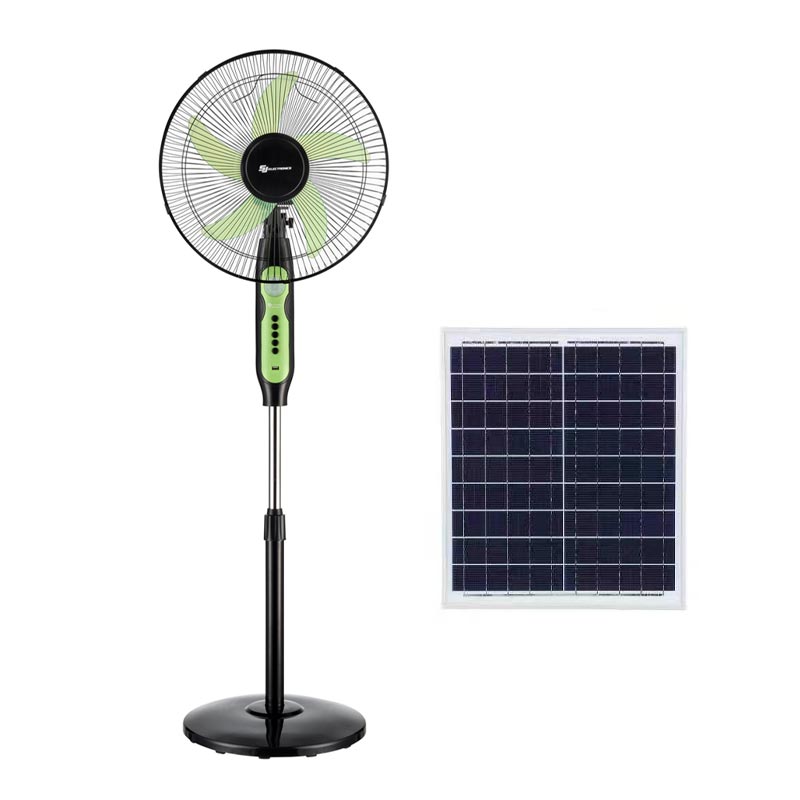
Table of Contents
- Article Outline
- Why Is a Stand Fan a Practical Cooling Solution?
- How Does a Stand Fan Produce Effective Airflow?
- What Features Should You Check Before Buying?
- How Does the Motor Affect Stand Fan Performance?
- How Do Blade Design and Airflow Work Together?
- How Can You Improve Stability and Safety?
- How Should You Choose a Stand Fan for Different Spaces?
- Stand Fan Selection Comparison
- How Can You Maintain a Stand Fan?
- How Can Buyers Avoid Common Purchasing Mistakes?
- Why Consider Moxie Air?
- Frequently Asked Questions
- Conclusion
Article Outline
- Understand why a Stand Fan remains useful for flexible cooling.
- Learn how the motor, blades, grille, oscillation system, and controls work together.
- Identify the specifications that affect comfort, reliability, and operating convenience.
- Match the fan configuration with the size and purpose of the space.
- Use practical maintenance and purchasing guidelines to reduce long-term problems.
- Understand how Moxie Air approaches Stand Fan manufacturing and customization.
Why Is a Stand Fan a Practical Cooling Solution?
Cooling requirements are rarely identical from one room to another. A bedroom may require gentle and quiet airflow, while an office may need continuous circulation across a larger area. A retail store, workshop, hotel, or temporary commercial space can have completely different requirements.
This flexibility is one of the main reasons the Stand Fan remains a practical choice. Unlike a fixed ceiling fan, a floor-standing model can be repositioned when the room layout changes. Its height can also be adjusted to direct airflow toward different levels of the occupied space.
A properly configured Stand Fan can help address several common cooling problems:
- Uneven airflow: Oscillation helps distribute air across a wider area instead of concentrating it in one direction.
- Limited installation options: A floor-standing design generally does not require permanent ceiling installation.
- Changing room layouts: The fan can be moved as furniture, workstations, or displays are rearranged.
- Personal comfort: Multiple speed settings allow users to select airflow appropriate for different conditions.
- Different user requirements: Height adjustment and directional control make one fan more adaptable to different applications.
The real value therefore comes from the combination of mobility, airflow, adjustability, and usability rather than from a single specification.
How Does a Stand Fan Produce Effective Airflow?
A Stand Fan uses an electric motor to rotate a set of blades. As the blades rotate, they move air forward and create a pressure difference that produces a continuous stream of airflow. The grille surrounding the blades provides physical protection while also influencing the overall airflow path.
Several components contribute to the final cooling experience:
- Motor: Provides the rotational force required to drive the blades.
- Fan blades: Convert motor rotation into air movement.
- Protective grille: Helps reduce accidental contact with rotating components.
- Oscillation mechanism: Moves the airflow from side to side over a wider area.
- Stand and base: Support the fan and provide stability during operation.
- Control system: Allows users to adjust speed and, depending on the model, other operating functions.
Effective cooling is not simply a matter of producing the strongest possible airflow. Excessive airflow can be uncomfortable in some environments, while insufficient airflow may fail to provide meaningful air circulation. The objective is to select a fan that balances airflow volume, speed, noise, stability, and energy consumption for its intended application.
What Features Should You Check Before Buying?
When comparing different Stand Fan models, buyers should evaluate the complete configuration rather than focusing on one advertised number.
Important factors include:
- Fan diameter: Larger blade assemblies can be suitable for applications requiring broader air movement, provided the motor and aerodynamic design are appropriately matched.
- Motor power: Motor specification influences the fan's ability to maintain airflow, but higher wattage alone does not guarantee better performance.
- Speed settings: Multiple speeds make it easier to adapt airflow to temperature and user preference.
- Height adjustment: An adjustable pole allows airflow to be positioned according to seating, standing, or working height.
- Oscillation: A wider oscillation range can improve air distribution across a room.
- Base construction: A stable base helps reduce unwanted movement and tipping during operation.
- Noise performance: Quiet operation is particularly important in bedrooms, offices, classrooms, and hospitality environments.
- Safety grille: The grille should provide appropriate protection while allowing sufficient airflow.
- Control method: Mechanical controls, remote controls, timers, and other options can be selected according to the application.
- Voltage compatibility: Export buyers should confirm the required voltage, frequency, plug configuration, and applicable market requirements.
For commercial procurement, additional factors such as packaging, supply consistency, customization capability, spare parts, quality control, and after-sales support can be just as important as the fan itself.
How Does the Motor Affect Stand Fan Performance?
The motor is one of the most important components inside a Stand Fan. It converts electrical energy into mechanical rotation, which drives the blades. Motor selection influences airflow stability, operating noise, energy use, durability, and the expected service life of the fan.
Material selection can also affect the motor configuration. Depending on the model and buyer requirements, motor components may use different conductive materials and construction approaches. Moxie Air's product range, for example, supports different motor material choices according to quality and application requirements.
However, buyers should avoid judging a motor solely by wattage. A motor with higher power consumption is not automatically more efficient or more effective. The motor must be properly matched with blade geometry, fan diameter, grille structure, control system, and operating conditions.
For continuous-use environments, it is especially important to consider whether the motor can provide stable performance over extended operating periods without excessive temperature rise or abnormal noise.
How Do Blade Design and Airflow Work Together?
Fan blades are responsible for converting rotational movement into airflow. Their number, shape, angle, material, and overall geometry influence the way air is accelerated and distributed.
A multi-blade configuration can provide a balanced airflow pattern when properly engineered. Blade shape also matters. A design intended for strong airflow may differ from one optimized for quieter operation or energy-conscious use.
When evaluating a Stand Fan, consider the complete airflow system rather than asking whether a fan has a certain number of blades. The interaction between the blades, motor, grille, and housing determines the actual user experience.
For example, a powerful motor paired with an inefficient blade design may consume more electricity without delivering a proportional improvement in useful airflow. Conversely, a well-matched motor and aerodynamic blade system can provide a more balanced combination of cooling and operating efficiency.
How Can You Improve Stability and Safety?
Stability is easy to overlook when comparing fans, but it directly affects daily usability. A Stand Fan operates with rotating components and therefore needs a sufficiently stable support structure.
A well-designed base should remain steady during normal operation, including when the fan oscillates. The pole should also maintain its position when the height is adjusted correctly.
For safer operation, users should follow several practical rules:
- Place the fan on a flat and stable surface.
- Keep the power cord away from walking paths whenever possible.
- Do not operate the fan if the grille, blade, cable, plug, or housing is damaged.
- Keep children away from exposed or damaged fan components.
- Disconnect the power before cleaning or performing maintenance.
- Avoid placing the fan where water can directly contact electrical components.
- Do not block the grille with curtains, clothing, packaging, or other objects.
For manufacturers and commercial buyers, safety considerations should also include component quality, electrical design, grille construction, stability testing, and the requirements of the destination market.
How Should You Choose a Stand Fan for Different Spaces?
The best Stand Fan depends on the environment in which it will operate. Selecting the right model begins with understanding the cooling objective.
- Bedrooms: Prioritize low-noise operation, controllable airflow, and convenient speed adjustment.
- Living rooms: Consider oscillation, adjustable height, and sufficient airflow coverage.
- Offices: Quiet operation and directional control are especially valuable where people work for extended periods.
- Retail spaces: Stable operation, broad airflow, and easy maintenance can be important for continuous daily use.
- Hotels: Appearance, operating noise, reliability, and ease of use can influence guest satisfaction.
- Workshops: Stronger airflow and durable construction may be more important than compact design.
- Temporary or outdoor-related applications: Buyers should verify whether the selected model is actually designed for the environmental conditions involved rather than assuming every Stand Fan is suitable for outdoor exposure.
Some specialized configurations can also address unusual power requirements. For example, Moxie Air offers Stand Fan models that combine solar power with AC/DC operation and USB connectivity, providing an alternative for scenarios where conventional power access may be limited.
Stand Fan Selection Comparison
| Application | Recommended Priority | Useful Features | Common Concern |
|---|---|---|---|
| Bedroom | Quiet comfort | Low-speed setting, timer, adjustable airflow | Excessive noise |
| Home Living Area | Wide circulation | Oscillation, multiple speeds, height adjustment | Uneven cooling |
| Office | Continuous comfort | Quiet motor, stable base, directional adjustment | Disruptive operating noise |
| Retail Store | Coverage and durability | Strong airflow, oscillation, easy controls | Frequent-use wear |
| Workshop | Air movement | Powerful airflow, durable construction | Insufficient circulation |
| Special Power Application | Energy flexibility | Solar, AC/DC, USB or other suitable power options | Limited power availability |
How Can You Maintain a Stand Fan?
Even a reliable Stand Fan needs regular care. Dust and debris can accumulate on the grille, blades, motor housing, and other components. Over time, buildup can affect airflow and may increase the mechanical load on the fan.
A simple maintenance routine can include:
- Switching off and unplugging the fan before cleaning.
- Removing accumulated dust from accessible grille surfaces.
- Cleaning the blades according to the manufacturer's instructions.
- Checking the grille for cracks or deformation.
- Inspecting the power cable and plug for visible damage.
- Checking that the base and height-adjustment mechanism remain secure.
- Watching for unusual vibration, grinding, rattling, or electrical odors.
Do not ignore a sudden change in operating behavior. Increased vibration or unusual noise may indicate a loose component, mechanical wear, blade imbalance, or another issue requiring inspection.
How Can Buyers Avoid Common Purchasing Mistakes?
Purchasing decisions can become difficult when specifications are presented without application context. A fan may appear attractive because of high power or a large blade diameter, but those specifications alone do not establish whether it is suitable.
Before purchasing, ask the following questions:
- Where will the Stand Fan be used?
- How large is the space that needs air circulation?
- Is the fan intended for occasional or continuous operation?
- Is quiet operation important?
- Does the user need oscillation?
- Is adjustable height necessary?
- What voltage and frequency are required?
- Does the target market require specific electrical or safety compliance?
- Will the product be sold under a private label or require customized specifications?
- Can the supplier provide consistent production and appropriate technical support?
For wholesalers, importers, distributors, and private-label buyers, the final question is particularly important. Product quality must be supported by stable manufacturing capacity, clear specifications, dependable communication, and repeatable production.
Why Consider Moxie Air?
Moxie Air, produced by Moxie Tech Co., Ltd. in Zhongshan, China, focuses on Stand Fan manufacturing for household, office, commercial, and other cooling applications. Its product range includes different configurations designed around practical requirements such as adjustable height, multiple speed settings, stable bases, protective grilles, and different motor options.
The available range includes models with features such as timers, remote controls, round bases, industrial-oriented construction, and alternative power configurations. This allows buyers to select a configuration based on the application instead of treating every cooling requirement as identical.
Moxie Air also emphasizes practical factors that matter to buyers beyond the basic airflow function, including maintainability, durability, design flexibility, and manufacturing support.
For businesses purchasing Stand Fans in volume, working directly with a manufacturer can also make it easier to discuss product specifications, packaging requirements, market-specific electrical configurations, private-label needs, and other procurement considerations.
Frequently Asked Questions
1. What is a Stand Fan?
A Stand Fan is a floor-standing electric fan supported by a vertical pole and base. It generally provides adjustable airflow and can often be positioned or oscillated to circulate air across a larger area.
2. Is a Stand Fan suitable for large rooms?
Yes, depending on the room size and fan configuration. Larger-diameter models and higher-airflow designs may be appropriate when broader or stronger air movement is required. The fan should be selected according to the actual space and airflow objective.
3. Why is oscillation useful?
Oscillation allows the fan to move airflow across a wider horizontal area. This can reduce the need to manually reposition the fan and can improve air distribution in shared spaces.
4. Does a higher wattage always mean better cooling?
No. Wattage indicates electrical power consumption, not the complete cooling performance. Motor efficiency, blade design, fan diameter, grille structure, and airflow characteristics all contribute to the final result.
5. How important is fan blade design?
Blade geometry has a significant influence on airflow. The number, shape, angle, and material of the blades should work together with the motor and grille to provide the intended airflow performance.
6. What should I consider when buying Stand Fans in bulk?
Bulk buyers should evaluate product specifications, production consistency, quality control, electrical compatibility, packaging, customization options, lead times, spare parts, and supplier communication in addition to unit price.
7. Can Stand Fans be customized?
Depending on the manufacturer and model, customization may include motor configuration, appearance, controls, packaging, voltage requirements, branding, and other product details. Buyers should confirm the available options before placing an order.
8. What makes Moxie Air different from a basic fan supplier?
Moxie Air focuses specifically on fan manufacturing and provides a range of Stand Fan configurations for different applications. Buyers can evaluate models according to airflow, controls, construction, power requirements, and other project-specific considerations.
9. How often should a Stand Fan be cleaned?
The cleaning frequency depends on the environment. A fan used in a dusty workshop may require more frequent cleaning than one used in a relatively clean bedroom. Regular inspection is more important than following a fixed universal schedule.
10. Can a Stand Fan replace air conditioning?
A Stand Fan and an air conditioner serve different functions. A fan primarily improves air movement and enhances the perception of cooling, while an air conditioner actively reduces air temperature. In many situations, a fan can complement air conditioning by improving air circulation.
Conclusion
Choosing the right Stand Fan requires a broader evaluation than simply comparing price or motor wattage. Effective cooling depends on the interaction of the motor, blades, grille, controls, oscillation mechanism, stand, and base. The right configuration should also match the space, operating schedule, noise expectations, electrical requirements, and maintenance conditions.
For home users, a practical Stand Fan can provide flexible airflow without permanent installation. For offices, hotels, retailers, workshops, wholesalers, and distributors, the selection process should additionally consider durability, consistency, customization, market requirements, and supplier support.
Moxie Air provides a range of Stand Fan solutions designed around different cooling scenarios and purchasing requirements. Whether you need a standard household model, a higher-airflow configuration, timer or remote-control functionality, or a specialized power solution, choosing the correct specification is the first step toward dependable long-term performance.
Looking for a Stand Fan solution for your market or project? Contact Moxie Air today to discuss your required specifications, application, customization needs, and purchasing plans. Contact us for professional product support and a Stand Fan solution tailored to your requirements.