

Article Summary: A refrigeration unit is the core of a cold storage system, responsible for removing heat and maintaining the temperature required to protect food, pharmaceuticals, agricultural products, and other temperature-sensitive goods. Choosing the wrong refrigeration capacity, compressor configuration, airflow arrangement, or control system can result in excessive energy consumption, unstable temperatures, product loss, and frequent maintenance. This guide explains how a refrigeration unit works, how to select the right system, which factors influence operating efficiency, and how HANYORK refrigeration solutions can help businesses build dependable and cost-effective cold storage applications.
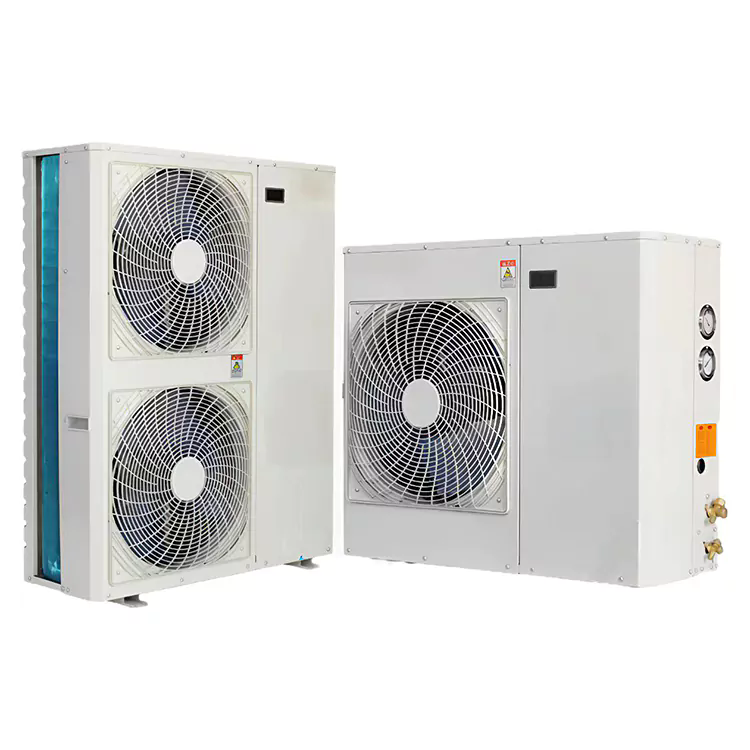
Table of Contents
- 1. Understanding the Role of a Refrigeration Unit
- 2. How a Refrigeration Unit Works
- 3. Key Components of a Refrigeration Unit
- 4. Main Types of Refrigeration Units
- 5. How to Select the Right Refrigeration Unit
- 6. Why Refrigeration Capacity Matters
- 7. How to Improve Refrigeration Unit Efficiency
- 8. Applications of Refrigeration Units
- 9. Maintenance Practices for Reliable Operation
- 10. Common Refrigeration Unit Problems and Solutions
- 11. Refrigeration Unit Selection Comparison
- 12. Why Consider HANYORK?
- 13. Frequently Asked Questions
- 14. Conclusion
1. Understanding the Role of a Refrigeration Unit
A refrigeration unit is a mechanical cooling system designed to remove heat from a controlled space, product, or process. In cold storage applications, it maintains the required temperature by continuously transferring heat from inside the storage area to the surrounding environment.
This function is fundamental to the cold chain. Food processors, logistics companies, supermarkets, restaurants, pharmaceutical facilities, agricultural businesses, and industrial manufacturers all depend on stable refrigeration to protect temperature-sensitive materials.
A refrigeration unit is not simply a device that produces cold air. It is part of an integrated thermal management system that must work together with insulation panels, doors, evaporators, condensers, refrigerant piping, electrical controls, and temperature monitoring equipment.
The performance of the complete system depends heavily on whether the refrigeration unit has been correctly selected for the actual operating conditions. An undersized system may run continuously without reaching the desired temperature, while an oversized system can increase initial investment, cycling losses, humidity problems, and unnecessary energy consumption.
For this reason, refrigeration equipment should be selected according to the actual application rather than based only on room size or nominal cooling capacity.
2. How a Refrigeration Unit Works
Most modern mechanical refrigeration systems operate through a vapor-compression refrigeration cycle. The system continuously absorbs heat from the refrigerated space and rejects that heat to the external environment.
The basic process consists of four major stages:
- Compression: The compressor receives low-pressure refrigerant vapor and compresses it into a high-pressure, high-temperature vapor.
- Condensation: The refrigerant releases heat through the condenser and changes from vapor into a high-pressure liquid.
- Expansion: The liquid refrigerant passes through an expansion device, where its pressure and temperature decrease.
- Evaporation: The cold refrigerant enters the evaporator and absorbs heat from the storage room or process before returning to the compressor.
This cycle repeats continuously while the refrigeration system is operating. Industrial refrigeration systems may use different compressor arrangements, condenser configurations, refrigerants, evaporators, and control strategies depending on the required temperature and cooling load.
For large industrial installations, multiple compressors or staged systems may be used to serve different temperature zones and varying loads. This provides greater flexibility and can improve system control when the facility has several refrigeration requirements.
3. Key Components of a Refrigeration Unit
A reliable refrigeration unit depends on the coordinated operation of several major components. Understanding these components makes it easier to evaluate equipment specifications and diagnose operating problems.
| Component | Primary Function | Importance to Performance |
|---|---|---|
| Compressor | Circulates and compresses the refrigerant | Strongly influences cooling capacity, efficiency, noise, and service life |
| Condenser | Rejects heat from the refrigerant | Determines how effectively system heat can be discharged |
| Expansion Device | Reduces refrigerant pressure before evaporation | Helps regulate refrigerant flow and evaporator performance |
| Evaporator | Absorbs heat from the refrigerated space | Directly affects cooling distribution and temperature stability |
| Controller | Monitors and regulates operating conditions | Supports accurate temperature control and system protection |
| Fans | Move air across heat-exchange surfaces | Influence heat transfer, airflow distribution, and temperature uniformity |
The compressor is particularly important because it determines much of the refrigeration system's operating characteristics. However, a high-quality compressor alone cannot compensate for poor condenser sizing, inadequate airflow, insufficient insulation, or incorrect system control.
4. Main Types of Refrigeration Units
Different refrigeration projects require different equipment configurations. Selecting a suitable type depends on cooling capacity, temperature requirements, installation conditions, noise limitations, maintenance preferences, and available space.
Hermetic Scroll Refrigeration Unit
A hermetic scroll unit uses a scroll compressor design in which two spiral elements compress refrigerant continuously. Its compact construction, relatively low vibration, and low operating noise make it suitable for applications where space and acoustic performance are important.
Scroll-based equipment can be appropriate for commercial refrigeration, small and medium cold rooms, food service facilities, and other applications requiring dependable continuous cooling.
Semi-Hermetic Piston Compressor Unit
Semi-hermetic piston compressor units are widely used when robust compression performance and serviceability are important. The compressor construction allows maintenance access while providing a strong solution for cold storage and refrigeration applications.
These systems can be particularly useful where operating conditions vary and the refrigeration equipment must withstand demanding workloads.
Screw Refrigeration Unit
Screw refrigeration units use twin-rotor screw compression technology and are generally suited to higher-capacity industrial refrigeration applications. They can support demanding continuous-duty operations such as large cold storage facilities, industrial freezing, food processing, and process cooling.
For high-capacity installations, screw systems can provide an effective solution when correctly matched to the required load and operating temperature.
Air-Cooled Refrigeration Unit
Air-cooled systems reject heat through ambient air. They are often easier to install because they do not require the same type of cooling-water infrastructure associated with water-cooled systems.
However, outdoor ambient temperature has a significant influence on condenser performance. Proper condenser sizing and airflow clearance are therefore essential.
Top-Discharge Air Unit
Top-discharge configurations are designed to discharge heated air upward, which can be advantageous in certain installation environments. U-type and V-type configurations can also help optimize equipment footprint and airflow arrangement.
For facilities where installation space is limited, selecting an appropriate airflow configuration can make a significant difference in equipment layout and maintenance accessibility.
5. How to Select the Right Refrigeration Unit
Choosing a refrigeration unit should begin with a detailed assessment of the application. The most important mistake to avoid is selecting equipment solely according to the physical dimensions of the cold room.
Consider the following factors before purchasing:
- Room dimensions: Determine the length, width, height, and total internal volume.
- Required temperature: Chilled storage and frozen storage have significantly different refrigeration requirements.
- Product load: Products entering the room may introduce substantial heat, particularly when they enter above the target storage temperature.
- Door opening frequency: Frequent door opening allows warm and humid ambient air to enter the cold room.
- Insulation quality: Poor insulation increases heat gain and forces the refrigeration system to operate longer.
- Ambient temperature: Outdoor conditions influence condenser performance and overall cooling capacity.
- Operating schedule: Continuous operation, seasonal operation, and intermittent use require different equipment strategies.
- Available power supply: Electrical voltage, frequency, phase, and starting characteristics must be compatible with the installation.
- Installation environment: Dust, humidity, salt exposure, high ambient temperatures, and limited ventilation can affect equipment selection.
- Maintenance requirements: Easy access to serviceable components can reduce downtime and long-term maintenance costs.
A professional refrigeration equipment supplier should evaluate these factors before recommending a final configuration.
6. Why Refrigeration Capacity Matters
Cooling capacity is one of the most important specifications when purchasing a refrigeration unit. It represents the amount of heat the system can remove under defined operating conditions.
The actual cooling load can include several heat sources:
- Heat transmitted through walls, ceilings, floors, and doors
- Heat entering when doors are opened
- Heat released by lighting
- Heat generated by fans and motors
- Heat from workers entering the room
- Heat contained in products introduced into storage
- Heat associated with defrost cycles
- Additional heat generated by refrigeration equipment installed inside the space
If these loads are underestimated, the refrigeration unit may struggle to achieve the required temperature. If the equipment is significantly oversized, the system may cycle inefficiently and incur unnecessary capital costs.
Therefore, refrigeration capacity should be determined through load analysis rather than a simple rule based on room volume.
7. How to Improve Refrigeration Unit Efficiency
Energy consumption is one of the largest ongoing expenses associated with cold storage. Improving efficiency requires attention to both the refrigeration equipment and the surrounding facility.
Maintain Proper Insulation
Good insulation reduces heat transfer between the cold room and the external environment. Damaged panels, poorly sealed joints, and deteriorated door seals can increase refrigeration demand significantly.
Reduce Unnecessary Door Opening
Every time a cold room door opens, warm air can enter and cold air can escape. High-frequency access should be managed through operational procedures, suitable doors, strip curtains, air curtains, or other appropriate measures.
Keep Condensers Clean
Dust and debris accumulated on condenser surfaces can restrict heat transfer. When the condenser cannot reject heat efficiently, condensing pressure can rise and compressor energy consumption may increase.
Optimize Temperature Settings
Operating a room colder than necessary increases energy consumption. The target temperature should be established according to product requirements rather than using an unnecessarily low setpoint.
Use Appropriate Controls
Modern refrigeration systems can use temperature sensors, pressure monitoring, electronic expansion control, compressor staging, and other control strategies to match refrigeration output to actual demand.
Energy efficiency is therefore not only a matter of selecting a high-efficiency compressor. It is the result of proper system design, correct equipment sizing, good installation, effective controls, and disciplined maintenance.
8. Applications of Refrigeration Units
Refrigeration units serve a wide range of industries where controlled temperatures are essential.
| Industry | Typical Refrigeration Requirement | Key Concern |
|---|---|---|
| Food Processing | Cooling, freezing, and temporary storage | Temperature stability and hygiene |
| Cold Chain Logistics | Chilled and frozen warehousing | Continuous operation and reliability |
| Pharmaceuticals | Controlled-temperature storage | Precise monitoring and temperature consistency |
| Restaurants | Walk-in coolers and freezers | Compact design and dependable operation |
| Agriculture | Produce preservation and post-harvest cooling | Rapid cooling and operating cost |
| Chemical Processing | Process cooling and temperature control | Continuous-duty performance |
| Supermarkets | Display refrigeration and storage | Energy consumption and noise |
9. Maintenance Practices for Reliable Operation
Even a high-quality refrigeration unit requires regular inspection and maintenance. Preventive maintenance is generally more economical than waiting for a major component failure.
A practical maintenance program should include:
- Inspecting condenser coils and removing accumulated dirt.
- Checking evaporator surfaces for excessive frost or ice.
- Inspecting refrigerant lines for abnormal conditions or signs of leakage.
- Checking electrical terminals and connections.
- Monitoring compressor operating conditions.
- Checking fan motors and blades.
- Inspecting door seals and cold room insulation.
- Verifying temperature sensors and control settings.
- Checking drainage systems and defrost operation.
- Recording abnormal noises, vibration, pressure, or temperature changes.
Maintenance intervals should be determined according to equipment type, operating hours, environmental conditions, manufacturer recommendations, and the criticality of the refrigerated application.
10. Common Refrigeration Unit Problems and Solutions
| Problem | Possible Cause | Recommended Action |
|---|---|---|
| Room temperature is too high | Insufficient capacity, excessive heat load, poor insulation, or airflow problems | Check cooling load, insulation, airflow, and system operating conditions |
| Compressor runs continuously | High heat gain, incorrect setpoint, dirty condenser, or undersized equipment | Inspect the complete system and identify the source of excessive load |
| Excessive frost | High humidity, poor airflow, door leakage, or defrost problems | Inspect door seals, airflow, evaporator, and defrost system |
| High energy consumption | Dirty heat exchangers, inefficient operation, excessive heat gain, or poor controls | Optimize equipment operation and inspect heat-transfer surfaces |
| Unusual vibration | Mechanical imbalance, mounting problems, or compressor-related issues | Inspect mounting, fans, compressor condition, and rotating components |
| Frequent system shutdown | Protective control activation, electrical issues, excessive pressure, or overheating | Check fault records and have qualified technicians inspect the system |
Repeated problems should not be solved simply by resetting the equipment. Recurring shutdowns, unstable temperatures, or unusual operating noise may indicate an underlying system problem that requires professional diagnosis.
11. Refrigeration Unit Selection Comparison
| Unit Type | Typical Strength | Suitable Applications | Selection Consideration |
|---|---|---|---|
| Hermetic Scroll Unit | Compact and low vibration | Commercial and light-duty refrigeration | Capacity and operating temperature |
| Semi-Hermetic Piston Unit | Serviceable and robust | Cold rooms and medium-duty refrigeration | Load variation and maintenance access |
| Screw Refrigeration Unit | High-capacity continuous operation | Industrial freezing and process cooling | Load profile and system configuration |
| U-Type Top Discharge Unit | Space-efficient airflow arrangement | Food processing and industrial applications | Installation clearance and airflow |
| V-Type Top Discharge Unit | Efficient heat rejection and compact arrangement | Industrial and commercial refrigeration | Ambient conditions and condenser requirements |
12. Why Consider HANYORK?
HANYORK is a China-based refrigeration equipment manufacturer and supplier offering refrigeration units for commercial, cold storage, food processing, and industrial applications. Its product range includes hermetic scroll units, semi-hermetic piston compressor units, U-type top-discharge air units, V-type top-discharge air units, screw refrigeration units, and evaporative condensers.
One of the practical advantages of working with an experienced refrigeration equipment manufacturer is the ability to evaluate the complete application rather than simply selecting a standard product from a catalog. Room dimensions, target temperature, ambient conditions, expected product load, installation space, electrical requirements, and operating schedule all influence the appropriate configuration.
HANYORK also provides customized refrigeration unit options for different project requirements. This can be particularly useful for customers working with non-standard cold rooms, industrial facilities, limited installation spaces, or specific temperature requirements.
For buyers, the objective should not be to find the cheapest refrigeration unit available. The better approach is to find a system that provides an appropriate balance between cooling capacity, energy consumption, reliability, maintenance accessibility, installation requirements, and total operating cost.
13. Frequently Asked Questions
What is a refrigeration unit?
A refrigeration unit is a mechanical cooling system that removes heat from a refrigerated space, product, or process. It normally includes a compressor, condenser, expansion device, evaporator, controls, and related components.
How do I choose the correct refrigeration unit capacity?
Capacity should be selected according to the complete cooling load rather than room volume alone. Factors include room dimensions, target temperature, product temperature, product load, door openings, insulation, lighting, personnel, equipment heat, ambient temperature, and operating schedule.
What is the difference between a scroll and piston refrigeration unit?
Scroll compressors use orbiting scroll elements and are known for compact construction, smooth operation, and relatively low vibration. Piston compressors use reciprocating pistons and can provide robust performance with serviceable semi-hermetic designs. The best choice depends on capacity, application, temperature range, and maintenance requirements.
When should I use a screw refrigeration unit?
Screw refrigeration units are generally appropriate for larger industrial refrigeration applications that require high capacity and extended operating periods. They can be used in large cold storage facilities, industrial freezing, food processing, and process cooling applications when properly engineered.
How can I reduce refrigeration energy consumption?
Start by reducing unnecessary heat gain. Maintain effective insulation, minimize unnecessary door opening, keep condensers and evaporators clean, use appropriate temperature setpoints, optimize controls, and ensure that the refrigeration unit is correctly sized for the actual load.
Why does my refrigeration unit run continuously?
Continuous operation can result from excessive heat gain, high ambient temperatures, poor insulation, frequent door opening, dirty heat-transfer surfaces, an incorrect temperature setting, inadequate capacity, or a system fault. A complete inspection should be performed before replacing equipment.
Can one refrigeration unit serve multiple cold rooms?
It can be possible when the refrigeration system is designed for multiple loads and temperature zones. However, different rooms may require different evaporating temperatures and control strategies, so the system must be engineered according to the individual loads and operating requirements.
How often should a refrigeration unit be maintained?
Maintenance frequency depends on operating conditions, equipment type, usage intensity, environmental conditions, and manufacturer recommendations. High-use industrial systems may require more frequent inspections than lightly used commercial systems.
14. Conclusion
A refrigeration unit is much more than a compressor and cooling coil. It is a critical part of a temperature-control system that directly affects product quality, energy consumption, operating reliability, and long-term business costs.
The right solution begins with an accurate understanding of the application. Cooling capacity, temperature requirements, product load, insulation, door frequency, ambient conditions, airflow, compressor type, condenser arrangement, controls, and maintenance requirements should all be considered before purchasing equipment.
For small commercial cold rooms, compact scroll or piston-based systems may provide a practical solution. For larger industrial installations, screw refrigeration units and carefully engineered high-capacity systems may be more appropriate. Regardless of the configuration, correct sizing and system integration remain essential.
HANYORK provides a range of refrigeration units designed for different commercial and industrial requirements, with options for customized configurations. By matching the equipment to the actual application instead of focusing only on initial purchase price, businesses can build refrigeration systems that provide stable temperatures, dependable operation, manageable maintenance, and better long-term value.
Planning a new cold storage project or upgrading an existing refrigeration system? Share your required temperature, cold room dimensions, application, product type, and operating conditions with HANYORK. Our team can help you evaluate a suitable refrigeration solution for your project. Contact us today to discuss your refrigeration requirements and request a suitable solution.