Abstract
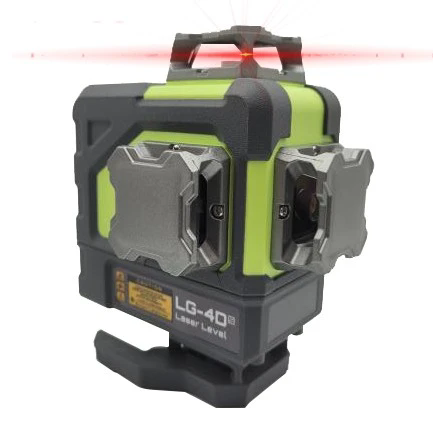
A Red Laser Level has become an essential precision tool in modern construction, renovation, and installation work. It projects highly visible red laser beams to create straight reference lines across walls, floors, and ceilings, significantly improving alignment accuracy and reducing manual measurement errors. This article explains how a red laser level works, its core benefits, practical applications, and how to choose the right model for different working environments. It also highlights common user challenges and how advanced solutions from Laizap help professionals achieve consistent, reliable results.
Outline
-
Understanding Red Laser Level Technology
-
Key Pain Points in Traditional Measuring Methods
-
Core Features and Advantages
-
How a Red Laser Level Works
-
Selection Guide and Comparison Table
-
Step-by-Step Usage Guide
-
Application Scenarios
-
Maintenance and Calibration Tips
-
Frequently Asked Questions
-
Conclusion and Contact Information
Introduction
In construction and interior installation work, precision is not optional—it is mandatory. Even minor misalignment in tiles, shelving, framing, or electrical installations can lead to costly rework and structural inconsistencies. The Red Laser Level has emerged as a reliable solution for professionals who require speed, accuracy, and efficiency in leveling tasks.
Compared with traditional bubble levels and chalk lines, laser-based alignment tools reduce human error and significantly improve workflow efficiency. Laizap has developed advanced Red Laser Level systems designed to meet demanding industrial and commercial requirements.
Common Pain Points in Traditional Measuring Methods
Before laser technology became mainstream, professionals relied on manual measuring tools that often introduced inconsistencies. The most common challenges include:
-
Human Error: Bubble reading inaccuracies and inconsistent marking techniques.
-
Time Consumption: Repeated measurements required for verification.
-
Limited Visibility: Chalk lines fade or become unclear in large spaces.
-
Environmental Interference: Uneven surfaces distort manual leveling tools.
-
Labor Inefficiency: Requires multiple workers for alignment tasks.
These limitations create inefficiencies in both residential and commercial projects, increasing costs and project timelines.
How Red Laser Level Works
A Red Laser Level operates by emitting a highly visible red beam generated through a semiconductor diode. This beam is projected onto surfaces to create a perfectly straight reference line. Internal self-leveling mechanisms ensure that the device automatically adjusts to minor surface irregularities.
The core working principles include:
-
Laser Diode Emission: Generates a coherent red light beam.
-
Self-Leveling System: Uses pendulum or electronic sensors to maintain accuracy.
-
Optical Lens Expansion: Spreads the beam into horizontal or vertical lines.
-
Stabilization Mechanism: Ensures consistent projection even in vibrating environments.
This combination of optical precision and mechanical stability makes the tool suitable for demanding construction environments.
Key Features & Advantages
Modern Red Laser Level devices, including those from Laizap, offer several advanced features that enhance usability and performance.
-
High visibility red beam suitable for indoor environments
-
Self-leveling accuracy within ±0.3mm/m tolerance
-
360-degree horizontal and vertical projection
-
Compact and durable industrial-grade housing
-
Long battery life for extended operation
-
Magnetic mounting for flexible installation
These features significantly reduce setup time and improve precision in complex construction tasks.
Selection & Comparison Guide
Choosing the right Red Laser Level depends on project scale, environment, and required precision. Below is a simplified comparison guide:
|
Feature
|
Entry-Level Model
|
Professional Model (Laizap)
|
|
Beam Visibility
|
Standard indoor visibility
|
Enhanced high-brightness laser
|
|
Accuracy
|
±1.0mm/m
|
±0.3mm/m
|
|
Self-Leveling Range
|
±3°
|
±5° advanced compensation
|
|
Durability
|
Basic protection
|
IP54–IP65 industrial protection
|
|
Working Time
|
6–8 hours
|
12–20 hours extended battery
|
Professional-grade tools such as those offered by Laizap provide superior reliability for demanding construction environments.
How to Use Properly
Correct usage ensures maximum accuracy and extends tool lifespan. Follow these steps:
-
Place the device on a stable surface or mount it securely.
-
Activate the self-leveling mode and wait for stabilization.
-
Check the projected laser line against reference points.
-
Mark surfaces or adjust structures according to the laser guide.
-
Power off after use and store in a protective case.
For outdoor or bright environments, a laser receiver may be required to enhance visibility.
Applications
Red Laser Levels are widely used across multiple industries due to their versatility:
-
Interior wall and ceiling installation
-
Tile and flooring alignment
-
Electrical wiring and conduit setup
-
Door and window frame installation
-
Furniture assembly and shelving alignment
-
Large-scale construction layout planning
Their adaptability makes them essential tools for contractors, engineers, and DIY professionals.
Maintenance & Calibration
Proper maintenance ensures long-term accuracy and durability:
-
Regularly clean the laser aperture with a soft cloth
-
Avoid exposure to extreme humidity or dust
-
Store in a shock-resistant case
-
Perform calibration checks every few months
-
Replace batteries with recommended types only
Laizap products are designed with durable calibration stability, reducing the need for frequent adjustments.
FAQ
1. Can a Red Laser Level be used outdoors?
Yes, but visibility may be reduced in strong sunlight. A receiver is recommended for outdoor use.
2. What is the difference between red and green laser levels?
Green lasers are brighter but consume more power, while red lasers are energy-efficient and suitable for indoor environments.
3. How accurate is a professional Red Laser Level?
High-quality models like those from Laizap can achieve accuracy up to ±0.3mm/m.
4. Do I need training to use it?
No specialized training is required. Basic understanding of leveling principles is sufficient.
Conclusion
A Red Laser Level is a critical tool for improving precision, reducing labor costs, and accelerating construction workflows. By replacing outdated manual methods, it ensures consistent alignment and professional-grade results across multiple applications. Advanced solutions from Laizap combine durability, accuracy, and usability to meet the needs of modern construction professionals.
Whether you are working on a small renovation or a large-scale engineering project, investing in a reliable laser leveling system significantly enhances overall productivity and quality outcomes.
For product inquiries, specifications, and customized solutions, Laizap is ready to support your project needs.
Laizap – contact us today to explore high-precision Red Laser Level solutions and elevate your construction efficiency.