

How Does a Desk Fan Improve Personal Comfort and Airflow?
2026-08-24
Article Summary: A well-designed desk fan can do much more than provide a simple breeze. It can improve personal comfort, support air circulation, reduce the feeling of stagnant indoor air, and provide flexible cooling for offices, bedrooms, study areas, workshops, and commercial spaces. However, choosing the right desk fan requires more than looking at blade size or motor power. Airflow performance, noise level, adjustability, durability, energy consumption, safety, maintenance, and application requirements all influence the overall user experience. This guide explains how a desk fan works, what features matter most, how to choose the appropriate configuration, and how Moxie Air approaches practical cooling requirements.
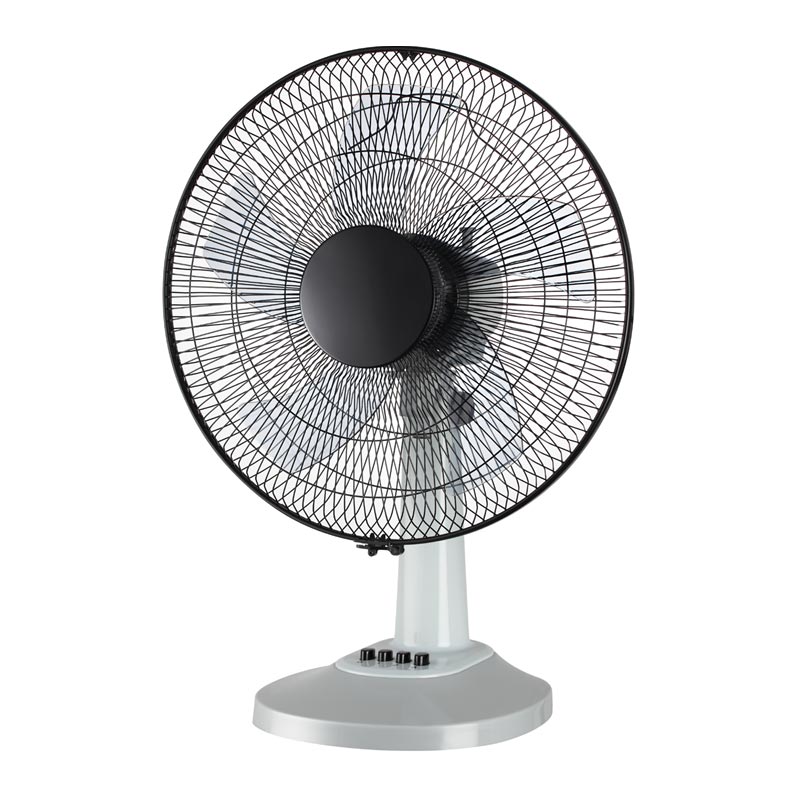
Table of Contents
- Article Outline
- Why Is a Desk Fan Important for Everyday Comfort?
- How Does a Desk Fan Improve Airflow?
- What Features Should a Reliable Desk Fan Provide?
- How Does Motor Performance Affect a Desk Fan?
- How Do Blade Design and Size Influence Cooling?
- How Can a Desk Fan Deliver Cooling Without Excessive Noise?
- How Does Adjustable Airflow Make a Desk Fan More Practical?
- How Can You Choose a Desk Fan for Different Applications?
- Desk Fan Selection Guide
- How Can You Maintain a Desk Fan for Long-Term Performance?
- What Mistakes Should You Avoid When Choosing a Desk Fan?
- Why Consider Moxie Air for Desk Fan Solutions?
- Frequently Asked Questions
- Conclusion
Article Outline
- Understand the role of a desk fan in personal cooling and air movement.
- Evaluate airflow, motor performance, blade construction, noise, and adjustability.
- Match fan size and configuration to the intended application.
- Consider maintenance, durability, safety, and long-term operating requirements.
- Use practical selection criteria instead of choosing a fan based only on appearance or price.
Why Is a Desk Fan Important for Everyday Comfort?
Indoor comfort is affected by more than room temperature. Air movement, humidity, personal activity, workstation layout, and heat generated by electronic equipment can all influence how warm a person feels. A desk fan provides a relatively simple way to create localized airflow without requiring an entire room to be cooled by a larger air-conditioning system.
This makes a desk fan particularly useful when only one area of a room requires additional airflow. A person working at a desk, studying, sleeping, reading, or operating equipment can position the fan toward the desired area and adjust the airflow according to immediate needs.
Another important advantage is flexibility. Unlike fixed ventilation equipment, a portable or desktop fan can generally be repositioned when the user's needs change. This is valuable in offices with changing seating arrangements, bedrooms where the sleeping position varies, classrooms, dormitories, retail counters, and temporary workspaces.
However, a compact footprint should not mean weak performance. A well-engineered desk fan needs to balance size, airflow, stability, motor performance, noise, and energy use. The best configuration depends on where and how the product will be used.
How Does a Desk Fan Improve Airflow?
A desk fan uses rotating blades to move surrounding air and generate a directed stream. When positioned correctly, the airflow can increase the movement of air around the user and reduce the sensation of heat caused by stagnant conditions.
The perceived cooling effect comes primarily from air movement across the skin. As moving air passes over the body, it can improve the evaporation of moisture from the skin, making the environment feel more comfortable even when the actual room temperature has not changed significantly.
Airflow is also important for circulation. Instead of concentrating the fan directly on one person, an oscillating configuration can distribute air across a wider area. This can be useful in shared spaces where several people need improved air movement.
Several factors determine the practical airflow performance of a desk fan:
- Blade diameter: Larger blades can move a substantial volume of air when paired with an appropriate motor and blade profile.
- Motor output: The motor determines how effectively the blades can maintain rotation under operating conditions.
- Blade geometry: Blade pitch and aerodynamic design influence airflow and turbulence.
- Fan speed: Multiple speed settings allow users to balance airflow against noise and energy consumption.
- Grille design: The surrounding grille should protect users while allowing efficient air passage.
- Fan positioning: Even a powerful fan performs poorly if airflow is blocked by walls, equipment, or furniture.
For this reason, selecting a desk fan should focus on the complete airflow system rather than one specification in isolation.
What Features Should a Reliable Desk Fan Provide?
A dependable desk fan should address practical problems rather than simply adding unnecessary functions. Users typically want strong enough airflow, simple controls, stable operation, manageable noise, easy maintenance, and dependable construction.
| Feature | Why It Matters | Typical User Benefit |
|---|---|---|
| Multiple speed settings | Allows airflow to be adjusted according to conditions | Better personal comfort |
| Adjustable tilt | Changes the vertical direction of airflow | More precise cooling |
| Oscillation | Moves airflow across a wider area | Improved circulation |
| Stable base | Reduces unwanted movement during operation | Safer and more reliable placement |
| Low-noise operation | Reduces disturbance during work or sleep | Greater comfort |
| Durable blade materials | Supports repeated operation | Longer service life |
| Easy-to-clean grille | Helps remove accumulated dust | Convenient maintenance |
| Timer function | Allows operation for a predetermined period | Convenient nighttime or scheduled use |
Not every application requires every feature. A basic office fan may prioritize quiet operation and compact dimensions, while a commercial workspace may place greater emphasis on airflow volume, durability, and flexible positioning.
How Does Motor Performance Affect a Desk Fan?
The motor is one of the most important components in a desk fan because it converts electrical energy into mechanical rotation. Its performance affects blade speed, airflow consistency, operating noise, energy consumption, and overall reliability.
A motor that is poorly matched to the blade assembly may produce excessive vibration, insufficient airflow, or unnecessary noise. Conversely, an appropriately matched motor and blade system can deliver stable performance across multiple speed settings.
Modern fan designs may use different motor technologies depending on the target market and product requirements. Brushless DC motor technology, for example, can provide precise speed control and efficient operation in suitable designs. Traditional motor configurations may remain attractive where simplicity, cost, and established manufacturing processes are priorities.
When evaluating a desk fan, buyers should therefore look beyond the motor label. Consider how the motor works together with the blades, grille, housing, control system, and intended operating conditions.
How Do Blade Design and Size Influence Cooling?
Blade size is an obvious specification, but it does not tell the entire story. A larger blade does not automatically guarantee better cooling. Blade profile, pitch, rotational speed, motor torque, and grille structure all contribute to actual airflow performance.
A compact desk fan with carefully designed blades can provide effective personal airflow while occupying very little workspace. Larger models can be advantageous when the user needs stronger airflow or broader circulation across a larger area.
Material selection is also important. Plastic blades can offer low weight, corrosion resistance, and design flexibility. Aluminum blades can provide a robust structure and may be suitable for applications where durability and strong airflow are important considerations.
For commercial buyers, blade material can also affect product positioning. A lightweight model may be more attractive for residential and office use, while a more robust construction can be appropriate for demanding environments.
How Can a Desk Fan Deliver Cooling Without Excessive Noise?
Noise is one of the most common reasons a fan becomes uncomfortable to use. A fan may provide excellent airflow, but if the motor, bearings, blades, or housing generate excessive sound, users may avoid operating it at higher speeds.
This issue becomes especially important in bedrooms, libraries, offices, meeting areas, study rooms, and other environments where concentration matters.
Noise can originate from several sources:
- Motor vibration
- Blade turbulence
- Loose structural components
- Unbalanced blades
- Air resistance around the grille
- Mechanical wear over time
A quieter fan therefore requires more than simply reducing motor speed. Mechanical balance, component quality, blade geometry, housing design, and assembly precision all contribute to the acoustic experience.
For customers purchasing fans in volume, it is useful to test representative samples at different speed levels rather than judging noise performance from a single low-speed setting.
How Does Adjustable Airflow Make a Desk Fan More Practical?
Airflow needs vary throughout the day. A user may want a direct breeze while working but prefer wider circulation when sharing the room with other people.
Adjustable tilt allows the fan head to be directed upward or downward. This simple feature can make a significant difference because desks, chairs, beds, shelves, and other furniture are positioned at different heights.
Oscillation provides another layer of flexibility. Instead of sending air continuously toward one point, the fan can sweep airflow across a broader zone. This is particularly useful in offices, dormitories, bedrooms, classrooms, and commercial areas.
Some desk fan configurations also support alternative placement methods. Depending on the model, a fan may be suitable for desktop, wall-mounted, or floor-standing use. Such versatility can reduce the need to purchase different fan types for different areas.
How Can You Choose a Desk Fan for Different Applications?
The right desk fan depends strongly on the application. Before purchasing, identify the location, required airflow, operating schedule, available space, expected noise level, and maintenance conditions.
Home and Bedroom Use
For bedrooms and personal living spaces, quiet operation is often more important than maximum airflow. Adjustable speed, stable placement, compact dimensions, and timer functionality can improve convenience.
Office and Study Areas
Office users usually need targeted airflow without disrupting conversations or concentration. A compact model with controlled airflow and low operating noise is often a practical choice.
Dormitories and Shared Rooms
Shared spaces require greater flexibility. Oscillation can help distribute air across multiple users, while adjustable tilt makes it easier to direct airflow around furniture and beds.
Commercial Environments
Retail counters, workshops, service areas, and other commercial spaces may require longer operating periods. Durability, airflow consistency, maintenance access, and stable construction become more important.
Large Personal Work Areas
Where a compact fan cannot deliver sufficient airflow, a larger desk fan may provide a better solution. Models with larger blades and stronger motors can be considered when the application requires greater air movement.
Desk Fan Selection Guide
| Application | Priority | Recommended Characteristics |
|---|---|---|
| Bedroom | Quiet comfort | Low noise, adjustable speed, timer |
| Home office | Personal cooling | Compact design, directional airflow, stable base |
| Study room | Concentration | Quiet motor, precise airflow adjustment |
| Shared room | Broad circulation | Oscillation and adjustable tilt |
| Workshop | Air movement | Strong airflow, durable construction |
| Commercial space | Long operating periods | Reliable motor, robust construction, easy maintenance |
For distributors and wholesalers, product range flexibility can be equally important. Offering several sizes, blade materials, speed configurations, and installation options allows a supplier to address different customer segments without relying on one universal model.
How Can You Maintain a Desk Fan for Long-Term Performance?
Regular maintenance is essential because dust naturally accumulates on fan grilles, blades, and housing surfaces. Over time, heavy dust accumulation can affect airflow and increase the load on moving components.
A practical maintenance routine should include:
- Disconnect power before cleaning. Never clean internal components while the fan is connected to a power source.
- Remove surface dust regularly. Pay particular attention to the grille and blade area.
- Inspect the power cord. Look for visible damage, cracking, or unusual wear.
- Check for abnormal vibration. Excessive vibration can indicate an unbalanced blade or loose component.
- Listen for unusual sounds. New rattling, grinding, or buzzing may indicate a developing mechanical problem.
- Keep air passages unobstructed. Do not place objects directly against the intake or outlet.
- Follow the manufacturer's maintenance instructions. Different motor and housing designs have different service requirements.
For commercial users, maintenance intervals can be established according to operating hours and environmental conditions rather than relying only on calendar dates.
What Mistakes Should You Avoid When Choosing a Desk Fan?
Many purchasing problems occur because buyers focus on one specification instead of considering the complete operating environment.
- Choosing only by price: The cheapest product may not provide the required durability or airflow performance.
- Ignoring noise: A fan that is acceptable in a workshop may be unsuitable for a bedroom or office.
- Assuming bigger is always better: A large fan can occupy valuable workspace when a compact model would be sufficient.
- Ignoring placement: A powerful fan cannot perform efficiently if its airflow path is blocked.
- Overlooking maintenance: Difficult-to-clean designs can become inconvenient in dusty environments.
- Buying without application analysis: Residential, office, commercial, and workshop requirements can be very different.
- Ignoring long-term operating conditions: A product intended for occasional use may not be the right choice for extended daily operation.
A better purchasing approach begins with the application and works backward toward the appropriate fan configuration.
Why Consider Moxie Air for Desk Fan Solutions?
Moxie Air focuses on practical fan solutions designed around different airflow and usage requirements. Its desk fan range includes configurations intended for personal cooling, office environments, bedrooms, shared spaces, and applications requiring stronger air movement.
The product range includes different fan sizes and construction approaches, including compact plastic-blade models, larger configurations, aluminum-blade designs, oscillating models, and versions incorporating timer functionality. This variety is useful for buyers who need to match product specifications with different market segments rather than offering a single standardized configuration.
For example, a compact desk fan can be suitable when workspace is limited, while a larger model may be more appropriate when stronger airflow is required. Oscillation can help widen the airflow coverage, while adjustable positioning provides greater control over the direction of cooling.
For wholesalers, importers, distributors, retailers, and project buyers, product consistency is also an important consideration. A professional fan supplier should be able to communicate product specifications clearly and help customers select configurations according to intended applications.
Moxie Air's desk fan solutions are positioned around practical performance, maintainability, and flexible application requirements. Buyers can evaluate different configurations according to fan size, blade material, airflow expectations, operating environment, and desired functions.
Frequently Asked Questions
1. What is a desk fan used for?
A desk fan is primarily used to provide localized airflow for personal comfort. It can be placed on or near a desk, table, counter, bedside area, or other suitable location to create a directed breeze and improve air movement.
2. Is a larger desk fan always more powerful?
Not necessarily. Airflow depends on the combination of blade size, blade geometry, motor performance, rotational speed, grille design, and overall engineering. A larger fan can provide greater airflow potential, but the complete design determines actual performance.
3. Why is oscillation useful?
Oscillation moves the airflow across a wider area instead of directing it continuously toward one location. This can make the fan more useful in shared rooms and spaces where several people need air circulation.
4. What should I consider when buying a desk fan for an office?
Consider noise level, airflow control, footprint, stability, adjustment range, maintenance requirements, and expected operating hours. A quiet fan with precise airflow control is generally more suitable for focused work environments.
5. Are plastic blades suitable for desk fans?
Yes. Plastic blades can provide a lightweight and practical solution for many residential and office applications. The suitability depends on the blade material, structural design, motor matching, and intended operating conditions.
6. When should I consider an aluminum-blade desk fan?
An aluminum-blade configuration can be considered when durability and strong airflow are important purchasing factors. The final choice should still be based on the complete product design and application requirements.
7. How can I reduce desk fan noise?
Use the fan on an appropriate speed setting, place it on a stable surface, keep the grille and blades clean, and inspect the fan for loose or damaged components. If abnormal noise continues, discontinue use and follow the manufacturer's service instructions.
8. Can a desk fan replace air conditioning?
A desk fan and an air-conditioning system perform different functions. A fan primarily moves air and improves the sensation of cooling, while air conditioning is designed to control room temperature and, depending on the system, humidity. A desk fan can complement air conditioning by improving localized air movement.
9. What size desk fan should I choose?
Choose the size according to the available space, required airflow, distance between the fan and user, and intended application. Compact models are useful for limited workspaces, while larger models can be considered when greater airflow coverage is needed.
10. Why should businesses work with a professional desk fan manufacturer?
A professional manufacturer can provide product specifications, multiple configurations, production support, and application-oriented recommendations. This is particularly valuable for distributors and wholesalers serving customers with different performance and market requirements.
Conclusion
A desk fan can be a simple product, but achieving reliable cooling performance requires careful engineering. Motor selection, blade design, airflow, noise control, stability, adjustability, material selection, and maintenance all influence the final user experience.
The most suitable fan is not necessarily the largest or the least expensive option. It is the model that provides an appropriate balance between airflow performance, operating noise, size, durability, convenience, and application requirements.
For homes, offices, study spaces, commercial environments, and other applications, understanding these factors makes it easier to select a fan that delivers dependable everyday comfort. For businesses, a diversified product range can also make it easier to meet the needs of different customers and market segments.
Moxie Air provides a range of desk fan solutions designed around different airflow, size, blade, adjustment, and operating requirements. Whether you are sourcing compact personal cooling products or looking for higher-airflow configurations for commercial use, evaluating the application first can help you make a more informed purchasing decision.
Looking for a dependable Desk Fan solution for your market or application? Explore the available configurations from Moxie Air and discuss your requirements with the team. For product specifications, customization discussions, wholesale cooperation, or purchasing support, contact us today and let Moxie Air help you find a practical cooling solution.