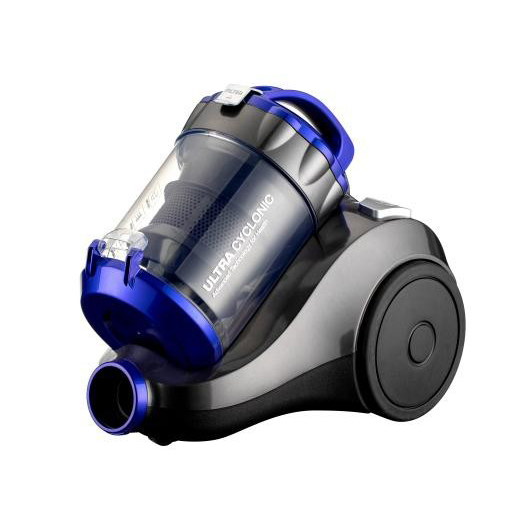
A cyclone vacuum cleaner uses centrifugal separation to help remove dust and debris from the airflow before the air reaches the filtration system. This design can support stable suction, reduce filter loading, simplify maintenance, and improve the overall cleaning experience. For households, offices, vehicle interiors, workshops, and other applications, understanding how cyclone technology works makes it easier to choose a vacuum cleaner that matches real cleaning requirements.
Article Summary
Vacuum cleaning is not simply about choosing the model with the highest advertised suction power. A practical cleaning system needs to maintain airflow, separate dirt efficiently, protect its filter, remain easy to empty, and provide comfortable operation over repeated cleaning cycles. These requirements become particularly important when a vacuum is used frequently or encounters a mixture of fine dust, hair, crumbs, fibers, and larger debris.
A Cyclone vacuum cleaner addresses part of this challenge through centrifugal airflow. Instead of allowing all collected particles to travel directly toward the filter, the cyclone chamber changes the direction and velocity of the incoming air. Heavier particles are driven outward and downward into the dust collection area, while the separated airflow continues toward the filtration stage.
This article explains the operating principle, major components, advantages, limitations, maintenance requirements, application scenarios, and purchasing considerations of cyclone vacuum cleaners. It also explains what buyers should examine beyond basic suction specifications when selecting equipment for residential or commercial cleaning.
Article Outline
-
Understanding the basic structure and operating principle of cyclone vacuum technology.
-
Explaining how centrifugal separation helps control dust before filtration.
-
Examining the benefits and practical limitations of cyclone systems.
-
Comparing cyclone designs with conventional vacuum arrangements.
-
Matching vacuum cleaner characteristics with different cleaning environments.
-
Providing a practical purchasing and maintenance checklist.
-
Answering common questions from household and commercial users.
What Is a Cyclone Vacuum Cleaner?
A cyclone vacuum cleaner is a vacuum system that uses a controlled swirling airflow to separate dust and debris from the air stream. The central idea is relatively straightforward: when air containing particles enters the cyclone chamber, the airflow rotates rapidly. Centrifugal force pushes heavier particles toward the outer wall of the chamber, allowing them to fall into a dust collection area.
The partially cleaned air then moves toward the next stage of the vacuum system, which may include one or more filters. By removing a substantial portion of larger particles before they reach the filter, the cyclone arrangement can help reduce the amount of debris accumulated directly on the filtration media.
This approach is especially useful for modern vacuum cleaners designed to handle different floor surfaces and a mixture of everyday debris. Depending on the product architecture, cyclone systems may be configured as single-cyclone or multi-cyclone designs. Some products also combine cyclone separation with washable filters, HEPA filtration, motor protection systems, LED cleaning heads, detachable batteries, or handheld configurations.
Key point: Cyclone technology does not mean that filtration becomes unnecessary. Instead, the cyclone stage and filtration system work together. The cyclone separates a significant portion of the incoming debris, while downstream filters handle finer particles.
How Does a Cyclone Vacuum Cleaner Work?
The working process can be divided into several connected stages. Understanding these stages helps users identify why airflow design, dust separation, filter condition, and motor performance all influence the actual cleaning result.
-
Air and debris enter the vacuum: The suction system draws air containing dust, hair, crumbs, fibers, and other particles through the cleaning head and intake path.
-
Air enters the cyclone chamber: The internal geometry directs the incoming airflow into a rotational path rather than allowing it to move straight toward the filter.
-
Centrifugal separation occurs: Heavier particles are driven toward the outside of the rotating airflow because of centrifugal effects.
-
Debris falls into the collection area: Once separated from the primary airflow, particles move downward into the dust container.
-
Air continues toward filtration: The remaining airflow passes through the filtration stage, where finer particles are captured.
-
Filtered air exits: After passing through the appropriate filtration and motor airflow path, the air is discharged from the vacuum cleaner.
The effectiveness of this process depends on the geometry of the cyclone chamber, airflow velocity, particle characteristics, filter condition, sealing performance, and motor capability. Therefore, two products that both use the term “cyclone” may deliver noticeably different real-world results.
Core Components of a Cyclone Vacuum Cleaner
A reliable cyclone vacuum cleaner is more than a motor and a dust container. Each component contributes to airflow, cleaning performance, user comfort, or product durability.
|
Component
|
Main Function
|
What Buyers Should Consider
|
|
Motor
|
Creates the airflow and suction pressure.
|
Power, durability, noise, thermal management, and efficiency.
|
|
Cyclone Chamber
|
Separates particles from the primary airflow.
|
Airflow geometry, separation efficiency, and clog resistance.
|
|
Dust Container
|
Stores collected debris.
|
Capacity, emptying method, sealing, and cleaning convenience.
|
|
Primary Filter
|
Captures finer particles after cyclone separation.
|
Washability, replacement availability, and filtration performance.
|
|
Cleaning Head
|
Transfers suction to the target surface.
|
Width, maneuverability, brush design, and surface compatibility.
|
|
Airflow Path
|
Controls movement of air through the machine.
|
Leaks, restrictions, bends, and ease of cleaning.
|
Why Choose Cyclone Technology?
The main advantage of cyclone technology is that it introduces a mechanical separation stage before the finest filtration stage. This can be valuable when a vacuum cleaner regularly encounters substantial amounts of dust and debris.
1. More stable airflow
Effective particle separation can help prevent the filtration system from becoming overloaded too quickly. When filters remain reasonably clear, airflow can be maintained more consistently.
2. Reduced filter loading
Larger particles can be separated before reaching the filter. This does not eliminate filter maintenance, but it can reduce the amount of material that needs to be captured by the filter.
3. Convenient dust collection
Many cyclone vacuum cleaners use transparent or easily removable dust containers, allowing users to see the collected debris and empty the container without handling a traditional disposable dust bag.
4. Flexible cleaning applications
Cyclone vacuum configurations can be designed for hard floors, carpets, furniture, kitchens, vehicles, offices, garages, and other everyday cleaning environments.
5. Potentially lower consumable requirements
Bagless cyclone designs can reduce dependence on disposable collection bags. However, filters still require cleaning or replacement according to the product design and operating conditions.
Cyclone Vacuum Cleaner vs. Conventional Vacuum Design
Choosing between vacuum designs should depend on the cleaning environment rather than marketing terminology alone. The following comparison provides a practical starting point.
|
Factor
|
Cyclone Vacuum Cleaner
|
Traditional Bag-Based Design
|
|
Dust separation
|
Uses centrifugal separation before or alongside filtration.
|
Dust is primarily retained inside the collection bag.
|
|
Disposable bags
|
Often bagless.
|
Usually requires compatible replacement bags.
|
|
Dust visibility
|
Many models allow direct visual inspection of the dust container.
|
Dust level may be less visible.
|
|
Maintenance
|
Requires dust-container and filter maintenance.
|
Requires bag replacement and filter maintenance.
|
|
Long-term operating considerations
|
Less dependence on disposable bags, depending on design.
|
Ongoing cost and availability of replacement bags should be considered.
|
Neither approach is automatically ideal for every user. A cyclone design may be attractive for users who prefer bagless operation and easy dust visibility, while some bag-based systems can be convenient for applications where dust containment during disposal is a major priority.
Where Are Cyclone Vacuum Cleaners Used?
The compact and adaptable nature of cyclone technology makes it suitable for a broad range of cleaning tasks. The appropriate configuration depends on the surface, debris type, cleaning frequency, and required mobility.
-
Homes: Suitable for everyday removal of dust, crumbs, hair, fibers, and common floor debris.
-
Carpeted areas: Appropriate cleaning-head design can help lift embedded debris from carpet surfaces.
-
Hard floors: Useful for tile, wood, laminate, stone, and other smooth surfaces when paired with a suitable cleaning head.
-
Kitchens: Convenient for collecting dry crumbs and loose debris around work areas.
-
Vehicle interiors: Compact handheld or cordless configurations can make seats, mats, consoles, and narrow spaces easier to clean.
-
Offices: Useful for routine floor and workstation-area cleaning.
-
Garages and workshops: Certain higher-capacity configurations can handle larger quantities of dry debris.
-
Commercial environments: Suitable configurations can support frequent cleaning in shops, offices, accommodation facilities, and other premises.
Important: A household cyclone vacuum cleaner should not automatically be treated as an industrial dust collector. Fine hazardous dust, wet materials, combustible dust, liquids, or specialized contaminants may require purpose-built equipment with appropriate safety provisions.
How to Choose the Right Cyclone Vacuum Cleaner
Selecting a cyclone vacuum cleaner based solely on motor wattage or a single suction figure can lead to disappointing results. A better approach is to evaluate the complete cleaning system.
-
Define the cleaning environment. Determine whether the vacuum will primarily be used for floors, carpets, furniture, vehicles, offices, kitchens, or mixed environments.
-
Identify the dominant debris. Hair, fine dust, crumbs, fibers, and larger particles place different demands on the intake, cyclone chamber, brush, and filtration system.
-
Check airflow design. A powerful motor cannot compensate indefinitely for restricted passages, poor seals, or a poorly matched cleaning head.
-
Evaluate filtration. Look at the number and type of filters, whether they are washable, and how easily replacement filters can be obtained.
-
Consider dust-container capacity. A small container may be acceptable for quick daily cleaning but inconvenient for larger spaces or frequent heavy debris collection.
-
Consider ergonomics. Weight, handle position, balance, cord arrangement, battery configuration, and cleaning-head movement all affect user fatigue.
-
Assess noise requirements. Homes, offices, hotels, and other occupied spaces may require careful attention to operating noise.
-
Examine maintenance access. A product that is difficult to disassemble and clean can become inconvenient even if its initial cleaning performance is strong.
|
Requirement
|
Recommended Focus
|
|
Small apartment
|
Compact size, maneuverability, moderate dust capacity, convenient storage.
|
|
Large home
|
Long operating time, larger dust capacity, efficient floor and carpet cleaning.
|
|
Pet household
|
Hair-handling capability, suitable brush design, effective filtration, easy cleaning.
|
|
Office
|
Low operating noise, mobility, reliable filtration, and easy maintenance.
|
|
Vehicle cleaning
|
Compact body, narrow attachments, cordless flexibility, and good maneuverability.
|
Maintenance and Cleaning Practices
Cyclone separation can reduce the load placed on downstream filters, but it does not eliminate maintenance. Regular care is essential for preserving airflow and avoiding unnecessary strain on the motor.
-
Empty the dust container before it becomes excessively full. An overloaded container can interfere with airflow and make emptying less convenient.
-
Clean washable filters correctly. Follow the manufacturer's cleaning and drying instructions. A filter should be completely dry before it is reinstalled when the product requires dry filtration media.
-
Inspect the cyclone chamber. Hair, fibers, and sticky debris may accumulate around internal components and should be removed when necessary.
-
Check the cleaning head. Remove wrapped hair and threads from brushes or rotating components.
-
Inspect the hose and intake path. Blockages can cause a noticeable reduction in airflow and cleaning performance.
-
Check seals and connections. Air leakage can reduce the effectiveness of the vacuum system.
-
Replace worn filters or components. Cleaning cannot restore every filter or mechanical component indefinitely.
One of the most common mistakes is to focus exclusively on the motor while ignoring the airflow path. If a vacuum cleaner suddenly loses suction, the cause may be a blocked intake, full dust container, dirty filter, clogged brush, or damaged seal rather than motor failure.
Common Problems and Practical Solutions
|
Problem
|
Possible Cause
|
Practical Action
|
|
Weak suction
|
Full container, clogged filter, blocked tube, or airflow leakage.
|
Empty, clean, inspect, and reconnect the airflow path.
|
|
Motor becomes unusually hot
|
Restricted airflow or prolonged operation under excessive load.
|
Stop operation, inspect filters and blockages, and follow product instructions.
|
|
Dust escapes
|
Poor sealing, incorrectly installed filter, or damaged component.
|
Check filter placement, seals, and dust-container connections.
|
|
Brush stops rotating
|
Hair, threads, or debris wrapped around the brush.
|
Switch off the machine and clean the brush according to the instructions.
|
|
Unusual noise
|
Blockage, loose component, foreign object, or mechanical wear.
|
Stop use and inspect the airflow and moving components.
|
Buyer Checklist for a Cyclone Vacuum Cleaner
Before purchasing a cyclone vacuum cleaner for private-label, wholesale, distribution, or direct-use requirements, buyers can use the following checklist to evaluate the product more systematically:
☐ Is the vacuum intended primarily for hard floors, carpets, vehicles, furniture, or mixed surfaces?
☐ Is the dust container large enough for the intended cleaning frequency?
☐ Can the dust container be removed and emptied conveniently?
☐ Are filters washable, replaceable, or both?
☐ Are replacement filters and other wear components readily available?
☐ Does the cleaning head match the intended surface?
☐ Is the vacuum comfortable to hold and maneuver?
☐ Is the operating noise acceptable for the target environment?
☐ If cordless, is the battery capacity appropriate for the intended cleaning duration?
☐ Are the cyclone chamber, filters, and airflow path easy to maintain?
☐ Does the supplier provide clear product specifications and after-sales support?
☐ For commercial purchasing, can the supplier support stable production and customized requirements?
Frequently Asked Questions
1. What is the main benefit of a cyclone vacuum cleaner?
The main benefit is the use of centrifugal separation to remove a substantial portion of dust and debris from the airflow before the air reaches finer filtration. This can help reduce filter loading and support more consistent airflow when the vacuum is properly maintained.
2. Does a cyclone vacuum cleaner need a filter?
Yes. Cyclone separation and filtration perform different functions. The cyclone stage separates many particles mechanically, while filters capture finer airborne particles that remain in the airflow.
3. Are cyclone vacuum cleaners suitable for carpets?
They can be. However, carpet cleaning performance depends on the complete system, including suction characteristics, cleaning-head design, brush action, airflow, and filtration. Buyers should evaluate these factors together rather than relying only on the cyclone label.
4. Are cyclone vacuum cleaners good for pet hair?
Many can handle pet hair effectively when equipped with an appropriate cleaning head and airflow system. Users should pay particular attention to brush maintenance because long hair can wrap around rotating components.
5. How often should a cyclone vacuum cleaner be cleaned?
The appropriate frequency depends on usage and debris volume. The dust container should generally be emptied before it becomes excessively full, while filters and cyclone components should be inspected and cleaned according to the manufacturer's instructions and actual operating conditions.
6. Can cyclone vacuum cleaners be used for commercial cleaning?
Yes, suitable models can be used for offices, retail environments, accommodation facilities, vehicle cleaning, and other commercial applications. The model should be selected according to operating frequency, dust volume, required runtime, durability, and maintenance requirements.
7. Does a larger motor always mean stronger cleaning performance?
Not necessarily. Cleaning performance depends on the interaction between motor output, airflow, pressure, cyclone efficiency, seals, filters, cleaning head, and overall system design. A well-balanced airflow system can be more useful than focusing on one motor specification alone.
8. What should wholesalers consider when sourcing cyclone vacuum cleaners?
Wholesalers should consider product consistency, production capacity, quality control, component availability, packaging, certifications required for the destination market, customization capability, lead times, and after-sales support in addition to the initial unit price.
9. Can cyclone vacuum cleaners be customized?
Depending on the manufacturer and product platform, customization may include appearance, branding, accessories, packaging, configuration, and other product requirements. Commercial buyers should discuss technical and production requirements with the manufacturer before placing an order.
Conclusion
A cyclone vacuum cleaner is designed around a practical principle: use controlled centrifugal airflow to separate dust and debris before the remaining air reaches the filtration system. When the cyclone chamber, motor, dust container, filters, seals, and cleaning head are properly matched, the result can be a convenient and effective cleaning solution for a wide variety of everyday applications.
The right choice should not be based on a single specification. Buyers should evaluate the entire airflow system, filtration arrangement, dust capacity, cleaning accessories, ergonomics, maintenance requirements, operating environment, and long-term component availability. These factors have a direct influence on how the vacuum performs after the initial purchase.
For businesses looking for reliable cyclone vacuum cleaner solutions, Ningbo Yah Technology Co., Ltd. provides cyclone vacuum cleaner products covering different configurations and application requirements. A professional supplier can help buyers evaluate the appropriate product structure, configuration, and commercial requirements according to the intended market and cleaning scenarios.
Looking for a Cyclone Vacuum Cleaner Supplier?
Whether you are sourcing cyclone vacuum cleaners for distribution, retail, private-label projects, or commercial cleaning applications, selecting the right product configuration and manufacturing partner can make a significant difference. Ningbo Yah Technology Co., Ltd. can provide product information and discuss suitable solutions according to your requirements.
Have questions about cyclone vacuum cleaner specifications, configurations, customization, or wholesale purchasing? Please contact us today to discuss your requirements and find a suitable solution.