

How Does a Battery Sprayer Improve Spraying Efficiency and User Comfort?
2026-08-24
Article Summary: A modern Battery Sprayer can make spraying tasks faster, more consistent, and less physically demanding than traditional manually pumped equipment. By replacing repeated hand pumping with battery-powered pressure generation, it helps users maintain a steadier spray pattern while reducing fatigue during gardening, horticulture, landscaping, greenhouse work, orchard management, and agricultural applications. This guide explains how a Battery Sprayer works, what features matter most, how to select the right capacity and configuration, and how proper operation and maintenance can improve long-term performance.
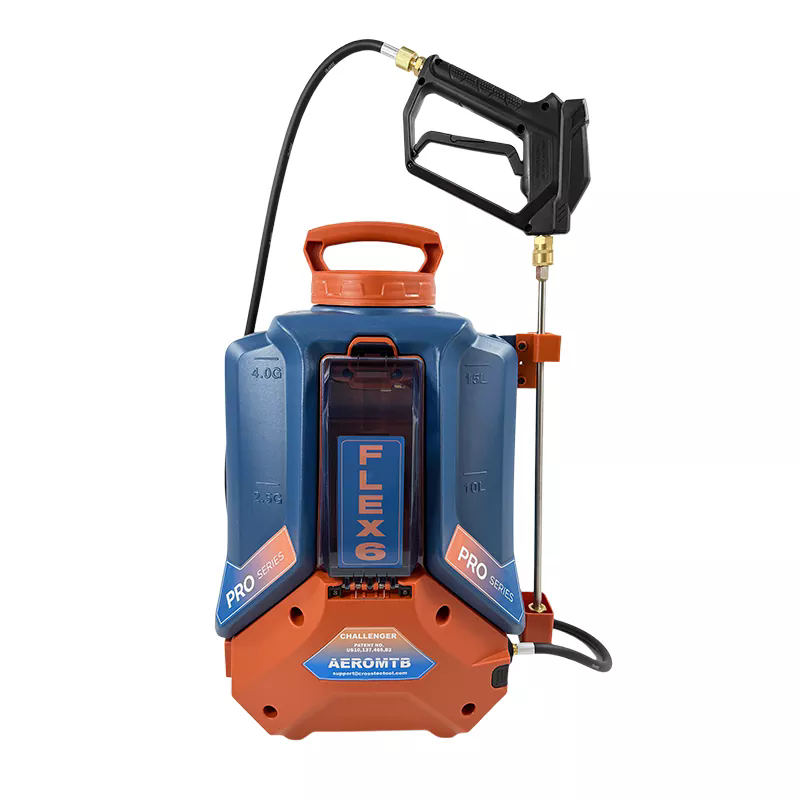
Table of Contents
- Article Outline
- Why Is a Battery Sprayer Becoming a Practical Choice?
- How Does a Battery Sprayer Work?
- What Components Determine Spraying Performance?
- What Benefits Can Users Expect?
- Where Can a Battery Sprayer Be Used?
- How Can You Choose the Right Battery Sprayer?
- How Should a Battery Sprayer Be Operated?
- How Can Maintenance Extend Service Life?
- Battery Sprayer vs. Manual Sprayer
- Why Consider Crosstec?
- Frequently Asked Questions
- Conclusion
Article Outline
- Understand why powered spraying can reduce repetitive manual work.
- Learn the basic operating principle of a Battery Sprayer.
- Identify the components that influence pressure, coverage, durability, and comfort.
- Compare different sprayer configurations for different working environments.
- Choose battery capacity, tank size, pump type, nozzle configuration, and carrying method according to the application.
- Follow practical operating and maintenance procedures to achieve reliable performance.
- Understand how Crosstec approaches battery-powered spraying solutions and customization.
Why Is a Battery Sprayer Becoming a Practical Choice?
Spraying appears simple until the work covers hundreds of plants, a large lawn, an orchard, a greenhouse, or a commercial landscape. Traditional pump sprayers require the operator to repeatedly pressurize the tank. As working hours increase, this repeated motion can become one of the biggest sources of fatigue.
A Battery Sprayer addresses this problem by using an electric pump powered by a rechargeable battery. Instead of manually generating pressure throughout the application, the operator can concentrate on directing the spray and maintaining an appropriate application speed.
The practical advantage is not simply that the equipment is powered by electricity. A well-designed system should provide a useful combination of stable pressure, appropriate flow, manageable weight, convenient controls, suitable battery endurance, and easy cleaning.
For professional users, these details directly influence productivity. For home gardeners, they can determine whether routine spraying is a quick maintenance task or a tiring job that gets postponed.
How Does a Battery Sprayer Work?
The operating principle is straightforward. Liquid is placed inside the sprayer tank, while a rechargeable battery supplies energy to the pump. When the operator activates the control, the pump draws liquid from the tank and pushes it through the spray system toward the lance and nozzle.
The nozzle then converts the pressurized liquid into a controlled spray pattern. Depending on the nozzle design and operating conditions, the output can be adjusted for different applications, such as localized treatment, broader coverage, or plant-care operations.
The basic operating sequence is:
- Fill the tank with the appropriate liquid according to its intended application and product instructions.
- Install and inspect the lance, hose, filter, and nozzle.
- Install a properly charged compatible battery.
- Activate the pump or operating control.
- Adjust the spray output to match the task.
- Apply the liquid using a consistent movement and appropriate distance.
- Switch the equipment off after spraying and clean the system according to the manufacturer's instructions.
Some advanced Battery Sprayer configurations can provide variable-speed control, allowing the operator to adjust output instead of relying on a single fixed spraying level. Certain models also incorporate self-cleaning functions, which can simplify post-operation maintenance.
What Components Determine Spraying Performance?
Not every battery-powered sprayer delivers the same user experience. The overall performance depends on how the pump, battery, tank, controls, hose, lance, nozzle, and carrying system work together.
| Component | What It Influences | What to Look For |
|---|---|---|
| Battery | Operating endurance and charging requirements | Suitable capacity, stable output, protection features, and compatibility |
| Pump | Pressure and liquid delivery | Reliable construction, suitable pressure range, and corrosion resistance |
| Tank | Liquid capacity and working weight | Durable material, appropriate capacity, secure connections, and practical filling |
| Nozzle | Spray pattern and application coverage | Configuration appropriate for the intended task |
| Lance and hose | Reach and operator control | Durability, flexibility, secure connections, and comfortable handling |
| Carrying system | User comfort during extended operation | Balanced weight distribution, suitable straps, and ergonomic design |
A common purchasing mistake is to focus only on tank capacity. A larger tank can reduce refill frequency, but it also becomes heavier when filled. The best equipment balances capacity with the physical demands of the application.
What Benefits Can Users Expect?
Reduced Manual Pumping
The most obvious benefit is the elimination of continuous manual pressurization. The electric pump handles pressure generation, allowing the operator to spend more time on the actual application rather than repeatedly operating a pump handle.
More Consistent Application
Manual pressure can fluctuate as the operator works. Battery-powered pumping can provide a more stable operating condition, helping users maintain a more consistent spray output when the equipment is correctly selected and adjusted.
Lower Operator Fatigue
Spraying for a long period can involve several types of physical stress: repeated pumping, carrying the equipment, holding the lance, and walking across the treatment area. Removing repetitive pumping can make a meaningful difference, particularly during extended jobs.
Better Productivity
When operators do not have to stop frequently to repressurize the tank, work can proceed more continuously. This can be especially valuable for landscapers, greenhouse operators, orchard workers, maintenance teams, and agricultural distributors supplying professional users.
Flexible Configuration
Different applications require different equipment. Backpack models are useful when mobility is important, while wheeled and trolley configurations can be more suitable when larger liquid volumes need to be transported across relatively accessible surfaces.
Modern Control Options
Variable-speed systems can provide additional control over liquid delivery. Some modern configurations also offer smart control features, giving users more flexibility when different crops, plants, surfaces, or application conditions require different spraying intensities.
Where Can a Battery Sprayer Be Used?
The versatility of battery-powered spraying equipment makes it suitable for a wide range of professional and domestic environments.
- Home gardening: Routine plant-care and garden maintenance tasks.
- Greenhouse cultivation: Controlled spraying in enclosed growing environments.
- Orchards: Treatment of trees and plants across larger growing areas.
- Vegetable farming: Application tasks requiring controlled and repeatable coverage.
- Landscape maintenance: Lawn, ornamental plant, and commercial property maintenance.
- Horticulture: Plant protection and routine crop-care applications.
- Pest and weed management: Targeted spraying when the selected liquid and equipment are appropriate.
- Fertilizer application: Liquid fertilizer distribution where the equipment is compatible with the formulation.
- Sanitation and disinfection: Suitable liquid applications when the sprayer materials and chemical compatibility requirements are satisfied.
Users should always verify chemical compatibility, application instructions, personal protective equipment requirements, and local regulations before using any treatment product.
How Can You Choose the Right Battery Sprayer?
Selecting a sprayer should begin with the job rather than the product name. Consider how much liquid is required, how long the operator works continuously, how far the equipment must be carried, and how precise the application needs to be.
1. Select the Appropriate Tank Capacity
Tank capacity should match the working area and operator requirements. A small tank may be easier to carry, while a larger tank can reduce the number of refills. However, capacity should not be considered separately from filled weight.
For example, a backpack sprayer may be suitable for users who frequently move between rows of plants, while a wheeled configuration can make larger liquid volumes easier to transport.
2. Evaluate Battery Endurance
Battery runtime should correspond to the expected working cycle. If the equipment is intended for extended professional use, battery capacity and charging time become especially important.
A practical evaluation should consider:
- Expected operating duration per work session
- Charging availability
- Availability of replacement batteries
- Battery protection functions
- Battery compatibility with the selected sprayer
3. Check Pump Performance
Pressure and flow should be appropriate for the intended application. Excessive pressure is not automatically better. The correct output depends on the liquid, nozzle, target, desired coverage, and application method.
4. Consider Variable-Speed Control
If the equipment will be used for several applications, adjustable output can provide greater flexibility. Variable-speed control allows the operator to adapt the spraying intensity instead of using the same setting for every task.
5. Examine Ergonomics
Comfort becomes increasingly important as spraying time increases. Look for balanced weight distribution, practical straps, comfortable handles, accessible controls, and a lance that can be operated without excessive wrist or arm strain.
6. Consider Cleaning Requirements
Residual liquid can create problems when equipment is not cleaned correctly. A system designed with accessible components, suitable filters, and convenient cleaning features can reduce maintenance effort and help preserve performance.
How Should a Battery Sprayer Be Operated?
Good operating practices protect both the equipment and the operator.
- Inspect before use. Check the tank, hose, connections, nozzle, battery, and pump for visible damage.
- Use the correct liquid. Confirm that the formulation is compatible with the sprayer materials and intended application.
- Do not overfill. Maintain the appropriate fill level recommended by the equipment manufacturer.
- Check the nozzle. A partially blocked nozzle can change the spray pattern and affect application consistency.
- Start with an appropriate setting. Adjust output according to the application rather than automatically choosing maximum flow.
- Maintain consistent movement. Keep the lance at a relatively consistent distance and move at a controlled speed.
- Use appropriate protective equipment. Follow the safety requirements associated with the liquid being applied.
- Clean after use. Empty and rinse the system as required, paying particular attention to the hose, nozzle, filter, and pump pathway.
- Store correctly. Keep the equipment clean and dry, and store the battery according to its charging and storage instructions.
These procedures are especially important when the same equipment is used repeatedly. Preventive care is generally easier and less costly than dealing with a clogged pump or damaged component after a long period of neglect.
How Can Maintenance Extend Service Life?
Maintenance does not need to be complicated, but it needs to be consistent. Many sprayer problems originate from contamination, chemical residue, poor storage, or neglected connections rather than from normal mechanical wear.
| Maintenance Task | Recommended Attention | Purpose |
|---|---|---|
| Inspect hoses and fittings | Before operation | Identify leaks, cracks, or loose connections |
| Clean the nozzle | After use and when output changes | Prevent blockage and irregular spray patterns |
| Check the filter | Regularly | Reduce debris entering the pump system |
| Rinse the liquid pathway | After applicable operations | Reduce residue accumulation |
| Inspect the battery | Before charging and storage | Identify damage and maintain safe operation |
| Store the equipment properly | After extended use | Protect components and reduce unnecessary deterioration |
Some Crosstec models incorporate self-cleaning functions designed to simplify maintenance. Such features can be particularly useful for users who operate spraying equipment frequently and need to minimize cleaning-related downtime.
Battery Sprayer vs. Manual Sprayer
Both manual and battery-powered sprayers can be useful, but their strengths are different.
| Factor | Battery Sprayer | Manual Sprayer |
|---|---|---|
| Pressure generation | Powered by an electric pump | Requires manual pumping |
| Operator fatigue | Generally lower during extended spraying | Can increase with repeated pumping |
| Pressure consistency | Can remain more stable with suitable equipment | Depends heavily on pumping frequency |
| Productivity | Well suited to repeated or larger-area work | Often suitable for smaller jobs |
| Power requirement | Requires battery charging | No battery required |
| Control options | May include variable-speed or smart functions | Usually simpler mechanical control |
The right choice depends on workload. For occasional small-area spraying, a manual unit may be adequate. For frequent operation, extended work sessions, or applications where consistent output is important, a Battery Sprayer can provide a more convenient workflow.
Why Consider Crosstec?
Crosstec develops battery-powered spraying equipment for gardening, horticulture, landscaping, greenhouse cultivation, and agricultural applications. Its product range includes backpack, wheeled, soft-bag, and accessory solutions designed for different working requirements.
The company's approach focuses on combining practical spraying performance with operator convenience. Depending on the model, features can include lithium-ion battery systems, adjustable output, Bluetooth-related control functions, self-cleaning capabilities, corrosion-resistant components, and ergonomic carrying systems.
Crosstec also supports OEM and ODM requirements for distributors, wholesalers, retailers, and brand owners. Customization can cover areas such as:
- Brand logo and color options
- Packaging requirements
- Battery capacity configurations
- Spray lance and nozzle configurations
- Functional modifications
- Private-label product solutions
This flexibility is valuable for businesses that need equipment adapted to a particular market rather than a one-size-fits-all product.
A strong supplier should also be evaluated beyond the product specification sheet. Manufacturing capability, component quality, testing procedures, customization support, communication, and after-sales service all influence the total purchasing experience.
Frequently Asked Questions
Is a Battery Sprayer better than a manual sprayer?
For frequent or extended spraying, a Battery Sprayer can reduce repetitive pumping, lower operator fatigue, and provide more consistent powered operation. A manual sprayer may still be practical for occasional small-area work where simplicity and low initial equipment requirements are priorities.
How long can a Battery Sprayer operate on one charge?
Runtime depends on battery capacity, pump load, operating setting, temperature, liquid characteristics, and usage pattern. Instead of relying on a universal runtime figure, buyers should compare the battery specification with the expected working cycle and consider whether spare batteries are available.
Can a Battery Sprayer be used for agricultural applications?
Yes, suitable models can be used for various agricultural, horticultural, greenhouse, orchard, and crop-care applications. However, the sprayer must be compatible with the intended liquid, and users should always follow the chemical manufacturer's application instructions and applicable regulations.
What tank capacity should I choose?
The ideal capacity depends on the area to be treated, refill availability, operator strength, and transportation requirements. Backpack models can be convenient for mobility, while wheeled configurations can make larger liquid volumes easier to move.
Are lithium-ion batteries suitable for sprayers?
Lithium-ion systems can provide useful operating endurance, stable electrical output, and convenient recharging. The actual performance depends on battery quality, capacity, protection circuitry, charger compatibility, and the power requirements of the sprayer.
What causes uneven spraying?
Possible causes include a partially blocked nozzle, dirty filter, damaged hose, unsuitable pressure setting, pump problems, or inconsistent operator movement. Regular inspection and cleaning can prevent many of these issues.
How should a Battery Sprayer be cleaned?
Follow the manufacturer's cleaning procedure. In general, remove remaining liquid appropriately, rinse compatible liquid pathways, clean the nozzle and filter, inspect connections, and allow relevant components to dry before storage. Chemical products should always be handled according to their safety instructions.
Can Crosstec provide customized Battery Sprayer solutions?
Crosstec provides OEM and ODM options that can include branding, color, packaging, battery configurations, nozzle and lance arrangements, functional upgrades, and private-label solutions, depending on project requirements.
Conclusion
A Battery Sprayer is more than a powered alternative to a hand-pumped sprayer. When the pump, battery, tank, controls, nozzle, and ergonomic design are properly matched to the application, it can create a more efficient and comfortable spraying workflow.
The key is to select equipment according to actual working conditions. Consider tank capacity, battery endurance, pump performance, spray control, portability, cleaning requirements, chemical compatibility, and long-term maintenance before making a purchase.
For users and businesses seeking a combination of practical functionality and customization flexibility, Crosstec offers a range of battery-powered spraying solutions for gardening, horticulture, landscaping, greenhouse, and agricultural applications. From portable backpack systems to larger wheeled configurations, the right design can help reduce unnecessary labor while maintaining dependable spraying performance.
Looking for a Battery Sprayer for your garden, agricultural project, landscaping business, or private-label product line? Contact Crosstec today to discuss your application, required configuration, OEM/ODM needs, and customized Battery Sprayer solution. Contact us to start your project and find the right spraying equipment for your market.