

How Do You Maintain a Cloth Cutting Machine to Prevent Blade Dulling
2026-06-16
A Cloth Cutting Machine is the backbone of any efficient tailoring shop, garment factory, or upholstery studio. When the blade dulls, you lose cutting accuracy, waste fabric, and slow down production. The single most overlooked question among operators is not how to cut, but how to maintain. At JIABEI TOOL, we have spent over a decade engineering cutting solutions, and we know that proper maintenance can triple the lifespan of your blade. This guide delivers a professional, step-by-step maintenance protocol to keep your Cloth Cutting Machine sharp, safe, and productive.
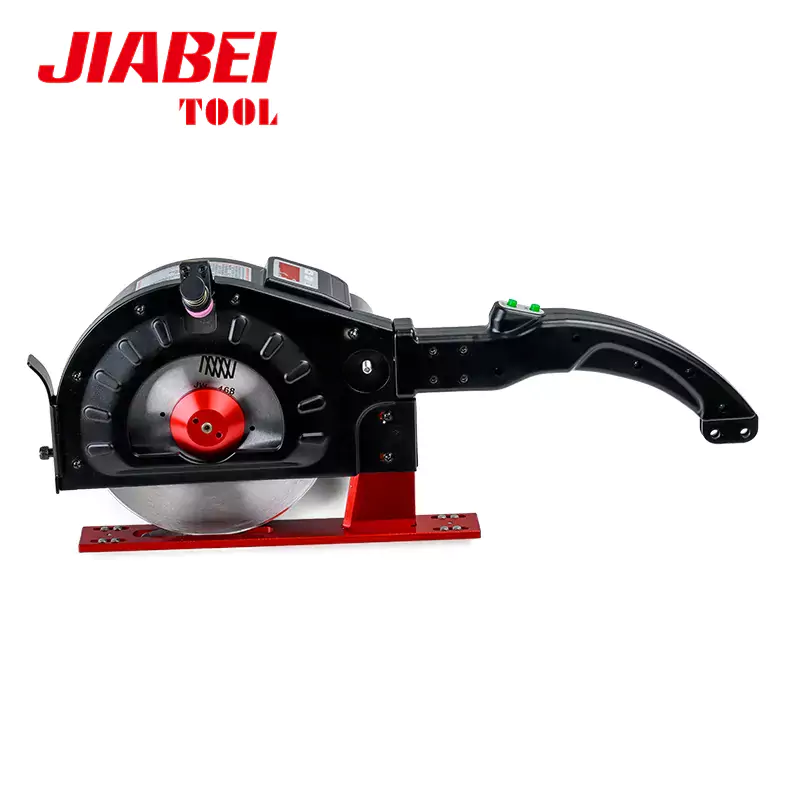
Why Blade Dulling Happens Faster Than You Think
Dulling is not just about friction. It is accelerated by adhesive residues from synthetic fabrics, improper lubrication, misaligned rollers, and overheating. A blade that runs hot loses its tempered edge within hours. Therefore, maintenance is not a weekly chore—it is an hourly discipline.
The 5-Point Daily Maintenance Checklist
| Step | Action | Frequency | Why It Matters |
|---|---|---|---|
| 1 | Wipe the blade with a silicone-impregnated cloth after every 2 hours of use | Every shift | Removes resin and lint that cause micro-pitting |
| 2 | Inspect the blade edge under a magnifying light for nicks | Start of each day | Catches damage before it propagates into cracks |
| 3 | Check the vertical play (end-float) of the spindle | Every 4 hours | Excessive play misaligns the cutting angle, increasing side-friction |
| 4 | Clean the air intake filter (for pneumatic models) | Daily | Dust clogs cooling vents, raising operating temperature |
| 5 | Apply high-temperature bearing grease to the reciprocating shaft | Every 8 running hours | Reduces harmonic vibration that chips the edge |
Weekly Deep-Maintenance Protocol
Beyond daily habits, a weekly routine preserves the metallurgical integrity of the blade.
-
Lubrication Schedule: Use only ISO VG 32 oil (not WD-40). Apply 3 drops directly to the felt pad inside the blade guard. Over-oiling attracts dust; under-oiling causes dry starts.
-
Tension Calibration: For band-type Cloth Cutting Machine models, check the belt tension with a frequency meter. Target range: 110–120 Hz. Loose belts cause blade flutter; tight belts overstress the motor bearings.
-
Sharpening Angle Verification: If your machine has an integrated honing stone, verify that the stone contacts the blade at exactly 18°–22°. A steeper angle increases edge retention but reduces toughness—JIABEI TOOL recommends 20° for mixed fabrics.
Professional Table: Signs That Your Blade Needs Immediate Attention
| Symptom | Root Cause | Corrective Action |
|---|---|---|
| Burn marks on cut edges | Blade overheating from resin buildup | Stop, clean with isopropyl alcohol, and re-lubricate |
| Chattering noise during plunge cuts | Loose reciprocating guide bushings | Replace bushings (do not tighten—they are wear items) |
| Fabric shifting under the presser foot | Dull edge pushing rather than shearing | Perform a light honing pass (max 2 seconds) |
| Uneven stack height cut (top vs bottom) | Uneven blade wear on one side | Rotate blade 180° if double-edged, or replace |
The Golden Rule: Sharpening vs. Replacing
Many operators over-sharpen. Each sharpening removes 0.05–0.1 mm of carbide or high-speed steel. A Cloth Cutting Machine blade typically allows 15–20 sharpenings before it falls below minimum width. JIABEI TOOL recommends a simple rule: sharpen only when you feel resistance increase by 20%, not on a fixed calendar schedule. Use a digital force gauge to measure downward pressure—anything above 4.5 kg for light fabrics signals dulling.
Cloth Cutting Machine FAQ – Common Questions from Professionals
Q: How often should I lubricate my Cloth Cutting Machine during a heavy production day (8+ hours of continuous cutting)?
A: For continuous operation, lubricate every 2 hours, but only with 2–3 drops of high-grade sewing machine oil. Avoid over-lubrication, which creates an oil mist that attracts lint. At midday, wipe the blade and re-apply a thin film of dry PTFE spray—this reduces friction without wetting the fabric. For JIABEI TOOL machines, we integrate an auto-lubrication wick that should be saturated every morning and replenished after lunch. Always run the machine for 30 seconds unloaded after lubrication to distribute the oil evenly across the reciprocating mechanism.
Q: Can I use the same maintenance routine for a straight-knife and a round-knife Cloth Cutting Machine?
A: No. Straight-knife machines (reciprocating) require frequent guide-rail cleaning and vertical play checks because the blade moves up and down thousands of times per minute. Round-knife machines (rotary) are more sensitive to bottom-plate wear—the blade rotates against a fixed base plate, so you must check the base-plate groove depth weekly. A worn groove will pinch the blade, causing micro-cracks. For straight knives, prioritize lubrication; for round knives, prioritize base-plate alignment. JIABEI TOOL provides separate maintenance tags for each model—never interchange them.
Q: What is the single most damaging mistake that shortens blade life on a Cloth Cutting Machine?
A: Cutting while the blade is still cold from a cold start. Operators often begin cutting immediately after powering on. The blade and spindle need 3–5 minutes of no-load running to reach thermal equilibrium. When cold, the metal is more brittle and the lubricant is viscous, causing stiction that chips the cutting edge. Always run the machine idle for at least 90 seconds in winter and 45 seconds in summer. Second to that is cutting pins or staples—always inspect fabric layers with a metal detector. JIABEI TOOL offers an optional magnetic sweep bar that catches ferrous debris before they reach the cutting zone.
Advanced Tip: Storage and Environment
Humidity above 70% accelerates oxidation on high-speed steel blades. Store your Cloth Cutting Machine in a climate-controlled area, and cover the blade with a VCI (vapor corrosion inhibitor) cloth overnight. If you cut chemically coated fabrics (e.g., flame-retardant or waterproof), clean the blade immediately after each batch—those chemicals are acidic and etch the edge within 30 minutes.
Why Professional Maintenance Pays Off
A well-maintained Cloth Cutting Machine reduces fabric waste by 5–8%, lowers motor current draw (saving electricity), and decreases operator fatigue. At JIABEI TOOL, we have documented that shops following this protocol replace blades 60% less frequently than those using reactive maintenance. That translates to over $1,200 saved annually per machine in blade costs and downtime.
Ready to Protect Your Investment?
Every minute you delay maintenance is a minute shaved off your blade’s useful life. JIABEI TOOL does not just sell machines—we provide lifelong technical support, including customized lubrication charts and sharpening schedules tailored to your fabric mix.
Contact us today for a free maintenance audit of your current Cloth Cutting Machine. Our engineers will analyze your cutting patterns, recommend the ideal blade alloy, and send you a complimentary digital force gauge with your next parts order. Reach out via our website or email—let us keep your production line sharp, safe, and consistently profitable. Your blades—and your bottom line—will thank you.