

Sliding turnstiles provide a controlled pedestrian entrance while keeping the passage visually open, organized, and easy to manage. Unlike conventional rotating barriers, their sliding doors move horizontally after an authorized credential is verified. This design can be particularly useful for offices, commercial buildings, hotels, intelligent buildings, campuses, and other facilities where security, pedestrian flow, space utilization, and appearance all need to work together. This guide explains how sliding turnstiles operate, what to consider before installation, how they integrate with access control systems, and how to avoid common purchasing and installation problems.
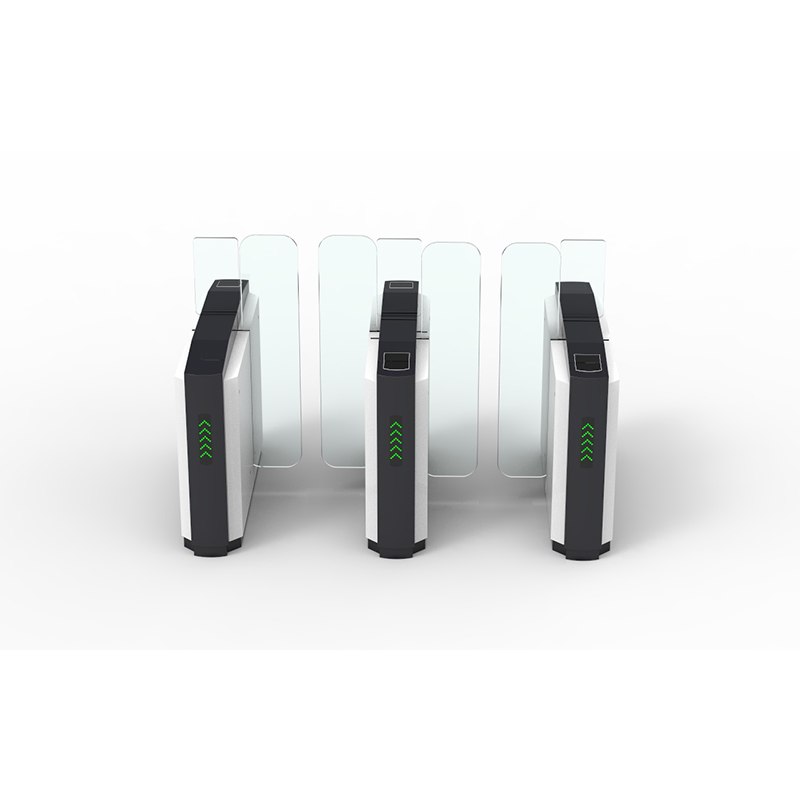
What Is a Sliding Turnstile?
A sliding turnstile is a pedestrian access control gate that uses horizontally moving door panels to regulate entry and exit. When an authorized user presents a valid credential, the control system sends an opening command to the drive mechanism. The sliding panels then move away from the passageway, allowing the person to pass before returning to the closed position.
The basic concept sounds simple, but a commercial access gate has to coordinate several functions at the same time. It must recognize an authorized user, open at the appropriate moment, detect pedestrians in the lane, prevent accidental obstruction, close after passage, and respond correctly to emergency or system signals.
Modern sliding turnstiles are therefore more than physical barriers. They form part of a complete pedestrian management system. Depending on the project, the gate can work with card readers, QR-code readers, fingerprint devices, facial recognition terminals, RFID systems, or other access-control equipment. ZOJE's sliding turnstile products are designed with this type of system integration in mind.
How Does a Sliding Turnstile Work?
The operating sequence normally begins before the pedestrian reaches the gate. A reader or identification terminal receives the person's credential and transfers the result to the access controller. If the credential is authorized, the controller sends a signal to the turnstile.
The drive mechanism moves the sliding doors horizontally. Sensors monitor the passage area and help the controller determine whether someone is entering, exiting, or standing in the lane. After the pedestrian has passed, the doors return to the closed position.
This sequence must happen smoothly. If the doors open too slowly, queues can form. If they close too quickly, the risk of interference increases. If sensors are poorly positioned or configured, the system may generate unnecessary alarms or prevent legitimate users from passing.
A Typical Passage Sequence
- The pedestrian approaches the controlled lane.
- The user presents an authorized card, QR code, biometric credential, or another supported identification method.
- The access controller verifies the permission.
- The turnstile receives the opening command.
- The sliding panels move horizontally.
- Optical sensors monitor the lane and pedestrian position.
- The pedestrian passes through the opening.
- The doors close and the lane becomes ready for the next user.
ZOJE's customized PB106 sliding turnstile, for example, supports single or bidirectional operation and can interface with multiple access-control technologies. The published product specifications also include a standard 600 mm channel width, with 900 mm and customized widths available as options.
What Problems Can Sliding Turnstiles Solve?
The purchasing decision is rarely about the gate itself. Building owners and system integrators are usually trying to solve several practical problems at an entrance. A well-configured sliding turnstile can address these issues simultaneously.
The important distinction is that a turnstile does not replace the access-control system. Instead, it provides the physical passage mechanism that acts on the authorization decision. This separation allows the entrance to be adapted to the specific security architecture of a building.
Key Components Behind Reliable Operation
A sliding turnstile contains several interconnected systems. Understanding them makes it easier to compare quotations and identify whether a proposed configuration actually matches the project's requirements.
| Component | Main Function | What Buyers Should Check |
|---|---|---|
| Cabinet | Supports and protects the internal mechanism and electronics. | Material, dimensions, finish, corrosion resistance and available installation space. |
| Sliding door panels | Physically control the pedestrian lane. | Material, transparency, dimensions, movement stability and safety design. |
| Drive motor | Moves the door panels during opening and closing. | Motor type, operating frequency, serviceability and compatibility with the control system. |
| Optical sensors | Detect pedestrians and monitor the passage zone. | Detection coverage, sensitivity, sensor quantity and anti-pinch performance. |
| Access controller | Processes authorization and controls opening commands. | Communication interfaces and supported authentication methods. |
| LED indicators | Show lane status to pedestrians. | Visibility, direction indication and integration with the control logic. |
| Emergency interface | Allows the gate to respond to emergency signals. | Automatic opening behavior and compatibility with the building's emergency system. |
For example, the ZOJE-PB106 uses a 304 stainless steel cabinet as standard, with 316 stainless steel available as an option. Its door material is acrylic by default, while tempered glass is available as an alternative. The product also uses optical sensing and anti-pinch protection.
How Do Sliding Turnstiles Connect With Access Control?
A sliding turnstile becomes much more useful when its physical operation is coordinated with the building's access-control architecture. The identification device determines who is requesting access, while the controller determines whether the request is valid and sends the appropriate signal to the gate.
Different facilities may use different authentication methods. An office could use employee cards, while a smart building may combine facial recognition, QR codes, RFID, or fingerprint verification. A visitor management system can also be connected to the entrance process.
ZOJE states that its customized sliding turnstile can integrate with face recognition, fingerprint recognition, IC cards, ID cards, RFID cards, barcodes and other access-control devices. Its published specifications also list dry-contact/relay input and RS485/TCP/IP communication interfaces.
Common Authentication Options
- IC and ID cards
- RFID credentials
- QR codes and barcode identification
- Fingerprint recognition
- Facial recognition
- Combined card and password authentication
- Remote opening through an access-control platform
ZOJE's AC101 access controller is another example of an access-control component designed for turnstile applications. Its published functions include TCP/IP communication, RS485 expansion, multiple authentication methods, scheduled door operation, remote opening and emergency-related signals.
Important Specifications to Check Before Ordering
Comparing only the quoted unit price can make two seemingly similar sliding turnstiles appear equivalent when their configurations are actually different. A more useful purchasing comparison starts with the technical specification.
| Specification | Why It Matters |
|---|---|
| Cabinet material | Influences durability, appearance and suitability for the installation environment. |
| Lane width | Determines whether the passage suits normal pedestrians and any accessibility requirements. |
| Door material | Affects appearance, visibility, impact resistance and overall design. |
| Drive type | Influences movement characteristics, operating behavior and maintenance requirements. |
| Passage speed | Should match the expected pedestrian flow rather than being considered independently. |
| Operating direction | Single-direction and bidirectional lanes may require different control configurations. |
| Environmental protection | Important for installations exposed to dust, moisture or outdoor conditions. |
| Emergency opening | Should correspond with the building's emergency and evacuation strategy. |
| Communication interface | Determines how the turnstile connects with readers, controllers and management systems. |
As one reference configuration, ZOJE's PB106 lists 304 stainless steel, a 600 mm standard channel, 900 mm/customized channel options, 0.2-second unlock time, single or bidirectional operation, AC110–230V 50/60Hz input, DC24V 3A operating voltage, RS485/TCPIP communication, automatic emergency opening and IP67 protection. These are product-specific specifications rather than universal requirements, so project conditions should determine the final configuration.
Where Are Sliding Turnstiles Commonly Used?
Sliding turnstiles are particularly suitable for entrances where controlled pedestrian movement needs to coexist with a clean architectural appearance. Their horizontal door movement and relatively compact structure make them useful in many modern indoor environments.
Office Buildings
Corporate entrances often need to process employees, visitors and contractors while maintaining a professional appearance. Sliding gates can be connected to employee credentials and visitor-management systems, helping separate authorized access from reception traffic.
Hotels and Intelligent Buildings
In premium buildings, entrance equipment needs to provide controlled access without looking overly industrial. Stainless steel cabinets combined with transparent door panels can be coordinated with contemporary interior design.
Campuses and Educational Facilities
Schools and universities may need different access rules for students, faculty, staff and visitors. The ability to connect a turnstile with card or biometric identification provides a physical checkpoint for these policies.
Residential Communities
Controlled pedestrian entrances can help property managers organize resident and visitor access. Depending on the site, the gate may work together with cards, QR codes, facial recognition or property-management systems.
Commercial and Public Facilities
Shopping centers, libraries, exhibition venues and other public-facing buildings can use controlled lanes where access authorization or pedestrian organization is required.
The appropriate turnstile type depends heavily on the environment. ZOJE's product range includes tripod, flap, full-height, speed, swing and sliding turnstiles, allowing different entrance layouts to be matched with different physical and operational requirements.
Safety and Emergency Passage Considerations
Pedestrian safety should be considered from the first stage of product selection, not after installation. A gate that controls access effectively but does not respond correctly to people, obstacles or emergency signals is not a complete entrance solution.
Sliding turnstiles can use optical sensors to detect pedestrians in the lane. Anti-pinch functions are also important because the door panels move automatically. ZOJE's PB106 documentation describes high-sensitivity optical sensors, mechanical anti-pinch protection, automatic protection and automatic reset functions.
Key Safety Points
- Keep the pedestrian detection area properly aligned and free from unnecessary obstruction.
- Verify that the anti-pinch function responds correctly during commissioning.
- Confirm the direction indicators are clear to approaching users.
- Test automatic opening behavior when the designated emergency signal is activated.
- Ensure the lane width matches the project's accessibility and operational requirements.
- Carry out functional testing after installation rather than relying only on factory settings.
Emergency behavior should always be coordinated with the building's fire, evacuation and access-control design. The exact requirements vary by building type, jurisdiction and project specification, so the turnstile supplier and responsible system engineer should confirm the final arrangement before commissioning.
Installation Planning: Details That Matter
Many installation problems can be avoided before the equipment reaches the site. The first step is to measure the entrance accurately. Do not assume that the available opening is sufficient simply because the gate's external dimensions appear to fit.
Consider the finished floor level, cable routes, lane width, equipment spacing, reader position and pedestrian approach direction. If several lanes are installed together, the distance between cabinets and the location of access-control readers should be planned as one complete layout.
For projects with limited space, an ultra-thin sliding turnstile can be particularly useful. ZOJE describes its PB106 as an ultra-thin cabinet designed for space-saving installations, while customized dimensions are available for specific projects.
Maintenance and Long-Term Operation
A turnstile may perform thousands of opening and closing cycles during its service life. Preventive maintenance is therefore more useful than waiting for a failure to interrupt the entrance.
Routine checks should include the movement of the sliding panels, sensor response, abnormal noise, fastening condition, electrical connections, indicators and emergency opening function. Dust or foreign material around moving components should also be addressed according to the manufacturer's maintenance instructions.
A Practical Maintenance Routine
- Inspect the cabinet and door panels for visible damage.
- Test opening and closing movement for unusual resistance or noise.
- Check optical sensor operation and detection coverage.
- Verify the access-control signal and communication interface.
- Test emergency opening behavior according to the site's procedure.
- Review fastening points and electrical connections.
- Record recurring faults instead of repeatedly resetting the system without identifying the cause.
Maintenance becomes easier when the original project documentation is complete. Buyers should retain wiring information, configuration details, spare-part information, installation drawings and commissioning records so that future service work does not depend entirely on individual technicians.
Why the ZOJE Sliding Turnstile Approach Matters
For a sliding turnstile project, product selection is only one part of the purchasing decision. The more important question is whether the equipment can be configured around the actual entrance requirements.
ZOJE's sliding turnstile range includes configurations intended for space-limited entrances as well as higher-flow environments. The PB106, for example, is designed around a slim cabinet and can be customized in dimensions and passage width. Its published configuration supports multiple access-control technologies and offers 304 stainless steel as standard with 316 stainless steel as an option.
ZOJE also provides other pedestrian access products, including speed gates, swing gates, flap turnstiles and full-height turnstiles. This broader product range can be useful for projects where different entrances require different types of pedestrian control.
For distributors, system integrators and project contractors, customization can be especially important. Channel width, cabinet dimensions, door material, motor configuration, communication interface and authentication method can all affect the final installation. Discussing these parameters before quotation helps reduce the risk of receiving equipment that technically works but does not fit the project.
Frequently Asked Questions About Sliding Turnstiles
1. What is the main purpose of a sliding turnstile?
A sliding turnstile controls pedestrian passage through an entrance by opening its horizontal sliding doors only after the required authorization is received. It can be connected to various identification and access-control systems.
2. Can a sliding turnstile work with facial recognition?
Yes. Sliding turnstiles can be integrated with facial recognition terminals when the access controller and communication interfaces are compatible. ZOJE's PB106 documentation specifically lists facial recognition among its supported access-control options.
3. What materials are available for sliding turnstile cabinets?
Stainless steel is commonly used because it provides a durable structure and a clean appearance. ZOJE's PB106 uses 304 stainless steel as the standard cabinet material and lists 316 stainless steel as an optional material.
4. Can the passage width be customized?
It can depend on the model. The ZOJE-PB106 has a standard 600 mm channel width, with 900 mm and customized options listed in its product specifications.
5. Are sliding turnstiles suitable for high pedestrian flow?
They can be used for controlled pedestrian entrances with regular traffic, but the number of lanes, passage speed, authorization process and expected peak flow should be evaluated together. For particularly high-flow projects, the supplier should calculate the required lane capacity before the final model is selected.
6. Can sliding turnstiles operate in both directions?
Yes, depending on the configuration. ZOJE's PB106 specifications list both single-direction and bidirectional operation.
7. What should be checked before ordering a sliding turnstile?
Confirm the entrance dimensions, lane width, cabinet material, door material, motor type, access-control method, communication interface, power supply, environmental conditions, emergency requirements and expected pedestrian flow.
8. Can sliding turnstiles be customized for a project?
Yes. Customization may cover dimensions, passage width, materials, motor configuration and other project-specific requirements. ZOJE presents its PB106 as a customized sliding turnstile and lists customized dimensions and channel widths as available options.
9. How should a sliding turnstile be maintained?
Regular maintenance should include checking door movement, sensors, electrical connections, access-control communication, emergency functions and mechanical fastening points. The maintenance schedule should follow the manufacturer's instructions and the actual usage intensity of the site.
10. What information should be included when requesting a quotation?
Provide the supplier with the entrance dimensions, required lane width, number of lanes, indoor or outdoor environment, access-control method, desired material, expected pedestrian volume, communication interface and any special customization requirements. This allows the supplier to recommend a configuration based on the actual project instead of a generic standard model.
Make the Entrance Work as One Complete System
A sliding turnstile works best when its mechanical structure, access-control equipment, sensors, emergency functions and entrance layout are planned together. The right configuration can help create a controlled pedestrian route without making the entrance feel unnecessarily complicated.
For buyers, contractors and system integrators, the most useful starting point is the project itself: available space, pedestrian flow, identification method, environmental conditions and required functions. From there, the turnstile specification can be developed around the actual application.
Need a Sliding Turnstile for Your Project?
Whether you need a standard sliding turnstile, a space-saving configuration, a customized passage width, or integration with an existing access-control system, ZOJE can discuss the technical requirements with you before quotation. Share your entrance dimensions, access-control method and project requirements to receive a configuration tailored to your application.
Contact us to discuss your sliding turnstile project, customization requirements and access-control integration.
Visit ZOJE for more product information and project support.