

How Can Roller Conveyor Scales Improve Industrial Weighing Efficiency?
2026-06-29
Abstract
Roller Conveyor Scales are advanced weighing systems designed to integrate seamlessly into conveyor lines, enabling continuous, real-time weight measurement of moving goods. In modern industrial environments where speed, accuracy, and automation determine competitiveness, these systems solve critical pain points such as manual weighing errors, production bottlenecks, and inefficient logistics tracking. This article explores how Roller Conveyor Scales work, their benefits, applications, and key selection considerations. It also highlights how J-sky provides reliable weighing solutions tailored for industrial demands.
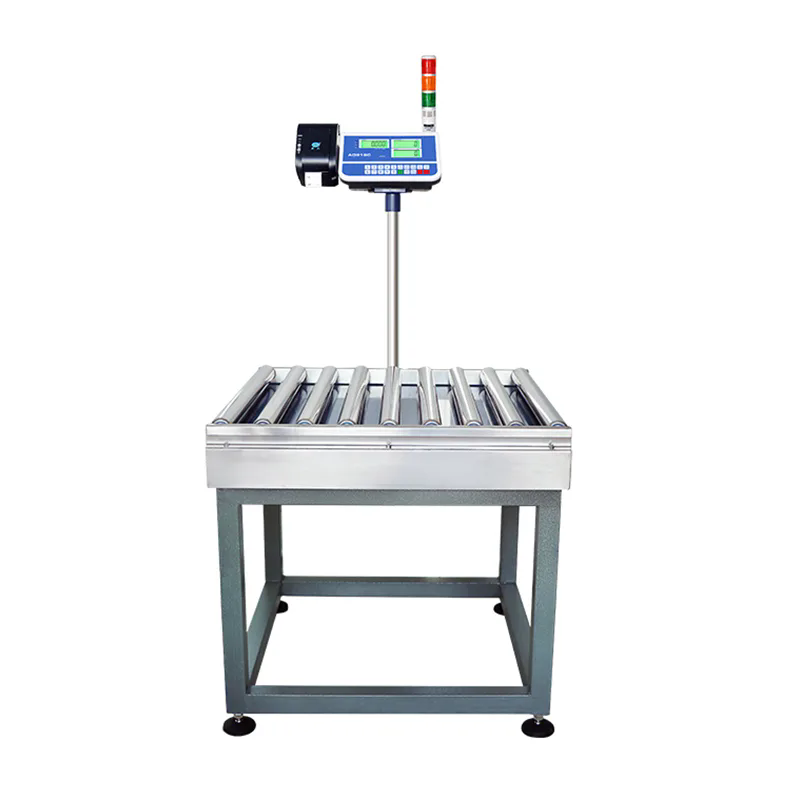
Table of Contents
- 1. Introduction: Why Conveyor Weighing Matters
- 2. What Are Roller Conveyor Scales?
- 3. How Do Roller Conveyor Scales Work?
- 4. Key Benefits in Industrial Operations
- 5. Industrial Applications
- 6. Buying Considerations
- 7. Maintenance and Operational Tips
- 8. Conveyor Scales vs Traditional Weighing
- 9. Why Choose J-sky Solutions
- 10. Frequently Asked Questions
1. Introduction: Why Conveyor Weighing Matters
In high-volume production and logistics environments, every second counts. Traditional weighing methods often require stopping production lines, manually handling goods, and recording data separately. These steps introduce delays, human error, and inefficiencies that accumulate into significant operational costs.
Industries such as food processing, warehousing, mining, packaging, and manufacturing increasingly rely on automated weighing systems to maintain throughput and accuracy. Roller Conveyor Scales address these challenges by enabling continuous weighing without interrupting material flow.
2. What Are Roller Conveyor Scales?
Roller Conveyor Scales are integrated weighing devices installed within conveyor systems. They combine precision load cells with roller conveyor structures, allowing items to be weighed dynamically as they move along production lines.
- They measure weight without stopping products
- They integrate with automated production systems
- They provide real-time data collection
- They support quality control and logistics tracking
These systems are particularly valuable in industries requiring high-speed sorting, packaging verification, and shipment validation.
3. How Do Roller Conveyor Scales Work?
The working principle of Roller Conveyor Scales is based on load cell technology combined with motion compensation algorithms. As products move across the rollers, the system captures weight data and filters out vibration or movement interference.
Basic workflow:
- Product enters weighing zone on conveyor rollers
- Load cells detect force exerted by product
- Signal is converted into digital weight data
- System compensates for motion and vibration
- Final weight is displayed or transmitted to control system
This enables continuous weighing without stopping production lines, significantly improving efficiency.
4. Key Benefits in Industrial Operations
Roller Conveyor Scales offer several operational advantages:
- High Efficiency: Eliminates need for manual weighing stops
- Improved Accuracy: Reduces human error in measurement
- Real-Time Monitoring: Enables instant quality control
- Cost Reduction: Minimizes labor and operational downtime
- System Integration: Works with ERP and warehouse systems
For businesses operating under tight production schedules, these advantages directly translate into improved profitability and consistency.
5. Industrial Applications
Roller Conveyor Scales are widely used across multiple industries:
| Industry | Application | Benefit |
|---|---|---|
| Food Processing | Package weight verification | Ensures compliance and quality control |
| Warehousing | Parcel sorting and shipping | Improves logistics accuracy |
| Manufacturing | Component weighing | Reduces production errors |
| Mining & Aggregates | Bulk material measurement | Supports load tracking and reporting |
6. Buying Considerations
Selecting the right Roller Conveyor Scales system requires evaluating several technical and operational factors:
- Load Capacity: Ensure compatibility with product weight range
- Accuracy Level: Required precision for your industry
- Conveyor Speed: System must match production flow
- Environmental Conditions: Dust, moisture, and temperature resistance
- Integration Capability: ERP or automation system compatibility
A well-selected system ensures long-term stability and reduced maintenance costs.
7. Maintenance and Operational Tips
To maintain optimal performance of Roller Conveyor Scales, regular maintenance is essential:
- Calibrate load cells periodically
- Keep rollers clean and free from debris
- Inspect wiring and signal connections
- Monitor system diagnostics for irregular readings
- Avoid overloading beyond rated capacity
Proper maintenance ensures accuracy and extends system lifespan.
8. Conveyor Scales vs Traditional Weighing
| Feature | Roller Conveyor Scales | Traditional Weighing |
|---|---|---|
| Speed | Continuous | Batch-based |
| Labor Requirement | Low | High |
| Accuracy | High with calibration | Moderate |
| Automation | Fully integrated | Limited |
9. Why Choose J-sky Solutions
J-sky is committed to delivering high-performance industrial weighing systems designed for demanding production environments. With a focus on durability, precision engineering, and system integration, J-sky Roller Conveyor Scales are built to support modern automation needs.
- Industrial-grade load cell technology
- Stable performance under continuous operation
- Customizable system configurations
- Compatible with industrial automation systems
More product details can be found at:
https://www.jskyweigh.com/roller-conveyor-scales
10. Frequently Asked Questions
Q1: Are Roller Conveyor Scales suitable for high-speed production lines?
Yes. They are specifically designed to handle continuous and high-speed operations with stable accuracy.
Q2: Can they integrate with existing systems?
Most modern systems, including J-sky solutions, support integration with ERP and warehouse management systems.
Q3: How often should calibration be performed?
Calibration frequency depends on usage intensity, but periodic checks are recommended for consistent accuracy.
Q4: What industries benefit most?
Logistics, manufacturing, food processing, mining, and packaging industries gain significant efficiency improvements.
Conclusion
Roller Conveyor Scales represent a critical upgrade for industries aiming to improve throughput, accuracy, and automation in weighing operations. By integrating real-time measurement directly into conveyor systems, businesses can eliminate inefficiencies associated with manual processes and achieve more reliable production control.
With advanced engineering and industrial reliability, J-sky provides solutions designed to meet modern production challenges.
For customized solutions, technical consultation, or product inquiries, contact us today and let J-sky help optimize your industrial weighing systems for maximum efficiency and performance.