

Achieving a smooth, consistent plaster finish takes more than experience. Contractors must manage material consistency, surface preparation, operator fatigue, working speed, and equipment reliability while keeping projects on schedule. The Plastering Lithium-Ion Trowel with Steering Wheel Handle is designed around the practical needs of material handling and finishing work, combining powered operation with a steering-wheel-style grip for controlled handling.
This guide explains the equipment's key features, how to assess its suitability for different jobs, how to use it responsibly, and what buyers should evaluate before placing an order. Whether you are a contractor, construction equipment distributor, or professional buyer, understanding these details can help you select tools that support consistent work and predictable operating costs.
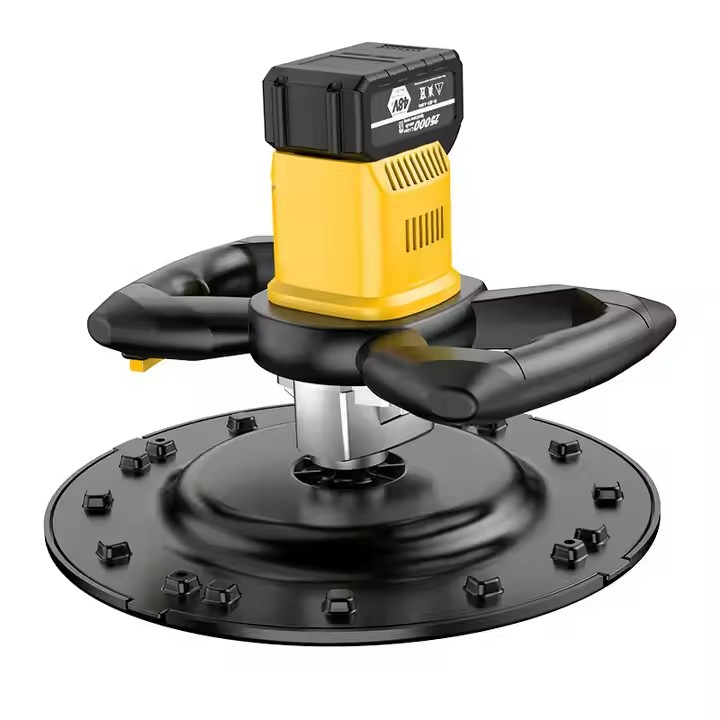
1. Understanding the Plastering Lithium-Ion Trowel with Steering Wheel Handle
Modern construction projects require tools that balance productivity, maneuverability, and dependable performance. A powered tool can reduce repetitive manual effort, but the right choice depends on the actual operation it is designed to perform.
The steering-wheel-style handle is an important part of the equipment's operating concept. A well-positioned handle gives the operator a defined gripping area and can make it easier to guide the tool while maintaining a controlled working posture. This is especially relevant when the job involves repeated movements or extended periods of tool handling.
Lithium-ion power systems are widely used in cordless construction equipment because they offer portable power without requiring a continuously connected mains cable. For jobs across multiple rooms, renovation areas, or sites where outlets are inconvenient, cordless operation may simplify equipment movement. Actual runtime, charging requirements, and available power must still be checked against the selected model's specifications.
Zhouxun Machinery's product listing for this exact model describes a multifunctional mixer and lists a 400 W power rating, a three-stage reduction design, and six-speed adjustment. Because the listing also uses plastering and finishing terminology, buyers should confirm the intended attachment, supported operation, battery configuration, and material compatibility with the manufacturer before assuming that the unit performs every type of wall-troweling task.
This distinction matters because mixing, spreading, leveling, and polishing are different operations. A machine suitable for one task may not have the appropriate attachment, operating speed, or contact surface for another. Confirming the intended application at the beginning helps prevent unsuitable purchases and avoidable jobsite delays.
2. Four Common Jobsite Challenges That Affect Productivity
Inconsistent Material Preparation
Plaster and related construction materials must be prepared according to their product instructions. Incorrect proportions, insufficient mixing, or excessive mixing can affect workability and the finished surface. A suitable powered mixer can help distribute components more consistently, provided the mixing attachment and speed are appropriate for the material.
Operator Fatigue During Repetitive Work
Repeated gripping, lifting, and guiding can place strain on the hands, wrists, shoulders, and back. A steering-wheel-style handle may provide a more comfortable grip for certain users, but ergonomics depend on handle position, total tool weight, vibration, working height, and task duration. Operators should maintain a neutral posture and take appropriate breaks.
Limited Movement Around the Work Area
Power cables can restrict movement and create trip hazards when they cross busy work areas. Where the selected model is genuinely battery-powered, cordless operation can improve mobility. Buyers should verify the included battery and charger, expected runtime under load, charging time, and battery replacement availability before planning a full work shift around the tool.
Unplanned Downtime
Equipment stoppages can disrupt material preparation and finishing schedules. Overloaded motors, clogged attachments, neglected cleaning, damaged cables or batteries, and incorrect operating procedures can all affect reliability. Choosing the correct tool and establishing a basic inspection routine are practical ways to reduce preventable interruptions.
3. Features and Practical Benefits to Evaluate
Product descriptions are most useful when buyers connect each feature to a real working requirement. The following considerations can help contractors and procurement teams assess whether a steering-wheel-handle model is appropriate for their applications.
Steering-Wheel-Style Handle
A larger, well-positioned gripping area may help the operator maintain control and distribute hand pressure more comfortably. Before purchasing, check whether the handle can be adjusted, whether its controls are easy to reach, and whether the machine can be guided safely in the intended working position.
Speed Adjustment
Different materials and tasks can require different mixing or working speeds. Adjustable speed gives the operator more control over the process, but the correct setting depends on the material manufacturer's instructions and the equipment's permitted operating range. Starting at an appropriate lower setting can also help limit splashing when mixing suitable liquids or pastes.
Motor and Gearbox Design
The motor provides the working power, while the gearbox influences how that power is delivered. A reduction gearbox can support controlled output speed and useful torque for the intended application. Buyers should examine rated power, allowable duty cycle, heat management, gearbox construction, and service-part availability rather than judging performance by motor wattage alone.
Cordless Convenience
A lithium-ion system can be useful when workers need to move between work areas without searching for power outlets. However, battery capacity, load, temperature, and material resistance all affect runtime. A practical purchasing decision should be based on the manufacturer's verified battery and charging specifications, not on an assumed full-shift operating time.
Durable Construction
Construction environments expose tools to dust, splashes, impacts, and frequent transport. A robust housing and serviceable mechanical components can support longer equipment life. Even a durable machine requires correct handling, cleaning, and inspection, and it should not be exposed to water or abrasive material beyond its stated protection limits.
4. How to Choose the Right Tool for Your Project
The best equipment is not necessarily the most powerful or the least expensive. It is the model that meets the actual task requirements, works with the materials being used, and can be maintained economically over time.
For commercial buyers, requesting a technical data sheet and a demonstration of the intended operation is often more valuable than relying on a product name alone. If the equipment will be used across several projects, a short trial under realistic working conditions can reveal handling issues before a larger purchase.
5. How to Prepare and Operate the Equipment Responsibly
Correct operation starts before the motor is switched on. Always follow the supplied manual, the material manufacturer's instructions, and applicable site safety procedures. The steps below provide a general preparation framework; they do not replace model-specific instructions.
Before Starting
- Inspect the housing, handle, attachment, fasteners, and other accessible components for visible damage or looseness.
- For battery-operated models, inspect the battery pack and contacts. Do not use a swollen, cracked, leaking, or otherwise damaged battery.
- Confirm that the attachment is approved for the machine and securely installed according to the manual.
- Prepare the work area by removing unnecessary obstacles and keeping other workers clear of moving components.
- Wear suitable eye protection, footwear, and other personal protective equipment required by the task and material safety information.
During Material Mixing
- Measure the material and water or other permitted components according to the manufacturer's instructions.
- Use a compatible mixing container with adequate stability and enough free space to help prevent splashing.
- Choose the appropriate attachment and permitted speed for the material. Never exceed the tool's rated capacity.
- Keep a secure grip and a balanced stance. Start and stop the machine as described in its manual.
- Observe the material's consistency and stop the machine before inspecting or adjusting the attachment.
During Plastering or Finishing Work
First, confirm that the selected machine and fitted head are specifically intended for the finishing operation. If they are, follow the manufacturer's guidance on surface preparation, tool angle, pressure, movement speed, and working sequence. Test the setup on a small, inconspicuous area before proceeding across a large surface.
Keep movements controlled and avoid forcing the tool to compensate for unsuitable material consistency or an incorrectly prepared substrate. Do not press harder than the equipment instructions permit. Excessive pressure can affect finish quality, increase load, and accelerate wear.
After Finishing
- Switch off the equipment and disconnect or remove the battery according to the manufacturer's procedure before cleaning or changing attachments.
- Remove material residue using an approved cleaning method. Keep liquid away from electrical components and battery contacts.
- Inspect the attachment and housing for abnormal wear, damage, or accumulated material.
- Store the machine and battery in a clean, dry location within the temperature limits stated by the manufacturer.
6. Material Compatibility and Finish Quality
A good finish begins with the correct material and substrate, not simply with the machine. Even well-designed equipment cannot compensate for a surface that has not been prepared correctly or a mixture that falls outside the material manufacturer's specified working range.
| Material or Task | What to Check | Practical Recommendation |
|---|---|---|
| Gypsum-based plaster | Mixing time, setting behavior, and permitted tools | Follow the product instructions and prepare manageable batches. |
| Cement-based mortar | Aggregate size, mixture resistance, and attachment rating | Use only a machine and attachment rated for the material. |
| Putty or finishing compound | Required consistency and permitted finishing method | Test a small area to confirm the finish and avoid overworking the surface. |
| Paint or coating | Viscosity, mixing requirements, and contamination risks | Use a compatible attachment and keep the container and tool clean. |
This table is a general selection aid, not a claim that every listed material is suitable for the same machine. Always verify the exact product's approved applications with its manufacturer.
Why a Small Test Area Matters
Material behavior changes with temperature, humidity, substrate condition, and preparation time. A small trial helps the operator evaluate whether the selected method produces a uniform result without dragging, ridges, excessive splashing, or surface damage. Where a coating or plaster has a limited working time, prepare only the quantity that can be handled within that period.
7. Maintenance Practices That Help Extend Service Life
Regular maintenance is essential for tools used around cement, plaster, and other materials that can harden on exposed components. A consistent routine helps identify wear early and reduces the chance that residue or loose parts will interfere with operation.
Daily Care
- Remove residue promptly using the cleaning procedure approved for the equipment.
- Check the handle, attachment, fasteners, and accessible housing for signs of damage.
- Keep air openings clear where the design uses them for cooling.
- Wipe down the exterior without directing water or cleaning fluid into the motor, switches, or battery compartment.
Battery and Charging Care
Use only compatible batteries and chargers specified by the manufacturer. Charge and store battery packs in suitable conditions, away from excessive heat, moisture, and combustible waste. Do not continue charging a battery that shows signs of damage or abnormal heating. Follow the instructions for storage, transport, and disposal.
Periodic Inspection
Inspect mechanical components at the interval specified in the manual. Pay attention to unusual play, damaged threads, worn attachments, and changes in noise or vibration. Repairs involving the motor, gearbox, battery system, or electrical controls should be handled by qualified service personnel.
A simple maintenance log can record inspection dates, operating issues, replacement parts, and service actions. For construction companies and equipment rental businesses, this record helps plan maintenance, identify recurring problems, and make more informed replacement decisions.
8. Manual Tools and Powered Equipment Compared
Manual trowels remain useful for detail work, small repairs, corners, and areas where precise hand control is essential. Powered tools can be beneficial when the operation is repetitive or material preparation requires more consistent mechanical action. Neither approach is automatically best for every job.
| Evaluation Factor | Manual Trowel | Suitable Powered Tool |
|---|---|---|
| Initial investment | Usually lower | Usually higher |
| Operator effort | More repetitive manual work | Can reduce effort for compatible tasks |
| Fine detail work | Often highly practical | Depends on tool design and attachment |
| Material preparation | Manual mixing may be labor-intensive | A compatible mixer can improve preparation efficiency |
| Maintenance | Generally simple | Requires cleaning and mechanical or battery care |
| Best selection basis | Small jobs and detailed finishing | Repeated tasks that match the machine's rated application |
For many professional teams, a combination of manual and powered tools offers the most flexibility. The key is to assign each tool to the work it is designed to perform rather than expecting a single machine to replace every finishing method.
9. A Purchasing Checklist for Contractors and Distributors
For B2B buyers, equipment selection involves more than the individual unit. Documentation, supply continuity, compatibility, and after-sales support all influence the long-term value of a purchase.
- Application: Obtain written confirmation of the machine's intended functions and supported materials.
- Technical specifications: Verify rated power, speed range, weight, dimensions, duty cycle, and attachment compatibility.
- Battery package: Confirm battery voltage and capacity, the number of batteries included, charger type, charging time, and replacement availability, where applicable.
- Safety documentation: Request the operating manual, relevant conformity documentation, and any available inspection reports.
- Quality checks: Ask about production inspection, functional testing, packaging, and procedures for handling defective units.
- Commercial terms: Clarify minimum order quantity, sample availability, payment terms, lead time, and shipping arrangements.
- After-sales service: Confirm warranty coverage, exclusions, service contacts, spare parts, and the process for resolving product issues.
- Market requirements: Check whether the equipment, battery shipment, labeling, and supplied documents meet the requirements of your destination market.
Distributors may also want to evaluate packaging durability, product identification, instruction-language requirements, and the consistency of specifications between sample units and production orders. Contractors should focus on practical handling, task compatibility, serviceability, and the availability of replacement components.
For a product-specific discussion, visit Zhouxun Machinery to learn about the company and contact its team regarding equipment requirements.
10. Frequently Asked Questions
1. What is a Plastering Lithium-Ion Trowel with Steering Wheel Handle used for?
Its exact function depends on the model and installed attachment. The product listing from Zhouxun Machinery describes this particular model as a multifunctional mixer associated with finishing, leveling, and mixing. Confirm the approved operations with the manufacturer before purchasing it for a specific plastering task.
2. What power rating is listed for the Zhouxun model?
The product page lists a power rating of 400 W. Buyers should confirm the current specification, battery arrangement, and operating details directly with Zhouxun Machinery before making technical or procurement decisions.
3. Why is a steering-wheel-style handle useful?
A steering-wheel-style handle can provide a defined grip and may make controlled guidance more comfortable for some operators. Actual ergonomic performance depends on handle dimensions, tool weight, vibration, working posture, and the task being performed.
4. Can one machine mix and finish every type of plaster?
No. Material viscosity, aggregate size, setting behavior, attachment design, and machine capacity all affect suitability. Check the manufacturer's approved applications and follow the instructions supplied with the material.
5. How can operators improve the consistency of prepared material?
Measure ingredients accurately, follow the specified mixing sequence, use a compatible attachment, and operate within the recommended speed range. Avoid adding extra water or other ingredients unless the material instructions permit it.
6. How should a lithium-ion tool be maintained?
Clean the machine after use, inspect the housing and attachment, keep ventilation openings clear where applicable, and follow the battery manufacturer's charging and storage guidance. Arrange qualified service if the tool develops abnormal noise, vibration, or overheating.
7. What should importers verify before placing a bulk order?
Importers should confirm the exact model, specifications, intended applications, battery and charger configuration, documentation, warranty, minimum order quantity, lead time, packaging, and after-sales support. Any market-specific requirements should be checked before shipment.
8. Can buyers request product details from Zhouxun Machinery?
Yes. Buyers can contact Zhouxun Machinery to ask about the model's specifications, supported applications, supply terms, and available service. Providing your target application and estimated order quantity will help the team respond more precisely.
11. Make a More Informed Equipment Decision
Choosing a plastering or material-preparation tool involves balancing application requirements, handling comfort, operating efficiency, maintenance, and total ownership cost. A steering-wheel-style handle may improve handling for suitable tasks, while adjustable speed and a well-matched motor and attachment can help operators work more consistently.
The most reliable purchasing decision starts with a clear understanding of the job. Verify the equipment's intended function, compare the technical specifications against your materials, and confirm service arrangements before committing to a project or bulk order.
Looking for Construction Equipment for Your Business?
Zhouxun Machinery provides construction equipment solutions for professional users and B2B buyers. If you are sourcing a Plastering Lithium-Ion Trowel with Steering Wheel Handle, need clarification about product specifications, or are comparing equipment for your market, its team can help you discuss your requirements.
Tell us about your intended application, material type, target market, and expected order quantity. Contact us to request further product information and discuss your purchasing needs.
Confirm all technical details, included accessories, warranty conditions, and delivery terms with the supplier before ordering.