

How Can a 20,000mAh Power Bank Solar Charger Deliver Reliable Off-Grid Energy?
2025-12-12
The growing need for dependable, portable energy solutions has made high-capacity solar power banks a core accessory for outdoor travel, emergency preparedness, and on-the-go charging. A 20,000mAh Power Bank Solar Charger is engineered to store substantial energy while maintaining the flexibility to convert sunlight into power when outlets are unavailable.
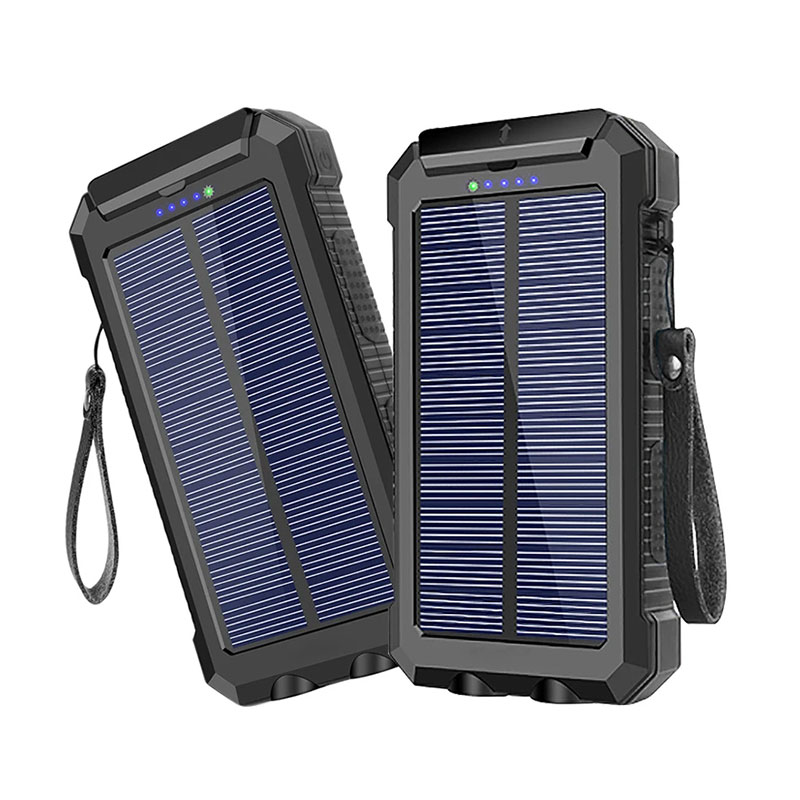
To ensure clarity and precision, core specifications are summarized in a single structured table:
| Parameter | Description |
|---|---|
| Battery Capacity | 20,000mAh high-density lithium-polymer battery |
| Solar Panel | Multi-cell high-efficiency photovoltaic panel with optimized conversion rate |
| Input Ports | Typically USB-C and micro-USB for wired recharging |
| Output Ports | Dual or triple USB-A/USB-C ports for multi-device charging |
| Waterproof/Dustproof Rating | Often IP65 or similar outdoor-ready protection |
| Lighting Features | LED illumination or SOS emergency mode (model-dependent) |
| Safety Protections | Overcharge, over-current, over-temperature, and short-circuit management |
| Durability | Shock-resistant casing designed for outdoor applications |
How Does a 20,000mAh Solar Power Bank Transform Sunlight Into Consistent Charging Performance?
A solar power bank with a 20,000mAh energy reserve depends on a combination of internal battery efficiency and photovoltaic conversion capability. Its core principle involves capturing light energy via the integrated solar panel and converting it into electrical power through semiconductor excitation. This electricity is regulated by an internal controller that matches voltage and current to the battery’s charging requirements, ensuring stable flow without overheating or overcharging.
While the capacity of 20,000mAh offers notable endurance, the actual usability depends on charge retention, output distribution, and conversion efficiency. High-density lithium-polymer cells are favored for their stability and low self-discharge rate. When outdoors, the solar panel supplements the internal battery using environmental light; under full sunlight, the panel gradually replenishes charge, particularly useful in remote areas that lack conventional power sources.
The charging strategy of such power banks typically integrates smart recognition technology, allowing the outputs to adjust based on device demand. This is especially crucial when charging multiple devices simultaneously. A high-capacity bank must therefore balance power distribution intelligently to maximize efficiency without compromising voltage consistency.
An additional factor influencing performance is thermal management. Solar charging generates heat, and outdoor temperatures amplify this effect. A well-engineered product dissipates heat through structural design, circuitry protection, and material composition. Consequently, long-term reliability depends not only on energy capacity but also on heat control and protection mechanisms embedded in the system.
How Should Users Evaluate the Charging Efficiency and Durability of a Solar Power Bank in Real Outdoor Environments?
Evaluating the performance of a 20,000mAh solar charger requires understanding how environmental factors influence both solar absorption and energy output. In practice, users often experience fluctuating conditions such as partial shading, dust accumulation, cloud coverage, and variable temperatures. Each condition affects panel performance, as solar charging is inherently slower than wired charging and works best as a supplementary source of energy.
Durability assessment begins with examining exterior build quality. A rugged casing supports resistance to impacts, vibration, and weather changes. A reliable solar power bank for outdoor or travel use often incorporates reinforced edges, sealed input covers, and textured surfaces for enhanced grip. The IP rating, commonly IP65 for splash and dust resistance, further indicates resilience against environmental exposure.
The ability to maintain charge over extended periods is a core evaluation metric. Lithium-polymer batteries maintain stability across multiple cycles, yet their performance can degrade if exposed to extreme temperatures. Therefore, proper heat dissipation design and internal temperature control systems indicate a higher-quality product.
Users should also assess output speed consistency. Multi-port power banks must sustain adequate amperage per port when multiple devices are connected. A strong internal management chip prevents power fluctuations that could compromise device charging efficiency. This chip also modulates distribution based on device hierarchy—for example, allocating higher current to power-hungry devices first.
Lighting and auxiliary features can further support outdoor use, but they must not detract from energy capacity or structural durability. A well-balanced design ensures that auxiliary features remain functional without compromising core battery performance.
Below are two common FAQs that help clarify operational understanding:
Q: How long does it take to fully recharge a 20,000mAh solar power bank using sunlight?
A: Under optimal direct sunlight and depending on panel size, full solar charging may require several days. Solar input is intended as a supplemental source rather than a primary method. Most users combine wired charging and solar maintenance charging in tandem for best performance.
Q: Can a 20,000mAh solar charger support high-power devices such as tablets or low-voltage laptops?
A: Yes, depending on output specifications. Models equipped with USB-C PD or high-amperage USB-A ports can support tablets and select low-voltage laptops. However, the power demand of such devices reduces total available cycles compared to smaller electronics.
How Is the Power Distribution of High-Capacity Solar Chargers Expected to Evolve With Advancements in Battery and Photovoltaic Technology?
The future trajectory of solar power banks reflects rapid advancements in lithium-based storage, energy density optimization, and panel efficiency. The industry trend indicates a shift toward improved conversion rates using multi-layer photovoltaic structures. These structures capture more light across a broader spectral range, enabling faster solar charging even in less direct sunlight.
Another significant development area is the integration of intelligent charge regulators designed to optimize energy harvesting dynamically. These regulators adjust input parameters according to environmental conditions and battery state. Over time, this reduces energy loss, accelerates charging cycles, and enhances device lifespan.
High-capacity power banks are also influenced by material science progress. The emergence of lighter, more impact-resistant polymers allows manufacturers to create slim yet durable casings without compromising internal protection. Integrated circuitry continues to improve, supporting faster charging protocols, wider voltage compatibility, and safer multi-port distribution.
Energy density improvements in lithium batteries will play a decisive role in future performance. Higher energy density enables compact designs while maintaining 20,000mAh or greater capacity. Additionally, evolving thermal regulation systems will mitigate heat issues during solar charging and high-load output.
Solar power banks are increasingly integrated into emergency, travel, and off-grid infrastructure. Therefore, long-term development is oriented toward reliability, protection layers, rapid charge capability, and cross-device compatibility. As portable energy becomes essential across industries, the 20,000mAh segment is expected to remain a core standard while incorporating enhanced features supported by next-generation photovoltaic innovation.
How Can Businesses and Consumers Maximize the Value of a 20,000mAh Solar Power Bank While Ensuring Long-Term Performance Stability?
Maximizing the long-term value of a solar power bank requires practical usage methods, proper storage, and awareness of operational constraints. Since solar charging efficiency depends on environmental conditions, users should adopt a hybrid recharging approach. Fully charging via wired input before outdoor activity offers a reliable baseline; solar panels then maintain charge levels throughout daily exposure.
To preserve battery health, avoid exposing the unit to extreme temperatures for prolonged periods. While rugged casings protect against environmental stress, the internal battery benefits from moderate conditions. Storage should occur in a cool, dry place with a partial charge to prolong battery cycle life.
Businesses incorporating solar chargers into their product line or operations should evaluate their supply chain for component quality. High-capacity batteries must be sourced from certified suppliers to ensure stability and safety. Solar cells of consistent grade, preferably monocrystalline or multi-cell composite structures, ensure better conversion reliability.
Organizations using solar power banks for field operations, logistics support, or emergency kits should conduct periodic performance checks. This includes verifying port output consistency, solar panel surface integrity, and overall charge retention. When deployed across teams, standardized maintenance protocols ensure uniform performance across units.
As the market continues to expand, the value of reliable, high-capacity chargers becomes more pronounced. Consumers prioritize long service life, dependable outdoor performance, and cross-device compatibility. Brands that deliver stable and efficient charging solutions gain trust over time.
The comprehensive nature of the 20,000mAh solar power category makes it ideal for diversified usage: camping, travel, emergency reserves, remote job sites, and daily commuting. As the demand for portable power continues to accelerate, choosing high-quality solutions becomes essential.
In this landscape, Quacoa positions its products with a focus on durability, consistent output, and practical outdoor engineering. For inquiries regarding availability, specifications, or partnership opportunities, contact us.