

How Are Chain Grinders Shaping the Way Industrial Chains Are Maintained Worldwide?
2025-12-15
Chain grinders are specialized power tools designed for the precision grinding, sharpening, and reconditioning of industrial chains used in forestry, agriculture, mining, manufacturing, and heavy-duty material handling. The core purpose of a chain grinder is to restore chain geometry, cutting accuracy, and operational consistency while extending service life and ensuring safety compliance.
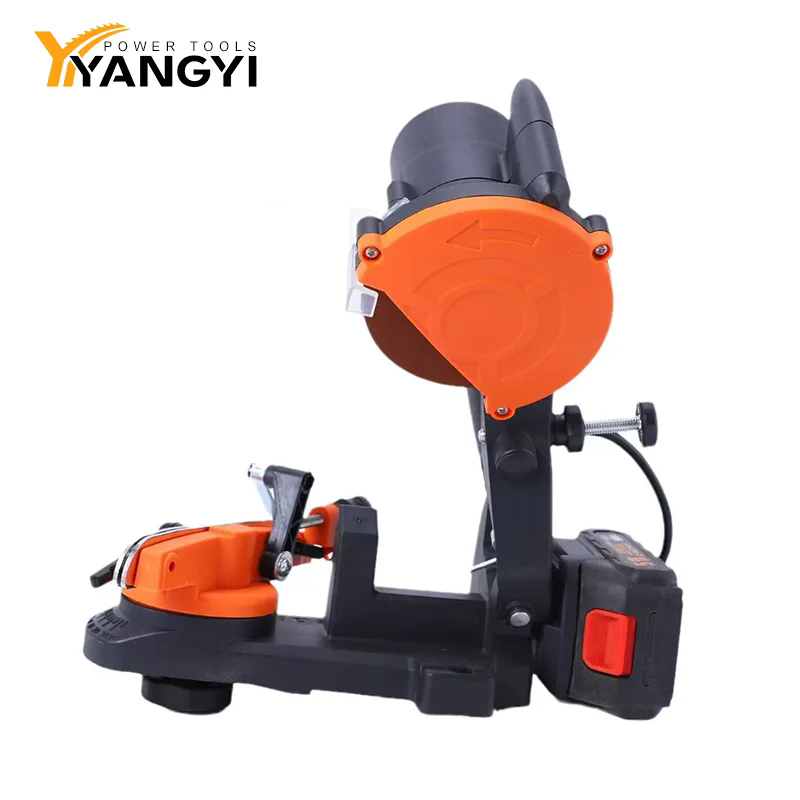
How Does a Chain Grinder Work in Professional Chain Maintenance Applications?
A chain grinder operates by using a high-speed abrasive grinding wheel to remove controlled amounts of material from chain cutters or links. The objective is not aggressive material removal, but precision reshaping that restores the original cutting angles, depth gauges, and symmetry specified by the chain manufacturer. In professional environments, consistency and repeatability are critical, as uneven grinding can lead to vibration, premature wear, or unsafe operation.
At the mechanical level, a chain grinder consists of a motor-driven spindle, an adjustable grinding head, a chain clamping system, and calibrated angle guides. The operator positions the chain within the clamp, sets the grinding angles according to chain specifications, and lowers the grinding wheel to make a clean, measured pass across the cutting surface. Advanced models incorporate fine-adjustment mechanisms, depth stops, and thermal control considerations to prevent overheating and microfractures.
From a workflow perspective, chain grinders are typically integrated into preventive maintenance routines. Instead of replacing chains prematurely, maintenance teams rely on scheduled grinding intervals to keep chains within tolerance. This approach reduces downtime, controls consumable costs, and supports consistent output quality across shifts and operators.
Core Technical Parameters of a Professional Chain Grinder
The performance and suitability of a chain grinder are defined by several measurable parameters. These specifications are commonly evaluated by maintenance managers, procurement teams, and technical engineers.
| Parameter | Typical Specification Range | Practical Significance |
|---|---|---|
| Motor Power | 250W – 550W | Determines grinding stability under continuous load |
| Grinding Wheel Diameter | 100 mm – 145 mm | Affects precision and compatibility with chain sizes |
| Adjustable Grinding Angle | 0° – 35° | Enables accurate matching of chain cutter geometry |
| Spindle Speed | 2,800 – 6,500 RPM | Balances material removal and surface finish |
| Chain Pitch Compatibility | 1/4" to 3/4" | Supports a wide range of industrial chain types |
| Clamping System | Manual or Quick-Release | Influences setup speed and repeatability |
| Construction Material | Cast aluminum or reinforced steel | Impacts vibration control and long-term durability |
These parameters collectively define whether a chain grinder is suited for light-duty workshop use or continuous industrial operation.
How Should Chain Grinders Be Selected for Different Industrial Use Cases?
Selecting a chain grinder requires alignment between operational demands and machine capabilities. A mismatch often results in inefficiency, inconsistent grinding quality, or increased maintenance costs.
In forestry and logging operations, chain grinders must accommodate frequent sharpening cycles and variable chain conditions. Units with higher spindle speed stability and robust angle guides are preferred, as they maintain accuracy even after extended use. Portability can also be relevant when maintenance is performed close to the worksite.
In manufacturing and conveyor systems, chains often operate under constant load and precise timing requirements. Grinding tolerances in these environments are narrower, making fine adjustment controls and rigid clamping mechanisms critical. Here, chain grinders are often bench-mounted and integrated into centralized maintenance stations.
Mining and heavy material handling present additional challenges, including hardened chain materials and abrasive contamination. Chain grinders used in these sectors typically emphasize motor torque, thermal resistance, and reinforced structural components to withstand demanding conditions.
Environmental and regulatory factors also influence selection. Noise output, dust control compatibility, and electrical standards must align with local compliance requirements. In regions with strict workplace safety regulations, grinders with integrated guards and stable base designs are increasingly favored.
How Do Chain Grinders Improve Maintenance Efficiency Over Manual Methods?
Manual chain sharpening methods rely heavily on operator skill and physical consistency. While suitable for occasional or low-precision tasks, they introduce variability that becomes costly at scale. Chain grinders address this issue through mechanical repeatability and controlled material removal.
The efficiency gains are evident in several areas:
-
Time Control: A calibrated chain grinder reduces sharpening time per chain while maintaining uniform results across multiple units.
-
Dimensional Consistency: Fixed angle guides and depth stops ensure each cutter is ground to the same specification, reducing imbalance.
-
Predictable Wear Patterns: Consistent grinding helps chains wear evenly, supporting longer service intervals.
-
Operator Training: Mechanical guidance reduces dependence on advanced manual skills, lowering training thresholds.
From a cost-management standpoint, these efficiencies translate into reduced chain replacement frequency and fewer unexpected failures. Over extended operating cycles, the return on investment of a professional chain grinder becomes measurable and predictable.
Common Questions About Chain Grinders
Q: How often should a chain be ground using a chain grinder?
A: Grinding frequency depends on operating conditions, material hardness, and workload intensity. In professional settings, chains are typically ground after a defined number of operating hours or when cutting performance declines. Preventive schedules are preferred over reactive sharpening to maintain consistent geometry.
Q: Can one chain grinder handle different chain types and sizes?
A: Most professional chain grinders are designed with adjustable clamps and angle settings to support multiple chain pitches and profiles. Compatibility should always be confirmed against the grinder’s specified adjustment range and wheel dimensions to ensure accurate results.
How Is the Future of Chain Grinding Technology Evolving?
Chain grinding technology is gradually evolving in response to industrial automation trends and rising quality expectations. While the fundamental grinding principle remains unchanged, refinements are being introduced in adjustability, ergonomics, and durability.
Precision calibration systems are becoming more refined, allowing faster setup with fewer manual adjustments. Material science advancements in grinding wheels are improving heat resistance and surface finish consistency. Additionally, there is growing emphasis on modular design, enabling easier replacement of wear components without full disassembly.
From a market perspective, buyers are placing greater value on long-term stability and technical support rather than entry-level pricing alone. This shift is influencing manufacturers to focus on standardized components, tighter tolerances, and documentation that supports international maintenance teams.
As industrial operations continue to prioritize uptime and predictable maintenance cycles, chain grinders are expected to remain a core tool within mechanical servicing ecosystems rather than a peripheral accessory.
In this context, Yangyi continues to develop chain grinder solutions aligned with professional maintenance requirements, emphasizing precision engineering, stable performance parameters, and compatibility with a wide range of industrial chain systems. For organizations seeking detailed specifications, application guidance, or procurement support related to chain grinders, contacting the Yangyi technical team is a practical next step. Contact us to discuss specific operational needs, customization options, and long-term supply considerations tailored to local market requirements.