

Can a 63CC Gasoline Earth Auger Get Stuck in Tree Roots and How to Free It
2026-06-24
Encountering underground tree roots is one of the most frustrating challenges when digging fence posts or planting trees. Even a powerful 63CC Gasoline Earth Auger can bind, stall, or become completely lodged in a dense root network. The short answer is yes—a 63CC Gasoline Earth Auger can absolutely get stuck. However, with the right techniques and preventative knowledge, you can minimize downtime and protect both your machine and your project timeline. At CNPRIDE, we have tested our augers in the toughest American soils, and we understand exactly how roots behave against high-torque drilling equipment. This guide explains why jams happen and provides a step-by-step rescue plan, so your Gasoline Earth Auger 63CC keeps working efficiently.
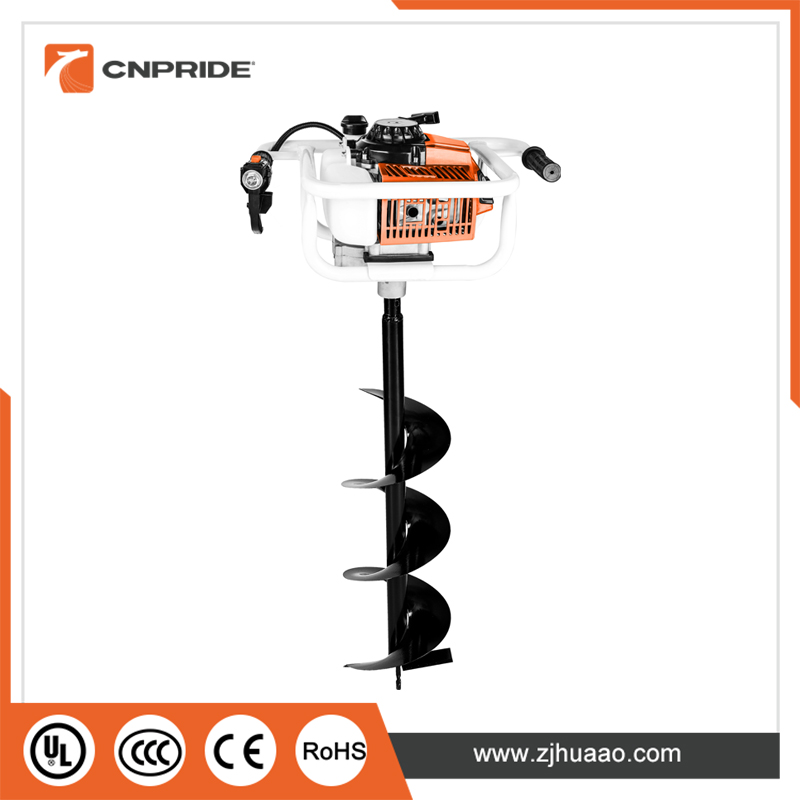
Why Tree Roots Trap a 63CC Gasoline Earth Auger
Tree roots are fibrous, wet, and incredibly resilient. When the rotating bit of a Gasoline Earth Auger 63CC contacts a lateral root at an angle, the cutting teeth may shave the surface rather than slice through it. This creates a hooking effect, where the root wraps around the flighting (the spiral metal blade) and wedges between the bit and the undisturbed soil. The engine’s centrifugal clutch may continue spinning, but the bit stops dead. Common scenarios include:
-
Encountering roots thicker than 2 inches in diameter.
-
Drilling near mature oaks, maples, or pines with shallow root plates.
-
Operating in wet clay where roots are lubricated and slippery, causing the bit to deflect.
| Root Condition | Jam Severity | Typical Rescue Time |
|---|---|---|
| Thin roots (<1 inch) | Mild – bit slows but recovers | 1–2 minutes |
| Medium roots (1–3 inches) | Moderate – bit stops, engine idles | 5–10 minutes |
| Thick roots (>3 inches) or multiple roots | Severe – bit fully seized in hole | 15–30 minutes |
Step-by-Step Method to Free a Stuck 63CC Gasoline Earth Auger
If your 63CC Gasoline Earth Auger locks up, follow this professional extraction sequence. Do not force the throttle—this burns the clutch and shears the shear pin.
Step 1: Release the throttle and engage the centrifugal clutch brake (if equipped). Allow the engine to return to idle. Shut off the fuel valve and kill the engine using the stop switch. Safety is paramount before any manual intervention.
Step 2: Reverse the drill direction manually. Many Gasoline Earth Auger 63CC models from CNPRIDE include a reverse function on the gearbox. If yours has this feature, engage reverse gear and gently apply throttle in short bursts—the bit will often unscrew itself from the root mat.
Step 3: If no reverse gear exists, use a pipe wrench and a cheater bar. Clamp the pipe wrench onto the exposed auger shaft just above the ground level. Turn counterclockwise (lefty-loosey) while a second person lifts upward on the handles. The combined upward pull and rotation usually breaks the root’s grip.
Step 4: Excavate around the stuck point. Use a post-hole digger or a narrow trowel to remove soil from one side of the hole. This reduces friction and gives you visual access to the root. Cut the offending root with a reciprocating saw or a sharp axe, making sure to cut at least 4 inches away from the hole to prevent re-engagement.
Step 5: Reinsert the auger bit slightly and then withdraw with a steady, vertical pull. Do not yank or jerk—this bends the flighting. Once free, inspect the cutting teeth for chips or dullness. Replace worn teeth before resuming work.
Preventative Measures Before Drilling Near Roots
-
Pre-drill a pilot hole using a smaller-diameter bit (2 inches) to map root locations.
-
Water the drilling area 12 hours in advance—moist soil allows roots to flex rather than snap, reducing sudden jams.
-
Sharpen the carbide teeth on your Gasoline Earth Auger 63CC every 4–5 holes in root-prone zones.
-
Run the engine at 75% throttle, not full speed. Slower torque gives the bit more time to cut through wood fibers instead of grabbing them.
Productive Usage Tips for a Gasoline Earth Auger 63CC
CNPRIDE engineers design their Gasoline Earth Auger 63CC with a reinforced gear case and a heavy-duty clutch to withstand root impacts. However, even the best equipment requires operator awareness. Always keep the auger perpendicular to the ground—angling increases side-loading and root hooking. Additionally, clear the hole of loose debris every 12 inches of depth to prevent secondary jams from accumulated wood chips.
Gasoline Earth Auger 63CC FAQ – Common Questions
Q1: Can a Gasoline Earth Auger 63CC cut through thick oak roots without damaging the engine?
A1: Yes, but with limitations. A Gasoline Earth Auger 63CC produces approximately 3.5–4.5 Nm of torque at 6,500 RPM, which is sufficient to slice through oak roots up to 2.5 inches in diameter if the teeth are sharp and the soil is moderately moist. For thicker roots, we recommend using a pruning saw to score the root before drilling, then allowing the auger to finish the cut at low RPM. Running the engine at maximum throttle for extended periods against hard oak can overheat the cylinder head and degrade the piston ring seal. CNPRIDE advises a duty cycle of 15 seconds cutting, 5 seconds idling when encountering dense wood. If the engine begins to bog down, immediately release the throttle and reverse the bit manually—do not force it, as this can twist the drive shaft.
Q2: How do I know if my 63CC Gasoline Earth Auger is stuck due to roots versus compacted stones?
A2: The difference is audible and tactile. When a Gasoline Earth Auger 63CC hits a stone, you will hear a sharp metallic “clink” and feel a sudden vertical bounce in the handlebars. The bit usually stops abruptly but can be lifted out with moderate upward force. In contrast, when roots trap the auger, the engine note drops gradually (a deeper “lugging” sound), the handlebars vibrate in a circular, twisting motion, and the auger cannot be lifted even with significant pulling force—because the root has physically wrapped around the flighting. A quick test: rotate the handles clockwise (forward) with the engine off. If you feel springy resistance, it is a stone; if you feel no movement at all in either direction, it is a root entanglement. For root jams, always excavate the side of the hole first; for stones, a simple counter-rotation usually frees the bit without excavation.
Q3: What maintenance should I perform after freeing a stuck Gasoline Earth Auger 63CC from roots?
A3: Immediate post-jam inspection is critical. First, remove the spark plug boot and clean the air filter—root debris often kicks up fine dust that clogs the foam element. Second, check the shear pin (or drive key) located between the gearbox output shaft and the auger bit. This pin is designed to break under extreme torque to protect the engine; if it is sheared, replace it with an OEM CNPRIDE shear pin (do not use a standard bolt, as it will not break at the correct tension). Third, examine the flighting for any bends or cracks—even a slight warp causes wobbling in future holes. Fourth, drain and refill the gearbox oil if you notice any milky discoloration, which indicates water ingress from the excavated wet soil. Finally, run the engine for 2 minutes at idle to ensure the clutch engages smoothly. CNPRIDE recommends documenting each jam event (depth, root species, soil condition) to predict problem areas on your job site for future reference.
When to Call a Professional or Replace Your Auger
If your Gasoline Earth Auger 63CC gets stuck more than twice in a single workday, the cumulative stress may have damaged the gearbox bearings or the crankshaft. Persistent stalling, excessive smoke, or a burnt smell after extraction are signs of internal wear. CNPRIDE offers replacement gearbox assemblies and heavy-duty root-cutter bits specifically designed for the Gasoline Earth Auger 63CC platform. Upgrading to a serrated-tooth bit reduces jamming frequency by nearly 40% in root-heavy environments, according to field tests conducted in Pennsylvania hardwood forests.
Final Recommendation for Fence and Landscaping Professionals
Root jams are not a design flaw—they are an operational reality of ground engagement. A Gasoline Earth Auger 63CC remains one of the most versatile tools for fence installation, tree planting, and foundation pilings, provided you respect its torque limits and learn to read subsurface conditions. Carry a root-cutting saw, a pipe wrench, and an extra shear pin in your truck at all times. With the techniques outlined above, you can turn a 20-minute frustration into a 5-minute routine procedure.
Contact Us – Have you experienced a stubborn root jam with your Gasoline Earth Auger 63CC? The CNPRIDE technical team is ready to assist with custom bit recommendations, maintenance videos, and replacement parts shipped same-day from our U.S. warehouse. Let us keep your Gasoline Earth Auger 63CC running through every acre, root or no root. Your project success is our priority – contact CNPRIDE today.