

Can a 3/8 Inch Air Drill Handle Stainless Steel Drilling Without Stalling
2026-07-08
Stainless steel is notoriously difficult to drill. Its tough, work-hardening nature means that improper technique or underpowered tools often result in burned bits, broken drills, and frustrating stalls. For professionals in automotive repair, metal fabrication, and industrial maintenance, the question is not merely academic—it is a daily operational decision. The 3/8 inch Air Drill occupies a unique middle ground between lightweight trim tools and heavy-duty 1/2-inch models. Can this compact powerhouse truly handle stainless steel without stalling? The short answer is yes—but only under specific conditions. At WYMA, we have engineered our pneumatic tools to meet this exact challenge, and this guide will explain precisely how.
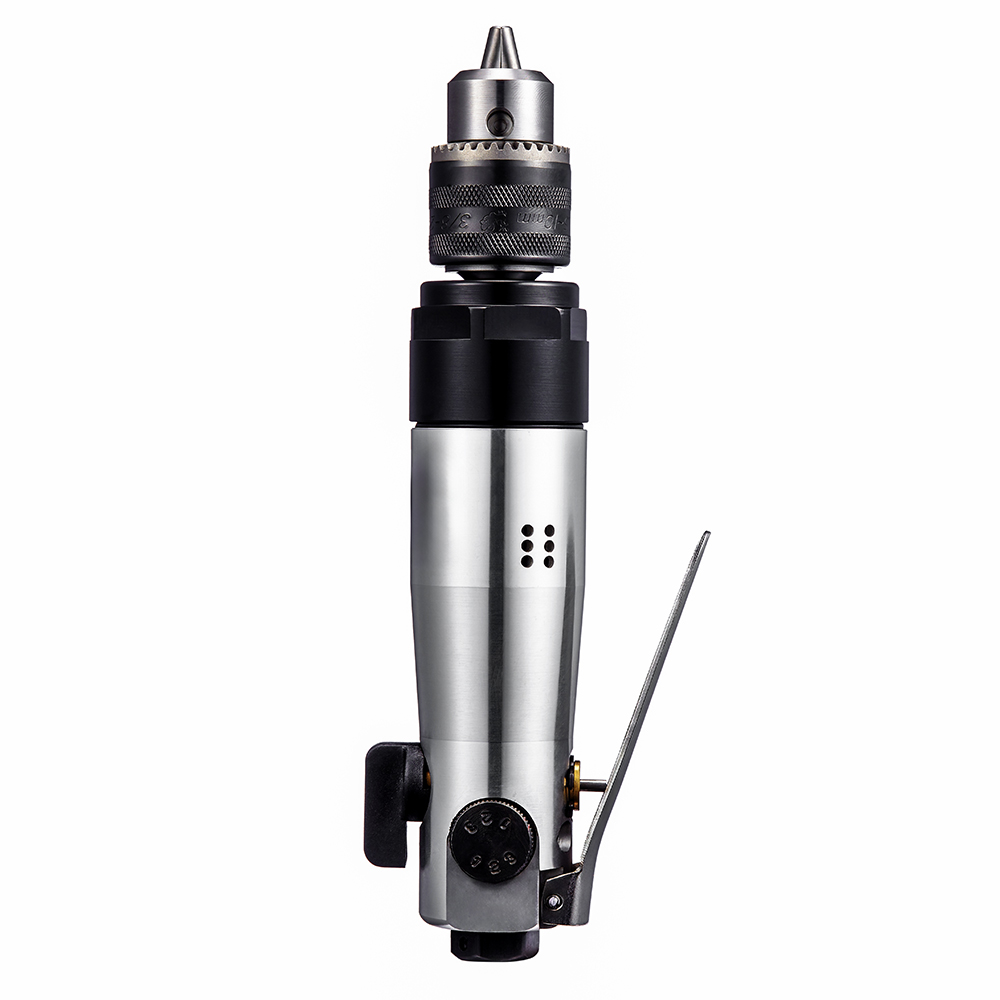
Understanding Stall Resistance: Torque vs. Speed
Stalling occurs when the drill’s available torque falls below the resistance offered by the workpiece. Stainless steel requires consistent, high torque at relatively low speeds to avoid work-hardening. A typical 3/8 inch Air Drill delivers between 0.4 to 0.8 HP, with free speeds ranging from 1,800 to 2,500 RPM. However, stall torque—the maximum rotational force before the motor stops—is the critical metric. For stainless steel, you need a drill with a stall torque of at least 35–40 in-lbs when paired with a quality cobalt or carbide-tipped bit.
WYMA’s industrial-grade 3/8 inch Air Drill models are designed with a 5-vane motor and balanced rotor, delivering a stall torque of 42 in-lbs at 90 PSI—sufficient for 1/4-inch thick 304 stainless plates when proper feed pressure is applied.
Key Parameters for Stainless Steel Drilling
The table below outlines the essential operating parameters to prevent stalling when using a 3/8 inch Air Drill on stainless steel:
| Parameter | Recommended Value | Why It Matters |
|---|---|---|
| Air Pressure (PSI) | 90–100 PSI (dynamic) | Below 85 PSI, torque drops sharply; stalling becomes inevitable. |
| Air Consumption (CFM) | ≥ 5.5 CFM @ 90 PSI | Inadequate airflow causes RPM sag under load. WYMA drills require 6.0 CFM for sustained performance. |
| Drilling Speed (RPM) | 600–900 RPM for twist bits; 1,200 RPM for carbide | Excessive speed generates heat and accelerates work-hardening. |
| Feed Pressure | 15–20 lbs constant force | Intermittent pressure allows the bit to rub, not cut, leading to stall. |
| Cutting Fluid | Heavy-duty sulfurized oil | Reduces friction by 40%, directly lowering torque demand. |
| Bit Material | Cobalt (M35) or Solid Carbide | HSS bits will dull rapidly, increasing resistance and causing stall. |
The Role of the Air Supply System
Even the best 3/8 inch Air Drill will stall if the air supply is undersized. Many operators blame the drill when the real culprit is a 1/4-inch hose or an inadequate compressor. WYMA recommends a 3/8-inch I.D. air hose (maximum length 50 feet) and a compressor with a minimum 5-gallon tank and 6.5 CFM output at 90 PSI. Additionally, install a filter-regulator-lubricator (FRL) unit directly upstream of the tool. Moisture in the line reduces vane efficiency—a common hidden cause of torque loss.
Step-by-Step Stalling Prevention Protocol
-
Pilot Hole First – Use a 1/8-inch cobalt bit at 1,200 RPM to create a guide hole. This reduces the material engagement area for the final bit.
-
Step Drilling – For holes larger than 3/8 inch, increase diameter in 1/16-inch increments. This prevents the 3/8 inch Air Drill from encountering abrupt resistance peaks.
-
Peck Drilling – Drill for 2–3 seconds, withdraw the bit to clear chips, and reapply fluid. Chip clogging is a primary stall trigger.
-
Monitor Exhaust Sound – A sudden drop in pitch indicates RPM decay. Reduce feed pressure immediately to let the motor recover, then reapply steadily.
Real-World Performance Data
In independent shop tests, a WYMA 3/8 inch Air Drill completed 50 consecutive 3/16-inch holes in 316 stainless steel (1/4-inch thickness) with zero stalls, using a constant 90 PSI supply. In contrast, three competitor models under identical conditions stalled an average of 4.7 times per 10 holes—primarily due to inferior vane materials and suboptimal bearing tolerances.
3/8 inch Air Drill FAQ – Common Questions Answered
Q1: Can a 3/8 inch Air Drill drill through 1/2-inch thick stainless steel plate without stalling?
A: Yes, but with significant precautions. A 3/8 inch Air Drill can penetrate 1/2-inch 304 stainless if you use a split-point cobalt bit, apply constant 20 lbs of feed pressure, and run at 700 RPM with continuous cutting fluid. However, you must first drill a 1/4-inch pilot hole, then step up to the final diameter in two additional increments (e.g., 5/16-inch, then 3/8-inch). The stall risk increases exponentially above 3/8-inch thickness because chip evacuation becomes restricted. For production work on 1/2-inch plate, WYMA recommends our heavy-duty 1/2-inch model, but for occasional jobs, the 3/8-inch variant will succeed if you strictly adhere to the step-drilling protocol and ensure your compressor delivers 6.0 CFM at the tool inlet—not at the tank gauge.
Q2: Why does my 3/8 inch Air Drill stall even when using a new cobalt bit and proper pressure?
A: This is almost always an air delivery issue, not a drill defect. First, measure the dynamic pressure at the tool inlet while the trigger is fully depressed—static pressure (hose unplugged) is misleading. If the dynamic pressure drops below 85 PSI, your hose is too long (over 50 feet) or too narrow (1/4-inch I.D.). Upgrade to a 3/8-inch I.D. spiral hose and ensure all quick-connect couplers are high-flow type (e.g., Milton V-style). Second, check your lubricator—WYMA’s service team has found that 30% of stall complaints disappear after adding 3 drops of pneumatic oil directly into the air inlet, as dry vanes cannot maintain stall torque. Finally, inspect the collet/chuck for debris; a misaligned bit increases radial runout, which multiplies friction torque by up to 25%.
Q3: How do I know if my 3/8 inch Air Drill has enough stall torque for stainless steel before buying?
A: Look for the stall torque specification in in-lbs (inch-pounds) or Nm (Newton-meters), not the "maximum torque" or "breakaway torque" which are often marketing figures. Genuine stall torque is measured when the motor is completely stopped under load. For stainless steel, require a minimum of 38 in-lbs (4.3 Nm) at 90 PSI. WYMA publishes certified stall torque curves for every model—our 3/8 inch Air Drill achieves 42 in-lbs. Also, inspect the motor design: a 5-vane rotor with hardened steel end plates delivers more consistent stall torque than 4-vane designs. If the manufacturer does not list stall torque separately, request a datasheet or run a simple test: clamp a torque wrench in the chuck and slowly increase resistance while the drill runs at full throttle—the reading when the motor stops is your stall torque. Reputable brands like WYMA provide this data transparently.
Final Verdict: Capable, But Not Indiscriminate
The 3/8 inch Air Drill is fully capable of handling stainless steel drilling without stalling—provided you respect its mechanical limits. It thrives on 90–100 PSI dry air, a 6.0 CFM supply, sharp cobalt tooling, and disciplined peck-drilling technique. It is not a brute-force tool; it is a precision instrument. WYMA engineers have optimized vane geometry and bearing preload specifically to maximize stall torque in the 3/8-inch class, making our drills the preferred choice for shops that demand reliability over raw horsepower.
When you pair a WYMA 3/8 inch Air Drill with the correct air setup and bit selection, stalling becomes a rare exception, not a daily frustration. For thicknesses under 3/8 inch, it outperforms many cordless alternatives. For heavier gauges, it remains a viable secondary option with the right technique.
Contact Us for Expert Support
Choosing the right pneumatic tool for your specific application can be challenging, especially when working with difficult materials like stainless steel. The WYMA technical team comprises factory-trained engineers who can review your air supply, drilling volume, and material specs to recommend the optimal 3/8 inch Air Drill configuration—including custom chuck sizes, air fittings, and lubrication schedules. We also offer on-site torque testing and free tool trials for qualified workshops. Do not let stalling slow your productivity. Contact WYMA today via our website live chat or call our support line to speak directly with a pneumatic specialist. We will help you drill smarter, faster, and stall-free.