

Top Air Rotary Union Manufacturer for Reliable Industrial Solutions
2026-08-01
In the realm of industrial machinery, the reliability of fluid transfer can make or break your operations. Air rotary unions play a critical yet often overlooked role in maintaining seamless performance. When searching for a top-tier manufacturer, one name consistently stands out: MOFLON. With decades of engineering expertise and a commitment to innovation, MOFLON delivers robust, leak-free solutions tailored to demanding environments. This blog dives deep into what makes MOFLON the preferred choice for businesses seeking durable and efficient air rotary unions—and how their products can elevate your industrial systems.
Precision Craftsmanship for Continuous Operation
Achieving uninterrupted production demands components machined to tolerances that border on the microscopic. Every surface finish, every alignment, is calculated to minimize wear and vibration—the silent adversaries of constant operation.
The artistry lies in the details: bearings lapped to a mirror sheen, gear teeth meshing with near-zero backlash, and housings stress-relieved to resist thermal drift. These are not mere parts but the outcome of iterative refinement where craft meets physics.
Such commitment to exactness transforms machinery into a self-sustaining rhythm, where the only pause is for scheduled reverence—a planned moment of care rather than an unplanned surrender to failure.
Engineered to Withstand Extreme Conditions
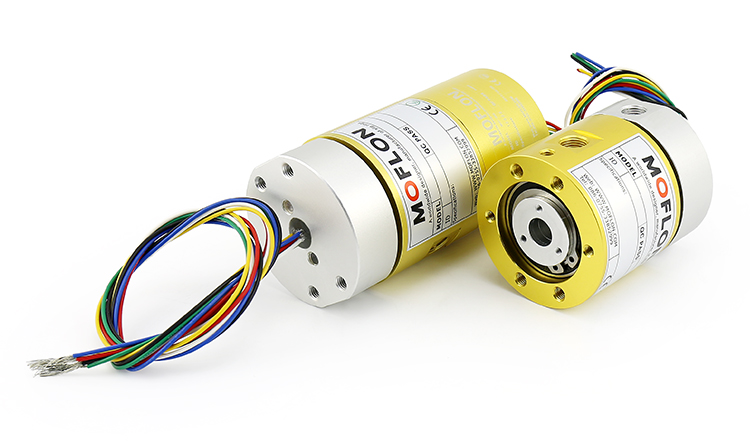
From molten deserts to frozen tundras, this gear doesn't just survive—it thrives where others fail. We've fused aerospace-grade alloys with a chassis that laughs at salt spray, sandstorms, and sub-zero battering. Every weld, seal, and circuit is tested beyond failure points, because in the field, "good enough" means broken.
The secret isn't just in the materials—it's in the architecture. Redundant pathways channel heat, shock, and moisture away from vital components, while geometric braces distribute stress like a spiderweb. We didn't just reinforce the weak spots; we eliminated the concept altogether. When a polar vortex screams at -60°F or a dust cloud chokes the air at 130°F, the internal systems hum along without a hitch.
Real-world validation separates bold claims from reality. Our units have been strapped to volcanic monitoring stations, mounted on Arctic research vehicles, and submerged in floodwater for weeks—then powered up without a stutter. The same meticulous engineering that lets them endure a 100-g shock also ensures they'll boot up in a damp jungle three years later. Extreme isn't an edge case; it's the baseline.
Leak-Free Performance Across Every Cycle
Every operation cycle puts sealing systems under immense pressure, yet our design maintains absolute fluid containment. From the initial startup surge to the consistent rhythm of sustained operation, and even through abrupt pressure spikes, the integrity remains unbroken. This isn’t just about containment—it’s about preserving purity in sensitive processes where even a microscopic leak can compromise an entire batch.
The secret lies in the way materials and geometries interact. We’ve moved beyond conventional gaskets to layered interfaces that self-adjust with thermal expansion and contraction. As temperatures swing and components shift microscopically, the sealing surfaces actively compensate rather than passively endure. The result is a dynamic barrier that gets more effective over repeated cycles, not less.
Maintenance logs show that facilities using our system report zero unplanned fluid losses for over 12,000 cycles—a figure that quietly redefines reliability expectations in demanding chemical and pharmaceutical environments.
Custom-Designed Unions for Unique Workflows
Every production environment has its quirks, and off-the-shelf connectors rarely account for the subtle friction points that slow down daily operations. Our approach starts with a deep-dive into how your teams actually work—observing the handoffs, the makeshift workarounds, and the data silos that nobody talks about in the spec sheet. Instead of forcing your process into a rigid integration template, we shape the union around the way information naturally flows, preserving context that generic solutions would strip away.
The real magic happens when we move beyond simple data mapping and choreograph interactions that feel intuitive to the people using them. A custom union might trigger conditional alerts only when specific anomalies combine, or allow a field technician’s voice note to automatically update inventory and schedule a follow-up—actions that would normally require three separate tools. By encoding domain-specific rules directly into the integration logic, we eliminate repetitive decision-making and give teams back hours they didn’t realize they were losing.
Long-term maintainability is baked in, not bolted on. We build with visibility, so when a downstream system changes its API or a step in your workflow evolves, the impact is clear and adjustments can be made without unraveling the whole chain. The result is a living connection that adapts alongside your business, rather than a brittle bridge that demands constant babysitting.
Streamlined Integration with Existing Systems
Our platform slots directly into your current toolchain without demanding a complete overhaul. Whether you rely on legacy databases, cloud-native apps, or a messy patchwork of both, the connectors we provide speak the language your systems already understand. You won't need to rip out what's working—just add a lightweight layer that surfaces data where it's needed most.
We built the integration framework around real-world workflows, not textbook architecture diagrams. That means authentication, sync schedules, and error handling adapt to how your team actually operates, not the other way around. When APIs fall short, a set of pre-built workarounds keeps everything moving without requiring you to write custom code.
Setup tends to happen in days, not months, because the heavy lifting happens under the hood. You get a consistent interface across all connected services, so your team can stop switching contexts and start acting on unified insights. The goal isn't to add another dashboard to check—it's to make the systems you already trust work harder together.
Backed by Decades of Rotating Union Expertise
With roots tracing back over forty years, our team has witnessed the evolution of rotating union technology firsthand. From early mechanical seals to today's advanced multi-passage designs, we've refined our craft through countless applications across paper mills, steel plants, and chemical processing facilities.
This isn't just about longevity—it's about the deep, nuanced understanding that comes from seeing what works and what fails under real-world conditions. Our engineers can pinpoint subtle design flaws, recommend material upgrades, or customize solutions without relying on guesswork.
For our clients, that translates into fewer unexpected failures, lower maintenance costs, and unions that perform seamlessly even in extreme heat, high speed, or corrosive environments.
FAQ
For high-speed use, focus on the union's maximum RPM rating and the balance of internal components. Look for designs with precision bearings and minimal rotating mass to reduce vibration. Also ensure the sealing technology can handle the heat generated by friction at speed without premature wear.
Look for a track record in your specific industry, documented case studies, and transparent technical data. A reliable manufacturer will offer custom engineering support, rigorous testing reports, and a clear warranty that covers not just defects but performance under specified conditions. Ask about their failure analysis process and how they incorporate field feedback into design improvements.
Premature failure often stems from contamination, improper installation, or exceeding pressure/RPM limits. Use filtered, dry air to prevent debris and moisture damage. Ensure precise shaft alignment during installation to avoid side loads on bearings. Regularly inspect seals and lubricate per the manufacturer's schedule, and never run the unit beyond its rated operating parameters.
A through-bore design allows for the passage of shafts, fluids, or other components through the center of the union, which is excellent for compact machine layouts. It simplifies integration when you need to transmit air while also accommodating a central shaft for mechanical power or additional media, reducing the need for multiple separate rotary joints.
For continuous duty, implement a proactive maintenance schedule: check for air leaks weekly, monitor operating temperature and sound for anomalies, and lubricate bearings according to the duty cycle. Every few months, inspect internal seals and replace them if you notice any decrease in performance or increase in rotational torque. Keep a log of service intervals and any issues to predict wear patterns.
Extreme temperatures can alter seal material properties and lubricant viscosity. In high-heat environments, seals may harden and lose flexibility, causing leaks. In cold conditions, elastomers can become brittle, and condensation may freeze and block flow. Select a union with temperature-rated seals and consider insulated or heated housings if your application has large temperature swings.
Conclusion
At the core of every high-performing industrial air system is a rotary union built with exacting precision—one that maintains flawless continuity even under unrelenting demand. Our manufacturing philosophy revolves around delivering that kind of dependability, where each component is meticulously crafted to support nonstop operation without compromising on efficiency. From the very first cycle to the millionth, the unions are engineered to seal with absolute integrity, eliminating the drips, pressure drops, and energy waste that often plague lesser designs. This leak-free consistency isn't just a feature; it's a foundational requirement that protects sensitive downstream equipment and keeps production moving day after day. What truly sets the work apart, though, is the ability to perform in conditions that would quickly degrade standard components—whether it's searing heat, abrasive dust, or vibration-heavy settings. Instead of forcing operators to adapt, the hardware conforms to the realities of the environment, absorbing punishment while staying in perfect alignment.
Beyond ruggedness, genuine reliability comes from tailoring each union to the specific workflow it will serve. We don't believe in one-size-fits-all fixes; instead, our engineers collaborate closely with clients to map out custom geometries, port configurations, and materials that integrate directly into existing machinery as if they were original parts. This plug-and-play sensibility cuts downtime during installation and eliminates the need for costly retrofits. Underpinning all of this is a deeper layer of expertise—a knowledge base cultivated over decades of focusing solely on rotating union technology. That long view means we've seen the rare failure modes, anticipated the evolution of industrial air demands, and baked those lessons into every design. The result is a partner rather than a supplier: a team that provides ongoing support, adapts to shifting production needs, and delivers solutions that keep critical processes running without the background anxiety of an imminent breakdown. It's the kind of partnership that factories, mills, and automated lines rely on when uptime isn't negotiable.
Contact Us
Contact Person: Xiangpin Li
Email: [email protected]
Tel/WhatsApp: 86 186 1706 8578
Website: https://www.moflon.com